
You launched with six shades of one lip product. Eighteen months later you’re carrying 34 SKUs across multiple formulas and finishes, plus a limited-edition drop you swore would sell out clean. Somewhere in that growth, “wrong item sent” became one of your top return reasons, and nobody flagged it as a fulfillment problem until the shade mismatches started outnumbering the sold-out complaints.
Makeup and color cosmetics are not like the rest of beauty fulfillment. A skincare brand can survive a slightly-off pick. A serum is a serum. A color cosmetics brand can’t: the wrong shade is a different product to the customer and it’s how a fulfillment mistake turns into a one-star review about your formula.
This guide covers what changes when a 3PL handles makeup instead of general beauty products: pick accuracy, packaging that survives shipping, batch and expiration tracking, and cost.
What makes makeup fulfillment different from general beauty fulfillment
Color cosmetics create two problems most 3PLs aren’t built to solve well: SKU density and breakage.

Shade-level SKU proliferation
A single foundation launched in 12 shades isn’t 1 SKU. It’s 12, each one needing its own bin location, its own barcode, and its own spot on a pick list where a warehouse worker has maybe four seconds to grab the right one. Add finishes (matte, dewy, satin) and sizes (full-size, mini, travel), and a catalog that looks small on the surface can carry far more active SKUs than the product-line count suggests. It’s the same SKU multiplication problem that trips up apparel brands with size runs, just driven by shade instead of size.
Generic 3PLs built for apparel or general ecommerce often bin-locate by product family. That works fine for a t-shirt in five colors, but it falls apart fast when 20 nearly-identical compacts sit in the same general area and the only difference is a shade name printed in 8-point font on the bottom.
Barcode scan confirmation at the point of pick is what catches a shade mismatch before it ships. Without it, a mispick doesn’t surface until the customer opens the box.
Breakage-prone packaging
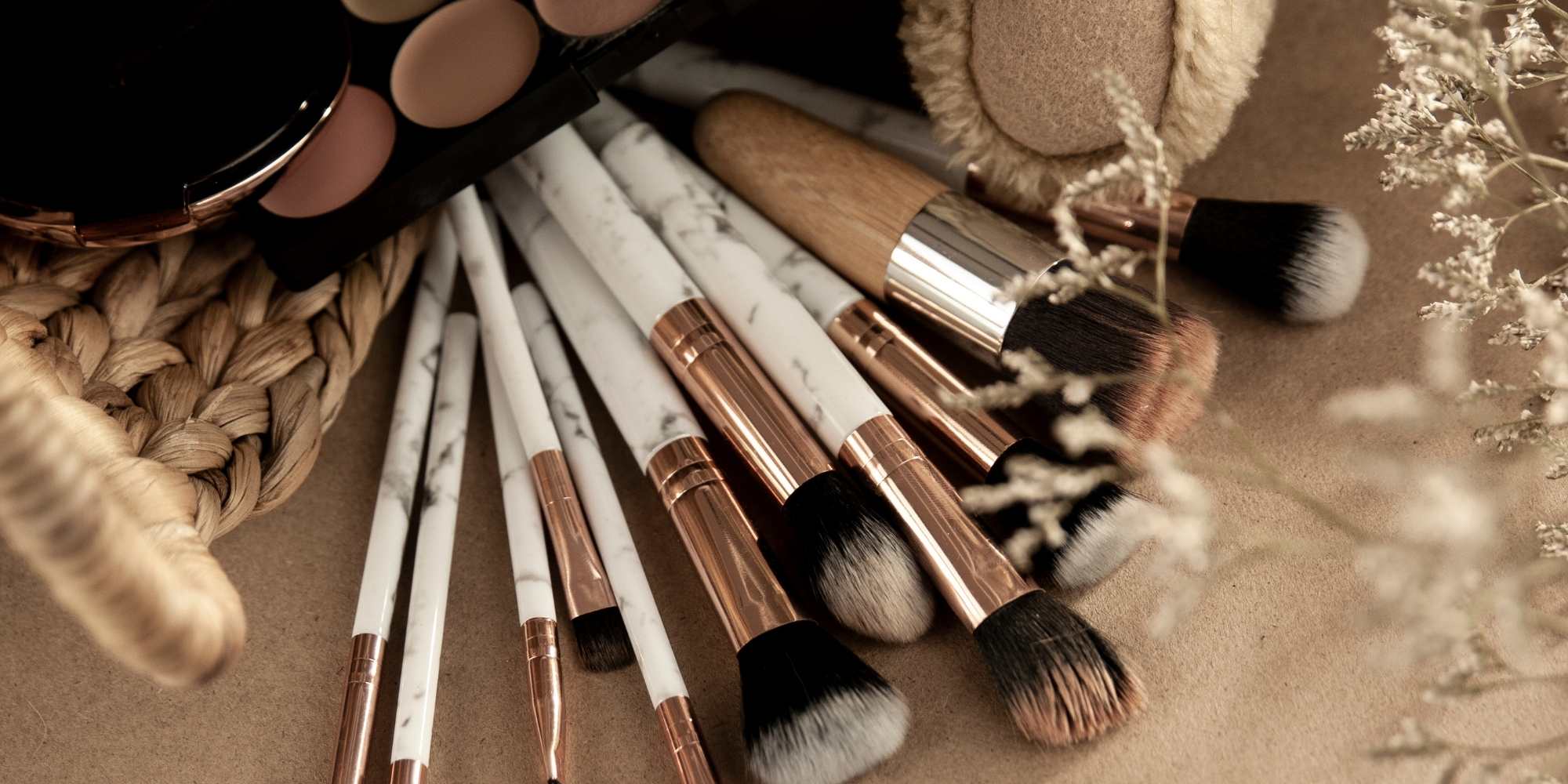
Compacts, palettes, and glass bottles don’t ship like apparel or supplements. A pressed powder can crack from a fall that wouldn’t leave a mark on a plastic bottle. A glass foundation bottle needs solid cushioning; a single air pillow tossed on top won’t cut it.
This comes down to a cost tradeoff: proper protective packaging (custom foam inserts, dividers for multi-pan palettes, glass-rated void fill) costs more per order than a poly mailer. Brands that skip it pay for it later, in returns processing and refunds that often cost more than the packaging would have.
The real cost of a shade-matching error
A wrong-shade shipment isn’t just one mistake. It’s a chain of costs that compounds:
| Cost component | What it covers |
|---|---|
| Return shipping | Customer ships the wrong item back (if they bother; many don’t) |
| Replacement shipping | Correct item shipped out, often expedited to save the relationship |
| Restocking labor | Returned item inspected, and if the seal is broken, it can’t go back on the shelf at all |
| Customer trust | The public review or DM that shapes how other prospects see the brand, before you even know there’s a problem |
The first three are ordinary operational costs — expensive, but the kind of thing a normal budget absorbs. The fourth doesn’t work like that. In beauty, a “wrong shade” complaint reads to a prospective customer as “this brand doesn’t have quality control,” and that’s a harder thing to walk back than a shipping delay.
Fulfillment with a Personal Touch.
See How Using a 3PL like eFulfillment Service sellers saves time. Get a Free Quote from eFulfillment Service Today!
Batch and lot tracking for color cosmetics
Color cosmetics use batch and lot tracking because formulas shift slightly between production runs, and if a customer has a reaction or a shade appears off, you need to trace it back to the exact batch, fast.

Why FIFO matters more here than in most categories
First-in-first-out inventory rotation isn’t a nice-to-have for makeup. Older batches sitting behind newer ones means:
- Product nearing its period-after-opening (PAO) date ships to a customer who then has less usable shelf life than expected
- If a batch does need a recall or a quality hold, older stock scattered through the warehouse instead of rotated out first makes the trace slower and the exposure bigger
General-ecommerce warehouse systems commonly track total quantity on hand. SKU-level batch/lot tracking is a separate capability, and its absence only becomes visible the moment a specific batch needs tracing.
PAO and expiration basics
Most color cosmetics carry a PAO symbol (an open jar icon with a number like “12M” or “24M”) rather than a fixed expiration date, though some formulas, especially anything with SPF or specific preservative systems, do carry hard expiration dates. Either way, a 3PL that can flag aging inventory before it becomes a problem is doing something a lot of general fulfillment operations don’t bother with.
Packaging that survives the trip from warehouse to doorstep

Compacts, palettes, and glass
The packaging decision tree for color cosmetics is different from almost any other ecommerce category:
- Pressed powders and pans: need rigid outer packaging plus internal cushioning that stops the product from shifting and cracking against the pan wall. A compact that would be fine in a padded envelope for a t-shirt order can arrive shattered without it
- Multi-pan palettes: need dividers or individual compartments; a single void-fill approach lets pans knock against each other
- Glass components: (foundation bottles, some lip glosses) need glass-rated protective packaging instead of standard poly bubble
This is standard practice in color cosmetics fulfillment once volume climbs. It’s also exactly the kind of detail a fulfillment partner without beauty-specific experience gets wrong on the first few hundred orders, while you absorb the breakage claims.
Testers, PR kits, and non-sellable stock
Makeup brands also move a category of inventory that never gets sold: testers, PR mailers, and influencer seeding kits. This needs its own inventory status, distinct from sellable stock, and often a faster turnaround than a regular order for time-sensitive influencer sends.
A 3PL that can’t hold that separation in their system will eventually ship a marked tester to a paying customer, or quietly miscount how much sellable stock is on hand.
Handling a TikTok Shop viral spike without shade chaos

A single creator video can multiply a brand’s daily order volume overnight, and we’ve covered what that surge actually looks like operationally for apparel brands. The dynamic is the same for color cosmetics, with one added wrinkle: a viral makeup moment is often shade-specific. One particular shade or palette gets the spotlight, and demand for that exact SKU outpaces everything else in the catalog by a wide margin.
This creates a narrower problem than a general demand spike, scoped to one SKU. The warehouse needs enough of *this one shade* in stock, correctly located, ready to pick fast. A fulfillment partner that can’t quickly tell you real-time, SKU-level stock on hand, beyond a total inventory count, leaves you finding out you’re oversold on the viral shade from angry comments instead of a dashboard.
Fulfillment with a Personal Touch.
See How Using a 3PL like eFulfillment Service sellers saves time. Get a Free Quote from eFulfillment Service Today!
What makeup fulfillment actually costs

There’s no single published number for exactly how much more color cosmetics fulfillment costs versus general ecommerce fulfillment. It varies too much by catalog complexity and packaging choices to generalize responsibly. What’s more useful is the fee structure itself, which typically includes:
| Fee type | What drives the cost |
|---|---|
| Receiving | Per-unit or per-shipment, higher for SKU-dense catalogs needing individual shade check-in |
| Storage | Often higher per bin than general merchandise, since shade-level SKUs need more individual bin locations |
| Pick and pack | Higher than a single-SKU order; multi-shade or bundle orders take longer to pick accurately |
| Protective packaging | Custom inserts, dividers, and glass-rated void fill cost more than standard packaging materials |
| Kitting (for PR/) | Charged separately if you run influencer kits or curated bundles |
The Tradeoff: a 3PL quoting noticeably below the market on a makeup catalog is very likely cutting corners somewhere, usually on protective packaging or SKU-level accuracy. You end up paying for that gap eventually, just not on the invoice where you’d notice it.
Fulfillment with a Personal Touch.
See How Using a 3PL like eFulfillment Service sellers saves time. Get a Free Quote from eFulfillment Service Today!
How to choose a 3PL for makeup and color cosmetics
Before signing with any fulfillment partner, ask these directly:
- Do you bin-locate by shade, or just by product? Shade-level locations are the difference between accurate picks and a growing wrong-item return rate.
- What’s your process for breakage-prone packaging? Ask to see the materials firsthand rather than just hearing “we handle fragile items.”
- Do you track batch/lot numbers at the SKU level? If the answer is “we track total quantity,” that’s a gap for anything needing traceability.
- Can you separate sellable stock from testers and PR inventory? This should be a distinct inventory status in their system rather than a manual workaround.
- What’s your real-time, SKU-level stock visibility? You need to know exactly how much of one specific shade is on hand, down to the unit.
- How do you handle a sudden viral spike? Ask what happens operationally when order volume jumps 10x overnight on one SKU.
Frequently Asked Questions
Do I need batch tracking if my products don't have hard expiration dates?
Yes. PAO dating tells a customer how long to use a product; it doesn't help you trace a formula issue back to its source. Batch tracking is what lets you know exactly which production run a customer's product came from.
How is makeup fulfillment different from general beauty fulfillment?
Makeup and color cosmetics carry far more SKUs per product line (every shade is its own SKU), need breakage-specific packaging for compacts, palettes, and glass, and require batch/lot tracking for traceability in a way that many other beauty categories don't need as urgently
How much more does color cosmetics fulfillment cost than general ecommerce fulfillment?
It varies by catalog, but expect meaningfully higher pick-and-pack and packaging costs than a single-SKU product, driven by SKU density and the protective packaging compacts, palettes, and glass require.
What happens to testers and PR kits in a fulfillment warehouse?
They should be tracked as a separate, non-sellable inventory status so they never get shipped to a paying customer by mistake, while still being fulfilled with the fast turnaround influencer and press sends usually need.
How do I prepare my fulfillment setup for a TikTok Shop viral moment?
Ask your 3PL for real-time, SKU-level (not just total) inventory visibility before you need it, so you know exactly how much of a specific shade you have on hand if one product suddenly spikes.
Can a general 3PL handle a makeup brand, or do I need a beauty specialist?
A general 3PL can work if they demonstrably bin-locate by SKU/shade, handle breakage-prone packaging correctly, and support batch tracking. The category doesn't strictly require a "beauty-only" 3PL, but it does require one that treats shade-level accuracy as a core requirement.
Key Takeaways
- Shade is the SKU. A 12-shade foundation line is 12 trackable units, and bin locations need to reflect that.
- Wrong-shade errors cost more than the return itself. Return shipping, replacement shipping, and restocking labor are recoverable; the trust damage from a public complaint isn’t.
- Breakage protection costs more upfront, but skipping it costs more later, in refunds and replacement shipments.
- Batch/lot tracking at the SKU level matters for traceability, even though most color cosmetics use PAO dating instead of hard expiration dates.
- Testers and PR kits need a separate inventory status so they never get shipped to a paying customer or distort your sellable stock counts.
- A viral spike rarely hits the whole catalog at once. It hits one shade. What matters is whether there’s enough of that shade, correctly located, ready to pick fast.
Note: Regulatory requirements under MoCRA continue to evolve. Consult with a qualified regulatory affairs professional for advice specific to your product line and business structure.


0 Comments