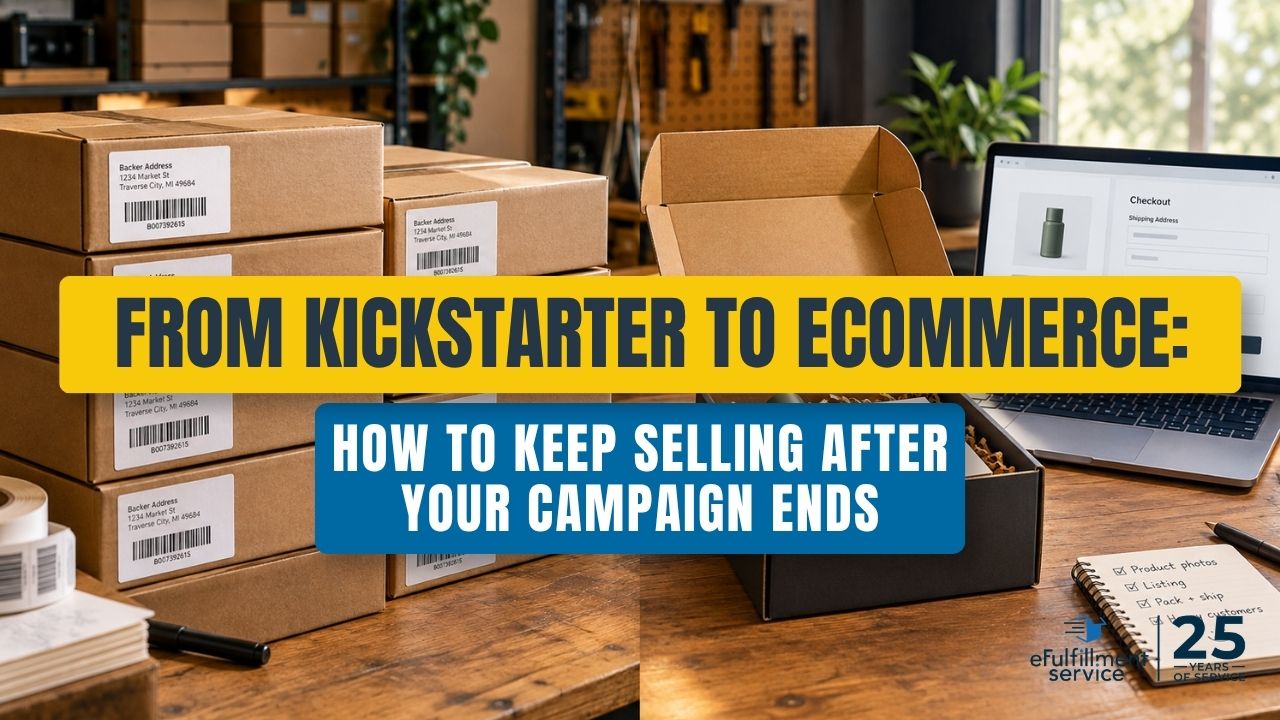
Mayku’s FormBox vacuum former raised $588,775 on Kickstarter, then sold another $192,256 through a pre-order store after the campaign closed, according to BackerKit’s write-up of the campaign. That second number is roughly a third of the first, and most of the store’s traffic came from paid ads.
Creators tend to plan as if demand stops when the countdown hits zero. The manufacturing order and the Kickstarter fulfillment plan both get sized to one fixed backer list, so there are no units left for the buyers who arrive a week later. Turning a campaign into an ongoing business starts with planning for those buyers before the manufacturing order is placed.
How to Keep Selling After Your Campaign Ends
Why demand keeps coming after the deadline
A campaign page keeps getting traffic after it closes, because backers post photos when their rewards arrive and people who missed the deadline go looking for somewhere to buy.

The platforms have built tools for this. Kickstarter made Late Pledges available to all creators on May 21, 2024, so a successfully funded project can keep accepting pledges on the same page. Indiegogo has run InDemand for years, letting funded campaigns keep taking orders after they close, as long as sales keep coming in.
That leaves a supply problem. If the manufacturing run matches the backer count exactly, every late buyer is a sale you can’t fill until the next production run.
How much post-campaign demand to expect
Nobody publishes a reliable average. Two examples BackerKit has shared in its post-campaign guide show how far apart results can land, though neither gives a time window for its pre-order figure:
| Campaign | Crowdfunding total | Post-campaign pre-orders |
|---|---|---|
| FormBox (Mayku) | $588,775 | $192,256 via BackerKit pre-order store |
| Trunkster | $1,395,370 on Kickstarter | $110,895 on Indiegogo InDemand, which has accepted projects first funded on Kickstarter |
Four ways to keep taking orders
Each option trades control for convenience. A common sequence is a platform tool right after the campaign, then your own store once inventory is in hand. A pre-order store sells units still being made, and your own store sells what’s already on the shelf.
| Option | Best for | What you give up |
|---|---|---|
| Kickstarter Late Pledges | Catching latecomers on the page they already found | Kickstarter still takes its usual 5% platform fee on late pledges, plus payment processing |
| Pledge manager pre-order store (BackerKit, PledgeBox, etc.) | Selling add-ons and pre-orders while production is still underway | Another platform fee and another system to reconcile |
| Indiegogo InDemand | Funded campaigns that want to keep a pre-order page running | Campaigns that don’t raise Indiegogo’s minimum payout amount within six months get closed automatically |
| Your own store (Shopify, WooCommerce, BigCommerce) | Selling in-stock product indefinitely, owning customer data | You drive all the traffic yourself |
Late pledges and pre-orders are still promises
Every late pledge and pre-order is another unit owed from a production run that may not exist yet. Cap the late pledge tier at the units you can actually produce, and add what comes in to the manufacturing order before it’s placed.
If you’re still deciding how your pledge manager should hand orders to a warehouse, our guide to connecting a pledge manager to a 3PL covers the export formats and timing.
Ship late pledges with the original rewards
Once your production run lands, eFulfillment Service ships late pledges and pre-orders alongside the original backer rewards, so latecomers aren’t stuck in a separate queue.
Size the production run for life after the campaign
The cheapest moment to make extra units is during the main production run, when tooling and setup are already paid for and a container is already booked. A second run later usually means another minimum order quantity (MOQ) and another ocean or air freight bill. That argues for ordering surplus. It also ties up cash the campaign may not have, so the right number depends on your margins and how much of the funds are already spoken for.
A simple way to set the surplus
- Start with the confirmed backer count, plus a replacement buffer for damaged or lost shipments.
- Add late pledges and pre-orders already collected at the time you place the order.
- Add an ecommerce estimate for the months until a second production run could realistically land.
- Check the total against cash on hand. Manufacturing, freight, platform fees, and fulfillment for the backer list come first.
Step 3 is a guess, so label it as one in the budget. A conservative estimate beats a hopeful one here.
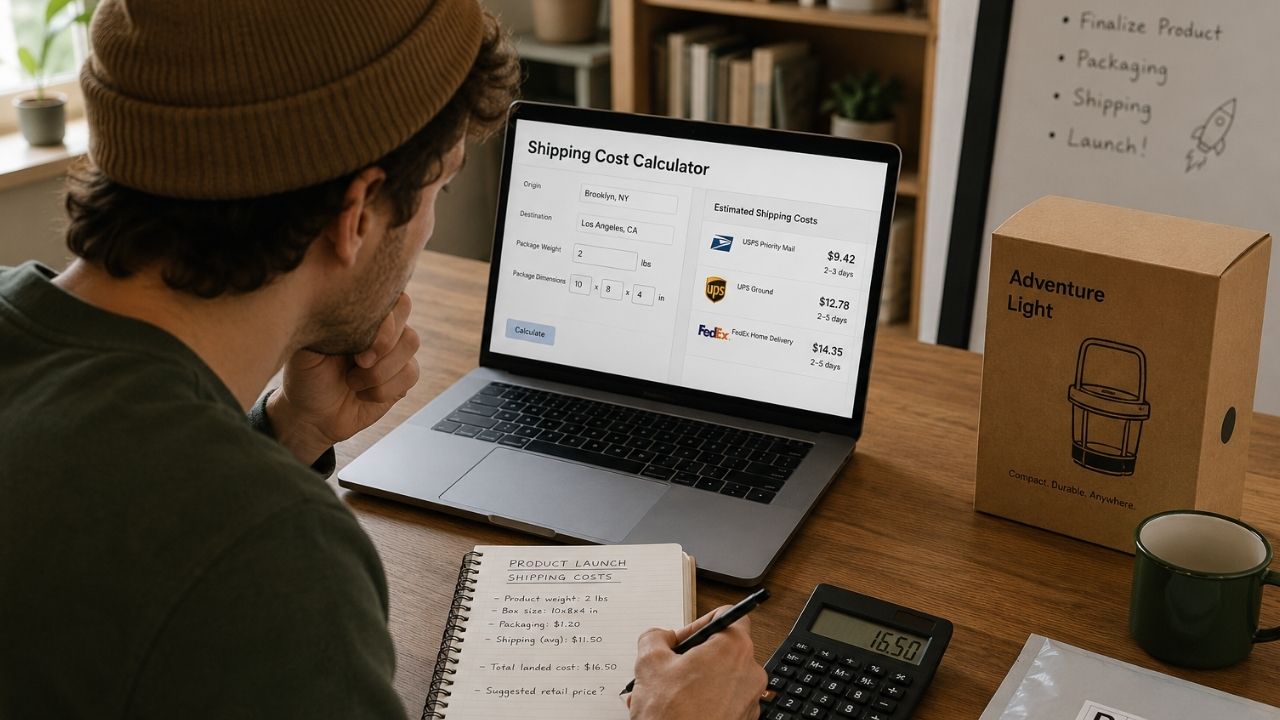
Our Kickstarter shipping cost calculator helps estimate the fulfillment side of step 4 before surplus stock eats the budget.
Plan storage for the surplus you do order
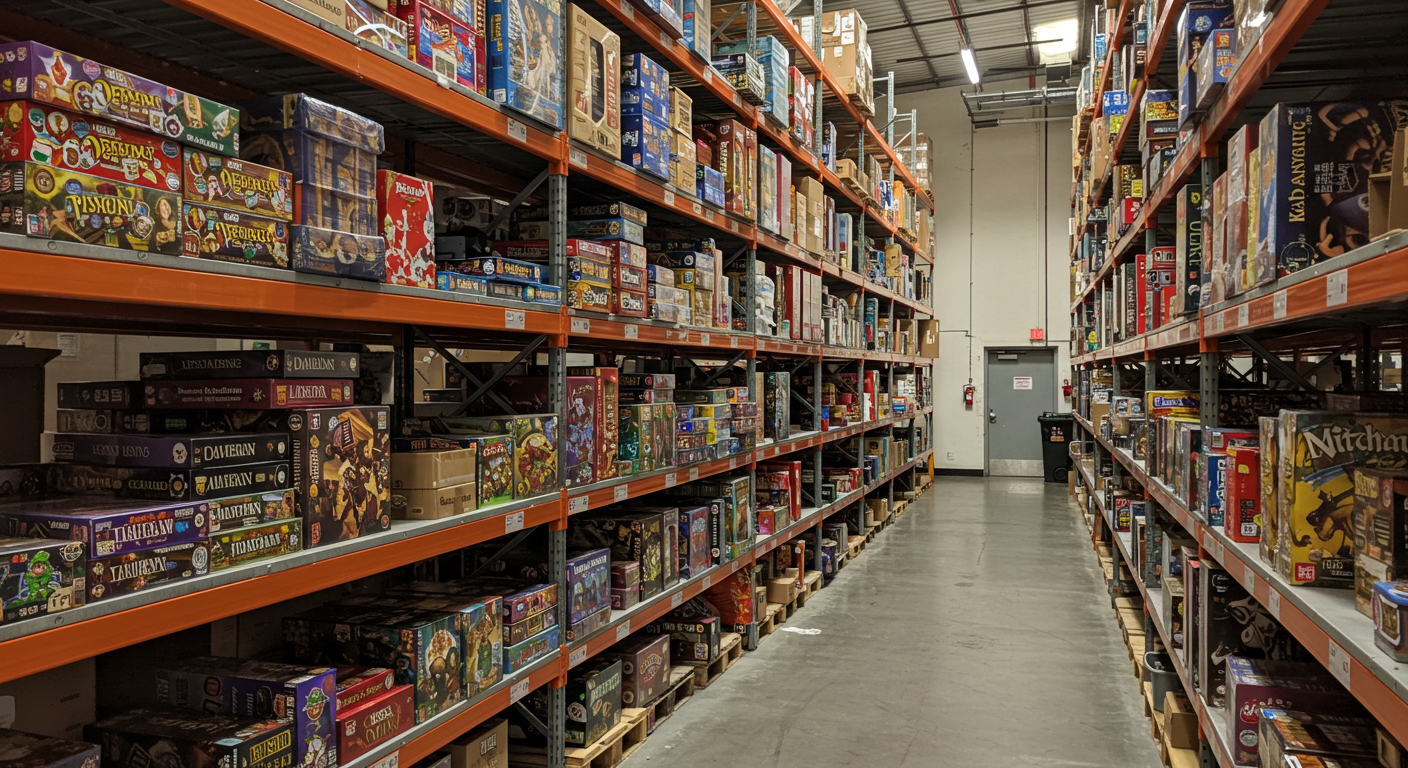
eFulfillment Service can quote your order volume, kit complexity, and climate-control needs as separate, itemized lines instead of one blended “premium storage” number.
Fulfillment changes from one big batch to daily orders
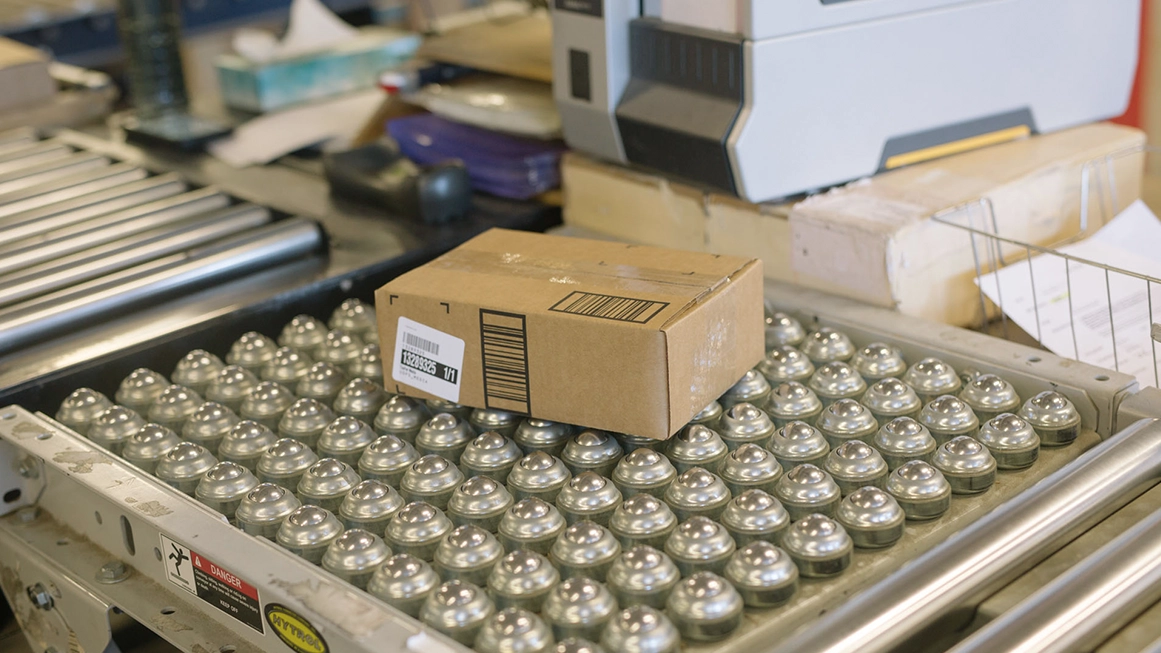
Reward fulfillment and ecommerce fulfillment run on different clocks. A campaign ships a fixed list in one wave. A store ships a few orders a day with no end date.
| Reward fulfillment | Ongoing ecommerce | |
|---|---|---|
| Order shape | Fixed backer list, imported by CSV | Orders arrive continuously through a store integration |
| Timing | One wave, ideally shipped over a few days | Daily, with a ship-by expectation on each order |
| SKUs | Many tier and add-on combinations | Usually fewer, simpler SKUs |
| Inventory | Drawn down to near zero | Needs reorder points and safety stock |
| Customer contact | Updates on the campaign page | Tracking emails, returns, support tickets |
The move from batch to daily orders is where some creators find out their campaign 3PL was a poor fit. Some fulfillment providers are built around one-time batches, and their pricing or minimums don’t suit a store shipping a few orders a day.
What to ask a 3PL before the rewards ship
- Can you handle both? One partner for the backer wave and the daily orders that follow avoids moving inventory between warehouses mid-launch.
- Does my store connect directly? eFulfillment Service has a direct Shopify integration and also connects to Amazon and eBay for sellers on more than one channel.
- Are there order minimums? The slow months after the campaign wave can fall below a provider’s minimum. eFulfillment Service has no minimum order requirements for ongoing orders.
- How do returns work? Store customers will expect a returns process that a campaign never needed. See our guide to handling Kickstarter returns and customer service.
Ship rewards and store orders from one warehouse
eFulfillment Service handles the reward wave and the daily store orders after it, with no long-term contract.
Turn backers into customers
Backers paid for the product before it existed, and some of them will buy an expansion or a gift if someone asks. Kickstarter’s campaign page won’t hold that customer relationship for long, since updates only reach backers of that one project.

Move the relationship somewhere you own
- Collect emails with consent in the pledge manager survey. Ask backers to opt in to product news, separately from shipping updates.
- Put a store link in the box. A printed insert with your store URL reaches every backer when they open the box.
- Post a final campaign update pointing to the store once the last wave ships, so the page’s traffic has somewhere to go.
Protect what backers paid for
Backers usually got the product at its lowest price. If the store opens at the same price or lower within weeks, early supporters notice, and they say so in the comments.
A safer pattern: keep campaign-exclusive items exclusive, and price retail above the campaign tier. Late pledge tiers can sit between the two.
Plan the store launch while rewards are still shipping
eFulfillment Service can add branded inserts, thank-you notes, and discount codes to every reward box during kitting and assembly, so the first marketing your store gets rides along with the rewards.
Marketplaces and retail after the store
A store is usually the first step. Marketplaces and wholesale come later, once there’s steady stock and a second production run in sight. We haven’t seen good data on how often crowdfunded products succeed on Amazon, so it’s probably safest to treat the first listing as a test.
- Amazon brings search traffic but adds its own inventory rules and fees. Some creators start with FBM (merchant-fulfilled) through a 3PL before deciding whether to send stock into FBA (Fulfillment by Amazon).
- Retail and distribution trade margin for volume. Stonemaier Games, one of the most visible tabletop crowdfunding success stories, eventually stopped using Kickstarter and sold through distributors and retailers, while still keeping a direct webstore.
- Etsy and TikTok Shop suit handmade and visually driven products, and both connect to most 3PL order systems.
Every new channel is another place inventory has to be counted, and selling the same stock on your own store and on Amazon without synced counts is how oversells happen.
Some creators run a second campaign instead of opening more channels. Our Indiegogo vs. Kickstarter comparison covers the platform side if you’re planning a second campaign alongside the store.
Common mistakes when moving from campaign to store
- Ordering exactly the backer count. Late pledges, replacements, and store demand all draw from the same run.
- Opening your in-stock store before rewards ship. Backers who see retail customers getting the product first feel skipped.
- Undercutting the campaign price. It penalizes backing early.
- Keeping a 3PL built only for batch shipping. It forces a warehouse move right as the store launches.
- Leaving customer data on the platform. Without an email list, the next launch starts from zero.
Already outgrown your campaign fulfillment setup?
If your current provider only wants the one-time backer wave, eFulfillment Service can take over the ongoing orders and connect your store directly.
FAQs
Can I keep taking pledges on Kickstarter after my campaign ends?
Should I use late pledges or open my own store right away?
Do I need a different 3PL for ecommerce orders?
How much extra inventory should I order for post-campaign sales?
Is a 3PL worth it if store sales stay small?
When should I open my own in-stock store?
Key Takeaways
- Demand continues after the deadline, and marketing decides how much. FormBox sold $192,256 in post-campaign pre-orders on top of a $588,775 Kickstarter, with most of its store traffic coming from paid ads.
- Late pledges and pre-orders are inventory commitments. Cap those tiers at the units you can actually produce.
- The main production run is the cheapest time to make surplus stock, but make only as much as cash allows after backers are covered.
- Batch reward shipping and daily ecommerce orders need different fulfillment setups. Choose a 3PL that handles both so inventory doesn’t move mid-launch.
- Backers are your first customers. Move them to an email list you own and keep the campaign price below retail.
Whatever stage you’re in, the fastest way to find out if a provider will actually deliver what they promise is to ask the questions in this guide before you sign, not after your first invoice arrives. eFulfillment Service will walk through exact, itemized pricing and a real point of contact from the first conversation. Get a free quote and see how DTC fulfillment works when nothing is hidden until month two.
0 Comments