
The usual advice is to outsource fulfillment once you cross some order count: 500 a month, 1,000, pick a number. For a beauty brand, that number means very little on its own. A skincare line shipping 300 orders a month can be in worse operational shape than an apparel brand shipping 2,000, because most units beauty sends out carry an expiration date, a lot number, and often a shade.
The ways beauty fulfillment fails are also louder than in most categories. A late hoodie is an annoyed customer. A serum that ships two months past its expiration date, or a foundation sent in the wrong shade, turns into a one-star review with a photo attached and a chargeback. And if a degraded or contaminated product triggers a customer reaction, current FDA cosmetics rules can put a reporting obligation on top. The right moment to bring in help is when the cost of a single mistake grows larger than the cost of the help itself, whatever your order count.
This guide lays out the thresholds that matter for beauty, from product and compliance to channel mix and founder capacity, and what to do at each stage.
Why beauty hits the fulfillment ceiling earlier

Most DTC categories can self-fulfill comfortably into four-figure monthly order counts. Beauty brands tend to hit the wall between 300 and 1,000 orders a month, well before the volume alone would seem to justify a change. The reason is that the product fights back.
Beauty inventory has properties most products don’t:
- Shelf life. Active ingredients degrade. Retinol and vitamin C lose potency on a clock, so your stock carries an expiration date that has to be rotated and tracked.
- Temperature and humidity sensitivity. Serums and emulsions can separate in a hot garage. Pressed powders and palettes absorb moisture. A studio or spare room rarely holds a stable climate.
- Fragile, premium packaging. Glass droppers and pumps break in transit far more easily than a folded t-shirt, and the damage is visible the moment the box opens.
Hazmat classifications. Fragrances are typically a Class 3 flammable; aerosols fall under Class 2.1; some beauty devices with lithium batteries carry their own shipping rules. These labels govern how the product can legally move.
On top of the physical complexity sits SKU density. A single foundation launch can mean 40 shades, each a separate SKU, several of which look nearly identical in a bin. Add sizes, finishes, seasonal collections, and limited editions, and the catalog multiplies fast. Picking accuracy drops exactly where it matters most, and a wrong shade becomes a public post within hours of arriving.
Rule of thumb: if a picking mistake on your product creates a public complaint rather than a quiet exchange, your error tolerance is lower than your order count suggests, and your fulfillment ceiling is closer than you think.
The real signals that tell you it’s time to outsource

Volume is the signal founders watch because it’s the easiest to see. The signals that predict real trouble are about risk and capacity, and they show up well before the order count looks alarming.
- Product-integrity failures are reaching customers. A leaked serum goes out, or an expired unit ships because nobody was tracking batch dates. Once this happens more than once, the system is telling you it can’t hold the standard.
- You can’t answer “how many of lot X do I have, and when does it expire?” on demand. If reconciling stock means an afternoon with a spreadsheet and a shelf count, your inventory data has already stopped being trustworthy.
- A demand spike outran you. A creator video or a TikTok moment pushed orders from 30 a day to 500, and you either sold out or shipped late through the one window that mattered. Winning the attention and losing the sale is the most expensive miss in beauty.
- Compliance is now legally your problem (more on this below). The moment you’re responsible for traceability and adverse-event reporting, informal fulfillment stops being a time sink and becomes a legal liability.
- You are the bottleneck. Packing orders until midnight is time not spent on formulation or the community that built the brand. The founder is the most expensive picker in any company.
Any one of these can justify outsourcing on its own. Two or more at once means the decision is overdue, regardless of what the monthly order total says.
Fulfillment with a Personal Touch.
See How Using a 3PL like eFulfillment Service sellers saves time. Get a Free Quote from eFulfillment Service Today!
The compliance line founders cross without noticing

The Modernization of Cosmetics Regulation Act (MoCRA) changed what the FDA requires of cosmetics companies, and most of those obligations don’t care how many orders you ship. They attach to the fact that you’re putting a cosmetic on the market at all.
What MoCRA puts on the brand:
- Facility registration and product listing. The FDA expects registered facilities and a listing for each marketed product.
- Serious adverse event reporting within 15 business days. Hard to meet unless you can trace a complaint to its production lot.
- Safety substantiation and recordkeeping. You keep records that hold up if the agency asks.
The operational consequence is lot-level traceability. If a customer reports a reaction, you need to know which batch they received and where the rest of that batch went, fast. A shoebox of handwritten order notes doesn’t meet that bar.
Beauty also runs on FEFO (first expired, first out) rather than plain FIFO. Most generic 3PLs and most DIY setups pick whatever’s in front. For products with active ingredients, picking the oldest-expir
There’s no reliable public data on how many indie beauty brands are actually MoCRA-compliant, and most founders learn the requirements late. Once the rules apply to you, “I’ll sort out fulfillment later” quietly starts costing money. Better to know that before the point it bites, not after.
Hazmat is the other line. If your catalog includes fragrances or aerosols, a 3PL that can’t legally store and ship hazardous materials is off the table entirely, whatever its price. Plenty of brands only learn their provider can’t handle a Class 3 flammable after they’ve already migrated inventory.
What outsourcing costs, and what staying costs
Outsourcing fulfillment has a visible price. Self-fulfilling has an invisible one, and for beauty the invisible bill is usually the larger of the two.

The visible cost of a 3PL generally breaks into three buckets:
- Receiving. Logging inbound inventory in and shelving it.
- Storage. Charged by the space you occupy, per pallet or bin per month.
- Pick and pack. A per-order fee, often with a small per-additional-item charge, plus the shipping label.
Exact rates swing widely with product size and packaging complexity. A brand shipping small, light skincare units has a very different cost profile than one shipping heavy glass sets.
Be skeptical of any 3PL, EFS included, that quotes a firm per-order rate before seeing your catalog. There’s no benchmark figure worth trusting until someone prices your actual SKUs.
The hidden cost of staying in your studio is harder to see on a P&L but tends to be bigger:
- Founder hours at the packing table instead of on the business.
- Spoilage and expiry write-offs when stock ages out because nothing enforced rotation.
- Oversells and stockouts during spikes, each one a lost sale and sometimes a lost customer.
- Review and refund damage from damaged or wrong-shade shipments, which also drags on acquisition cost because the reviews are public.
What to look for from a beauty 3PL
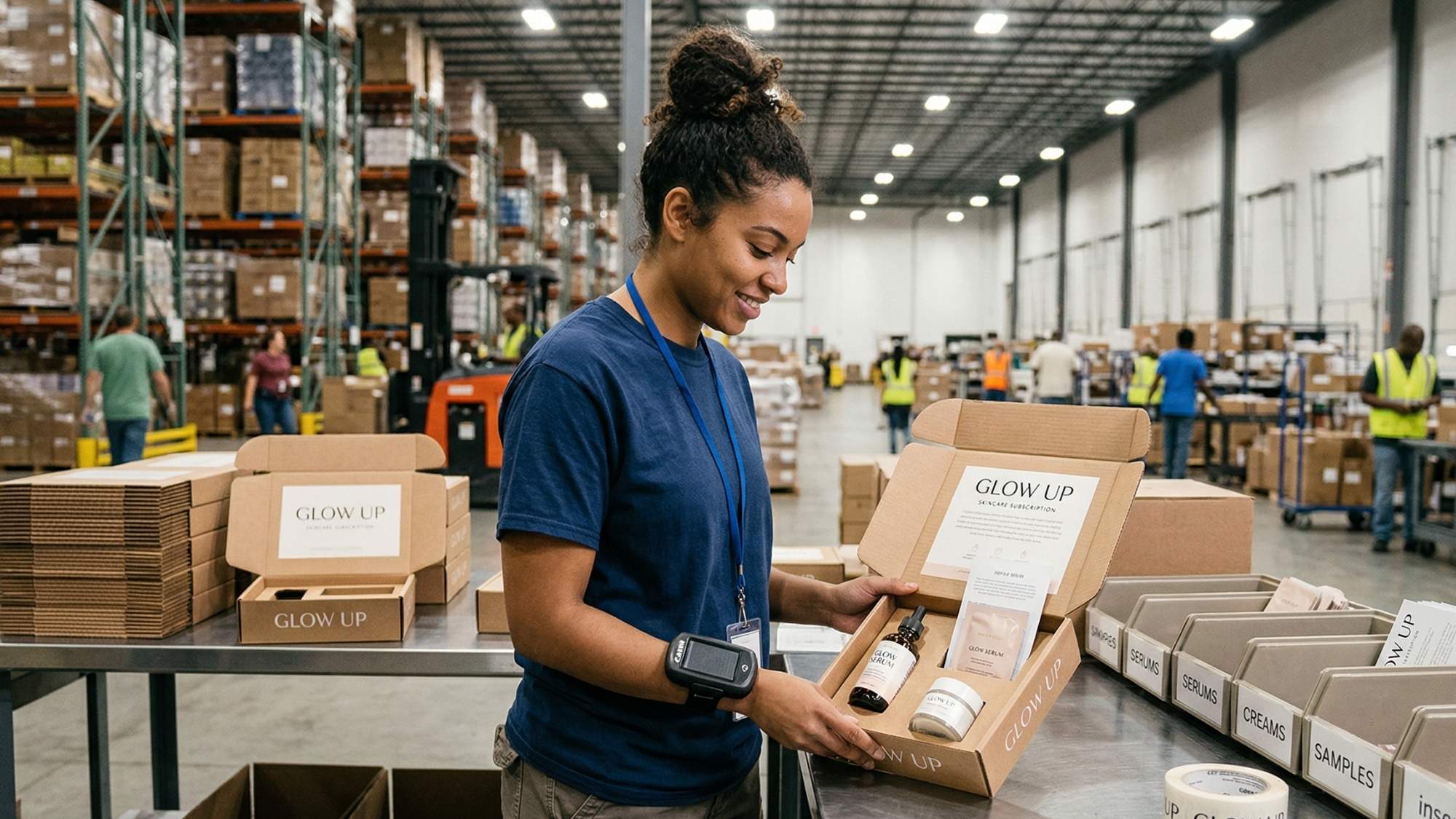
Not every 3PL can fulfill beauty, and the ones that can’t rarely say so up front. Before moving any inventory, confirm the provider clears the hard gates below. The first three are non-negotiable for essentially any beauty catalog, hazmat capability matters the moment you ship fragrances or aerosols, and the rest separate a true partner from a warehouse that happens to have space.
|
Requirement |
Why it matters for beauty |
|---|---|
|
FDA-registered facility handling |
MoCRA-era expectation; a baseline for working with regulated cosmetics |
|
Lot / batch tracking + FEFO rotation |
Enables 15-business-day adverse-event reporting and prevents shipping degraded product |
|
Climate-controlled storage |
Formulas separate or spoil in warehouses that run too warm |
|
Hazmat capability (Class 3, Class 2.1) |
Fragrances and aerosols are excluded by many generic 3PLs |
|
Real-time inventory visibility |
You should always be able to answer “what do I have, by lot” |
|
Protects the unboxing experience, PR mailers, and GWP bundles |
|
|
Omnichannel is the norm; manual syncing creates oversells |
|
|
No punishing volume minimums |
Small brands shouldn’t be deprioritized or penalized for size |
|
A human account contact |
When something goes wrong at 4 p.m. on a launch day, you need a person, not a ticket queue |
If a prospective partner can’t speak fluently to FEFO and hazmat handling in the first conversation, they probably don’t fulfill much beauty. That’s the fastest disqualifier.
Fulfillment with a Personal Touch.
See How Using a 3PL like eFulfillment Service sellers saves time. Get a Free Quote from eFulfillment Service Today!
How to switch to a 3PL without a disaster
The fear that keeps brands in a bad setup (their own garage, or a 3PL that doesn’t get beauty) is that switching will break something during the move. It’s a reasonable fear, and it’s manageable.
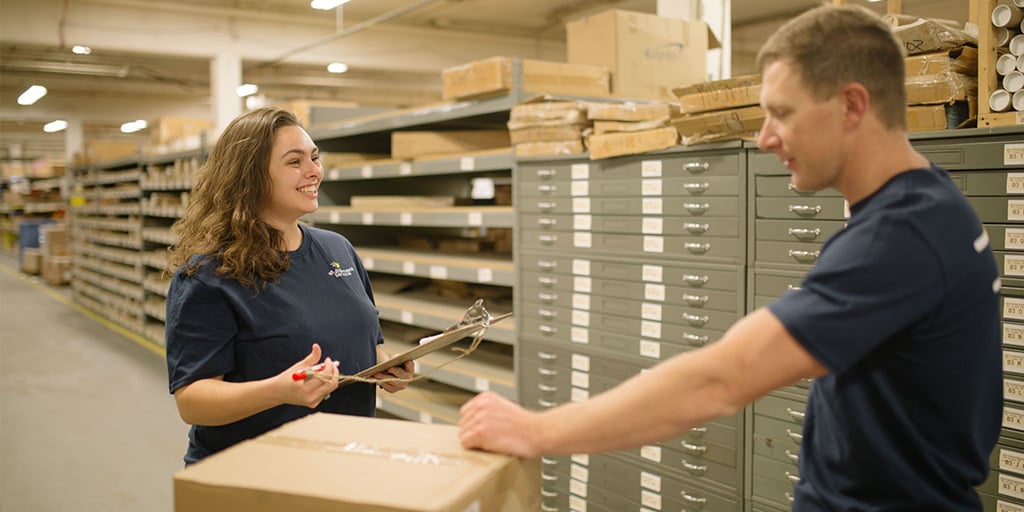
A sane migration looks like this:
- Reconcile before you ship anything. Get an accurate, lot-level count of what you have. A migration built on bad starting numbers inherits every discrepancy.
- Overlap, don’t hard-cut. Keep enough inventory to cover orders while the 3PL receives and shelves the bulk. A gap mid-move is how you end up personally shipping from the studio again.
- Start with one channel if you can. Route DTC through the 3PL first, confirm counts and timing hold, then add marketplaces and TikTok Shop.
Don’t migrate into a spike. Move during a quiet stretch, and avoid the week before a launch or a known viral window.
Done this way, the switch costs a few weeks of overlap and a learning curve rather than a cliff-edge.
Fulfillment with a Personal Touch.
See How Using a 3PL like eFulfillment Service sellers saves time. Get a Free Quote from eFulfillment Service Today!
Frequently asked questions
There's no universal number, and volume is the wrong lead metric for beauty. Many brands reach the tipping point between 300 and 1,000 orders a month, but the real triggers are product-integrity failures, untrustworthy inventory, a spike you couldn't fulfill, new compliance obligations, and founder burnout. If two of those are true, order count is beside the point.
FBA can handle Amazon volume, but it isn't built around beauty's lot tracking, FEFO rotation, or your branded unboxing, and fulfilling your own storefront from FBA stock (through Amazon's Multi-Channel Fulfillment) hands Amazon control of the box. Many brands run a channel-split (FBA for Amazon, a 3PL for everything else), but leaning on FBA alone usually leaves the compliance and brand-experience gaps unaddressed.
FEFO means "first expired, first out." You ship the unit that will expire soonest, instead of the oldest received or whatever sits nearest. Because beauty products degrade on a timeline, FEFO is how you avoid sending a customer something that's past its best before it even arrives. Many generic fulfillment operations don't enforce it.
Only if it's set up for hazmat. Fragrances are generally a Class 3 flammable and aerosols fall under Class 2.1, and plenty of 3PLs quietly exclude both. Confirm hazmat capability for your specific SKUs before signing anything.
Choose a partner that supports kitting and custom packaging (branded tissue, inserts, specific mailers, gift-with-purchase bundles) and document your pack-out in detail. A capable beauty 3PL treats the unboxing as part of the spec rather than an afterthought. Ask to see a sample pack-out before you commit.
It depends heavily on your order profile and packaging needs, so be wary of any flat number offered before anyone has looked at your orders. The monthly fee only means something next to what spoilage and damage are costing you, plus the hours you spend packing.
Key Takeaways
- Volume is the wrong lead metric for beauty. The tipping point often arrives between 300 and 1,000 orders a month, far earlier than in other DTC categories, because the product itself is perishable, lot-tracked, and shade-specific long before volume becomes the problem.
- Outsource when the cost of a mistake outgrows the cost of help. Public reviews, chargebacks, spoilage write-offs, and the occasional FDA reporting event cost more than predictable monthly fulfillment fees.
- Watch five signals rather than the order count. Product-integrity failures reaching customers, inventory you can't trust by lot, a spike you couldn't fulfill, new MoCRA compliance load, and the founder becoming the bottleneck. Two at once means the decision is overdue.
- Compliance quietly makes DIY a liability. MoCRA facility registration, 15-business-day adverse-event reporting, lot-level traceability, and FEFO rotation attach to the brand regardless of size.
- Not every 3PL can do beauty. Lot tracking, FEFO, climate-controlled storage, and hazmat capability are hard gates. If a provider can't discuss them fluently, they don't fulfill much beauty.
- Migrate carefully, and never during a spike. Reconcile lot-level counts first, overlap inventory, start with one channel, and avoid moving the week before a launch or a known viral window.
Which stage are you in?
Under 300 orders a month. You can likely still self-fulfill, but start building the habits now: track lot numbers and expiration dates from day one, and store product somewhere climate-stable. If you sell fragrances or aerosols, learn the hazmat rules before volume forces the issue. The goal is to not be starting from zero when a spike or a compliance deadline arrives.
300 to 2,000 orders a month. The operational wall usually arrives in the lower half of this band, so this is the zone to be seriously evaluating a 3PL. If you've hit any two of the signals above (integrity failures, untrustworthy inventory, a missed spike, new compliance load, or your own time disappearing into packing), begin the conversation now rather than after the next bad month. Model the cost against what self-fulfillment is quietly costing you.
Over 2,000 orders a month. If you're still self-fulfilling or working with a 3PL that doesn't specialize in beauty, the risk is no longer theoretical. One mishandled viral moment or compliance miss can set the brand back meaningfully. Prioritize a partner with lot tracking, FEFO, climate control, hazmat, and real-time visibility, and plan a careful, overlapping migration.
Wherever you are, the decision comes down to a single question: has the cost of a mistake outgrown the cost of help? For beauty, that line arrives earlier than the order count suggests, and crossing it unprepared is the expensive way to find out.
If you're weighing that decision now, eFulfillment Service can model your orders and storage against real numbers so you can compare the cost of outsourcing to the cost of staying put. Request a quote and get a straight answer for your specific catalog.
Note: Regulatory requirements under MoCRA continue to evolve. Consult with a qualified regulatory affairs professional for advice specific to your product line and business structure.


0 Comments