
Quick Answer:
A 4PL (fourth-party logistics) provider manages your entire supply chain on your behalf — selecting warehouses, coordinating carriers, and overseeing your 3PL partners — all from a single point of accountability. Unlike a 3PL, which executes your fulfillment, a 4PL designs and runs the system behind it. It’s best suited for brands doing $10M+ in revenue with operations across multiple warehouses or countries.
If you’ve an enterprise level brand, but haven’t yet figured out how to manage multiple warehouses, four carriers, and a customs broker without losing your mind, this is the article for you.
Most ecommerce sellers are familiar with 3PLs. You send your inventory to a warehouse, they pick and pack your orders, and packages go out the door. A good 3PL handles a tremendous amount of operational complexity on your behalf. But as brands scale into enterprises, complex multi-channel, or international territory, a different kind of challenge emerges, not with the 3PL’s execution, but with the strategic coordination layer above it. Who’s designing the network? Who owns the big picture across all your partners? That’s the gap the 4PL model is built to fill.
Here’s exactly what it is, when it makes sense, and what it actually costs.
The Logistics Hierarchy: 1PL Through 5PL Explained

The “PL” in 3PL, 4PL, and 5PL stands for “party logistics.” The number tells you how many layers of outsourcing are involved — and how strategic that outsourcing gets.
| Model | Who Runs It | What They Do | Best For |
|---|---|---|---|
| 1PL | You | Handle your own storage and shipping | Small, local producers |
| 2PL | A carrier | Provide transport or storage only | Startups needing basic freight |
| 3PL | A fulfillment partner | Warehouse, pick/pack, ship your orders | Growing ecommerce brands |
| 4PL | A strategic integrator | Orchestrate your entire supply chain network | Complex, multi-node enterprises |
| 5PL | An AI-driven ecosystem manager | Optimize entire networks of supply chains | Global omnichannel giants |
The pattern is straightforward: as your operation gets more complex, higher-tier models take on more of the strategic thinking. Most ecommerce sellers live in the 3PL tier. The 4PL tier starts making sense when coordinating your 3PLs becomes a full-time job in itself.
How A 4PL Actually Works
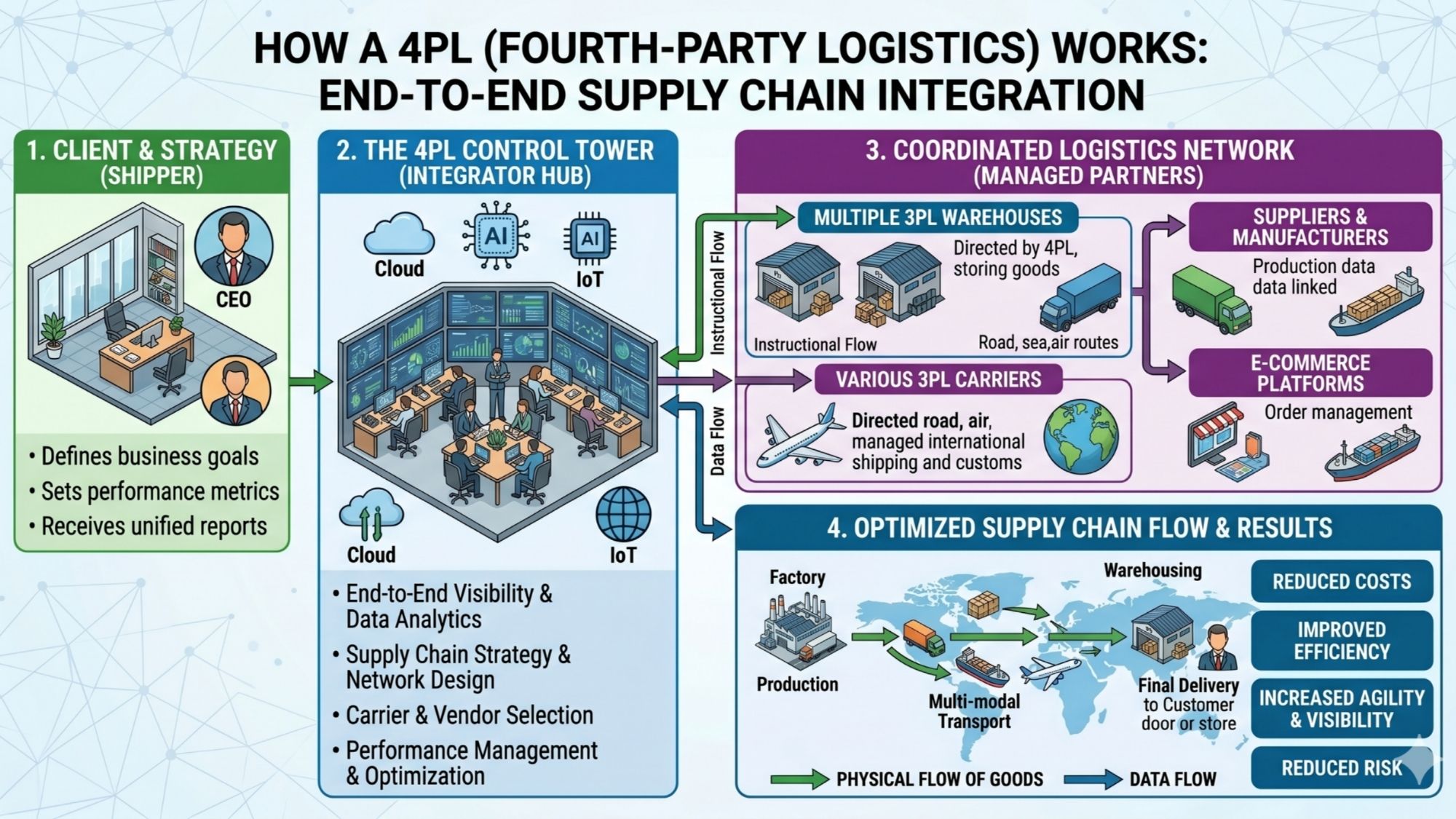
A 4PL provider is sometimes called a Lead Logistics Provider (LLP). The defining trait: they typically don’t own warehouses or trucks. Their value is intellectual — they design, govern, and optimize the network that other companies physically operate.
Think of them as a general contractor for your supply chain. They don’t swing hammers, but they’re responsible for the finished house.
The 4PL operating model has five layers:
- Network design. They determine where inventory should live, which regions need coverage, and how to route orders for the lowest cost and fastest delivery.
- Partner selection and governance. They identify, contract, and manage your 3PLs, carriers, and customs brokers — and hold them accountable to performance metrics.
- System integration. They connect your WMS, TMS, and ERP into a unified data layer so you have one source of truth instead of five fragmented dashboards.
- KPI management. They track end-to-end performance across every vendor in the network — not just individual SLAs, but whether the whole system is hitting your delivery and cost targets.
- Continuous optimization. They analyze performance data and make ongoing recommendations for cost reduction, process improvements, and market expansion.
The result is that you deal with one partner instead of managing a small army of logistics vendors yourself.
4PL vs. 3PL: The Core Difference
The short version: a 3PL executes your logistics. A 4PL manages the system behind your logistics.
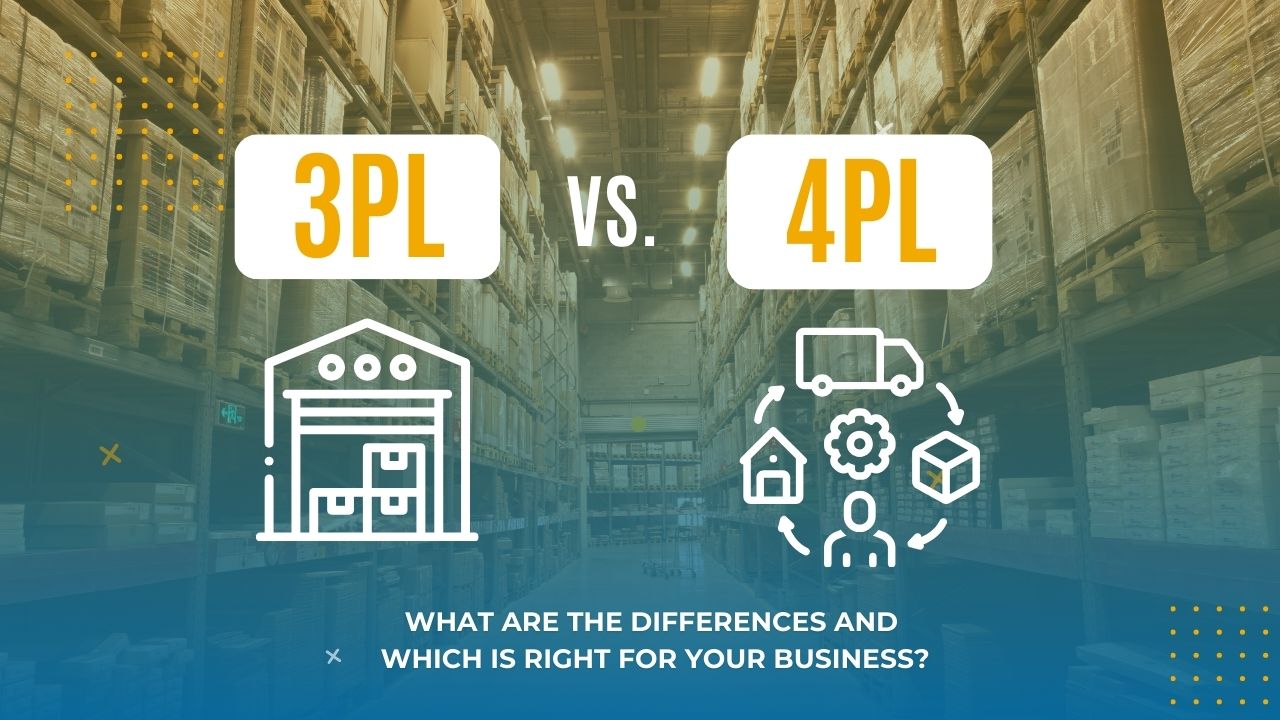
With a 3PL (Third Party Logistics), you’re still making the strategic calls. You decide which carriers to use, when to add a new warehouse, how to split inventory between locations. The 3PL handles the physical work.
With a 4PL, you hand over that strategy. They pick the vendors, design the network, and own the outcomes. You get a single point of contact instead of three vendor relationships to manage.
| Dimension | 3PL | 4PL |
|---|---|---|
| Primary goal | Execute fulfillment tasks efficiently | Optimize the entire supply chain network |
| Asset ownership | Usually owns warehouses and equipment | Asset-light — manages others’ assets |
| Who owns the strategy? | The merchant | The 4PL |
| Technology focus | WMS/TMS for their own operations | Integrated control tower across all partners |
| Accountability | Scoped to their warehouse and services | End-to-end outcome ownership |
| Best for | SMBs with straightforward fulfillment needs | Enterprise operations with global complexity |
One thing worth understanding as you evaluate the 4PL market: true 4PLs are asset-light by design. Because they don’t own warehouses or trucks, their value comes entirely from the quality of their network design and vendor governance — not from filling their own facilities. When you’re vetting providers, ask directly whether they own physical assets and how that factors into their vendor recommendations.
When Does a Brand Actually Need a 4PL?

Not every ecommerce seller does. In our experience at eFulfillment Service, most brands don’t hit the complexity threshold that justifies a 4PL until they’re well into the multi-million-dollar revenue range. Here’s a rough roadmap of where different logistics models fit:
- Under $1M/year: A single 3PL is almost always the right move. Keep it simple.
- $1M–$10M/year: A tech-enabled 3PL — one with solid integrations, real-time inventory visibility, and multi-warehouse capability — handles most of what you need.
- $10M–$50M+ per year: This is where the math starts to shift. If you’re running multiple warehouse locations, managing several carrier relationships, and your operations team is spending more time coordinating logistics than building the business, a 4PL conversation makes sense.
Beyond revenue, there are some specific signals that you’re hitting the 4PL readiness threshold:
- You’re managing three or more logistics vendors across different geographies
- Monthly order volume is hitting 2,000–3,000+ and the strategic coordination across multiple partners has become its own job
- Annual logistics spend is $2M+ and you have no visibility into where the inefficiencies are
- Your team spends hours every week chasing shipment updates or reconciling data across systems
- You’re planning rapid international expansion and don’t have the regional expertise in-house
If you’re checking two or more of those boxes, the coordination overhead is already costing you — the question is just whether you’re measuring it.
What Does a 4PL Actually Cost?
4PL pricing is more complex than a 3PL’s transactional billing model. The typical components:
- Implementation fee: $50,000–$500,000 one-time, covering network design and technology integration
- Management fee: Usually 5%–12% of total logistics spend per month, or a fixed monthly retainer
- Technology/platform fee: $10,000–$50,000/year for the visibility and orchestration tools
- Gain-share arrangements: Some 4PLs take a percentage of the cost savings they generate — which aligns their incentives with yours
Those numbers look steep. Here’s why they often pencil out.
A brand spending $5M/year on logistics that hires a 4PL at a 6% management fee is paying $300,000/year for coordination. If that 4PL delivers a 15% reduction in total logistics costs — which is well within the industry’s documented 10%–25% range — the gross savings are $750,000. Net of the management fee, you’re saving $450,000 per year. That’s typically a payback period of 18–24 months including implementation costs.
The hidden savings matter too: reduced inventory carrying costs, fewer stockouts, and the internal bandwidth your team gets back when they stop managing logistics vendor relationships all day.
One documented case involved a Fortune 500 semiconductor company that saved $5.6 million in annual operating expenses and freed up $6.9 million in working capital after implementing a 4PL model.
That’s an enterprise example, but the proportional math holds at smaller scales.
The Real Risks of 4PL (Don’t Skip This Section)

The 4PL model has genuine advantages, but it comes with risks that are worth taking seriously before you sign anything.
- Loss of operational control. You’re handing over strategic decision-making to a third party. If the 4PL doesn’t provide real transparency, you can become disconnected from your own supply chain.
- Conflict of interest. Not all providers operating in the 4PL space are truly asset-neutral. If a provider also owns physical infrastructure, ask how that’s accounted for in their vendor recommendations. An independent 4PL — one without assets of their own — has a cleaner incentive structure. Verify this upfront.
- Implementation burden. Getting your systems integrated with a 4PL’s control tower is a significant project. Budget time and internal resources accordingly.
- Exit difficulty. If the relationship sours, extracting yourself is hard. The 4PL may have become the central hub for your vendor relationships and data flows. A clear exit strategy written into the contract isn’t paranoia — it’s basic risk management.
- Data security. You’re sharing sensitive supplier and customer data. Vet their security protocols rigorously.
| Risk | What to Do About It |
|---|---|
| Loss of visibility | Require real-time data access in your contract — you own your data |
| Conflict of interest | Ask providers directly whether they own physical assets and how that’s disclosed in their recommendations |
| Data security | Conduct a full security audit before signing; require breach notification clauses |
| Over-dependency | Define a documented exit/transition plan from day one |
| Implementation cost overrun | Negotiate a phased rollout with defined milestones |
How to Implement a 4PL: A Practical Roadmap
If you decide to move forward, here’s how a typical implementation actually goes:
- Needs assessment. Document your current complexity — number of warehouses, carriers, monthly order volume, annual logistics spend, and the specific pain points costing you money or time.
- Market research and RFQ. Vet potential 4PL partners on industry expertise, geographic coverage, technology stack, and — critically — their asset ownership structure.
- Cost-benefit analysis. Build a detailed business case. Model out the management fees against projected efficiency gains before committing.
- Integration pilot. Don’t go all-in on day one. Start with a pilot in one region or for one product line. Connect systems in a sandbox environment and verify the data flows work before expanding.
- Full rollout. Gradually migrate all logistics operations to the 4PL management layer, with high-frequency performance reviews in the early months.
Your existing tech stack matters here. A clean API-first architecture — with platforms like Shopify or WooCommerce able to talk directly to the 4PL’s orchestration layer — makes the integration far smoother. If your data is fragmented across legacy systems, expect the integration phase to take longer and cost more than initial estimates suggest.
Where This Is All Heading: AI and the 5PL Model
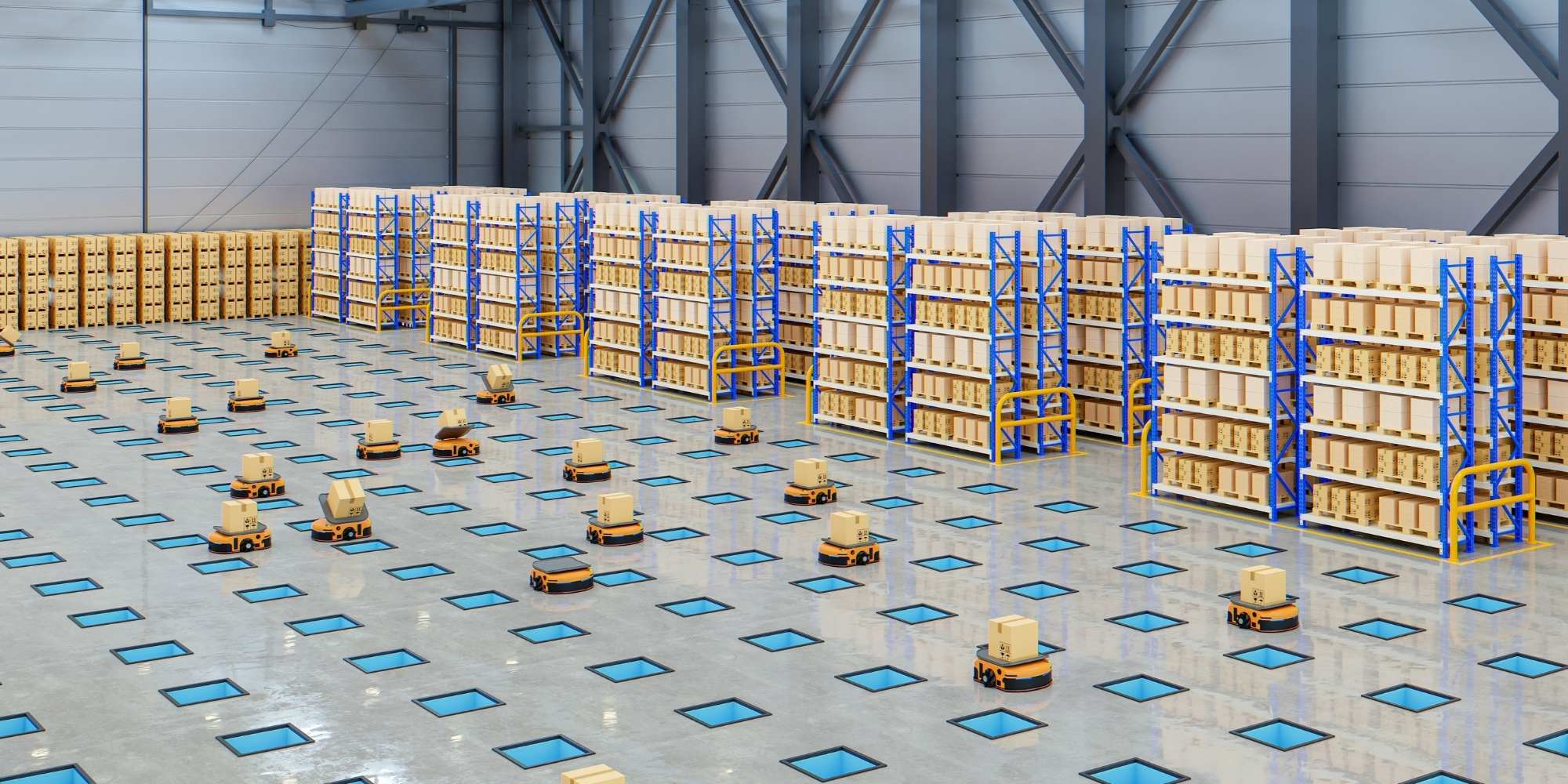
The 4PL model is already evolving. Agentic AI, autonomous systems that can reason and act without human intervention, is starting to show up in logistics orchestration. Think dynamic route optimization that responds to a port strike before your operations team even knows it happened, or inventory rebalancing that triggers automatically when a weather event is projected to hit a distribution hub.
Beyond that, Fifth-Party Logistics (5PL) is beginning to emerge for the largest global operators. Where a 4PL manages one company’s end-to-end supply chain, a 5PL manages entire networks of supply chains; acting as an aggregator that bundles the logistics needs of multiple 4PLs to extract even greater volume leverage and AI-driven optimization at scale.
For most ecommerce brands, 5PL is far on the horizon. But the trajectory matters: brands that build disciplined supply chain infrastructure now, whether through a strong 3PL partner or an eventual 4PL, are building toward that future. The brands that are still managing logistics reactively in 2030 will be at a real competitive disadvantage.
Is Your Business Ready for Professional Order Fulfillment Services?
Take our 3-minute assessment to discover if partnering with a fulfillment service could help scale your business.
Storage Solutions
Optimize your inventory management
Scale Operations
Support your business growth
Save Time
Focus on core business activities
Improve Accuracy
Enhance customer satisfaction
Takes 3 minutes • Get instant results • Free analysis
Business Metrics
Assessment Questions (1-4)
Assessment Questions (5-8)
Assessment Results
Not Ready for 4PL? Here’s What to Do Instead
The honest answer for most ecommerce sellers reading this: you probably don’t need a 4PL yet. And that’s fine.
If you’re a small-to-medium seller say, under $10M in revenue, what you need is a capable 3PL with real technology, genuine transparency, and the operational depth to grow with you. That’s where eFulfillment Service spends most of its energy.
We’ve been doing this for 25+ years. We handle over 76,000 unique SKUs, offer 20 different box sizes to reduce dimensional weight charges, and we’ve built programs like SaverShip specifically for heavy or high-value products where standard shipping costs kill margins. We don’t use Styrofoam peanuts — we divert over 3,500 square feet of waste monthly through sustainable packing practices.
None of that is 4PL. It’s a well-run 3PL operation with the systems, processes, and experience to handle real complexity. For most sellers, that’s the right fit.
Fulfillment with a Personal Touch.
See How Using a 3PL like eFulfillment Service sellers saves time. Get a Free Quote from eFulfillment Service Today!
4PL FAQs
What does 4PL stand for?
4PL stands for fourth-party logistics. It refers to a logistics model where a strategic provider manages your entire supply chain — including overseeing other logistics partners like 3PLs and carriers — on your behalf, rather than just executing fulfillment tasks themselves.
What's the difference between a 3PL and a 4PL?
A 3PL handles the physical execution of your logistics: warehousing, picking, packing, and shipping orders. A 4PL manages the strategic layer above that — designing your supply chain network, selecting and governing your 3PLs, and integrating all your logistics data into a single system. You still own the product; the 4PL owns the process.
Do 4PL providers own warehouses?
Typically, no. The defining characteristic of a true 4PL is that they’re asset-light — they don’t own the warehouses, trucks, or equipment they manage. This keeps them vendor-neutral. Be cautious of “4PL” services offered by asset-owning 3PLs, as they may favor routing your freight through their own facilities rather than the objectively best option.
How much does a 4PL cost?
Pricing typically includes an implementation fee ($50,000–$500,000), an ongoing management fee of 5%–12% of total logistics spend, and annual technology platform fees of $10,000–$50,000. Despite the upfront cost, companies that are right for 4PL generally see 10%–25% reductions in total supply chain costs, with ROI achieved within 18–24 months.
When should an ecommerce brand consider 4PL?
The clearest signal is managing three or more logistics vendors across multiple regions, combined with $2M+ in annual logistics spend and a team that’s burning time coordinating between systems instead of growing the business. Revenue-wise, $10M–$50M+ is where the complexity typically justifies the model.
Is a 4PL right for small ecommerce sellers?
Rarely. For sellers under $10M in annual revenue with straightforward fulfillment needs, a tech-enabled 3PL provides all the operational support needed without the overhead and complexity of a full 4PL arrangement. The 4PL model is designed for operations where managing multiple logistics vendors has become a business problem in itself.
What is a 5PL and how is it different from 4PL?
A 5PL manages entire networks of supply chains — essentially orchestrating multiple 4PL arrangements using AI and big data to optimize across companies and industries. Where a 4PL manages your supply chain, a 5PL manages the ecosystem. This model is currently relevant only for the largest global brands but is becoming more viable as AI-driven logistics tools advance.

0 Comments