

Your warehouse shelves are full. Your supplier invoice is due. The products in those boxes haven’t sold yet, and until they do, that inventory is cash you can’t use.
The loss doesn’t appear on your income statement. Storage fees accumulate. Working capital that could fund your next product launch or pay down a credit line stays locked in unsold goods.
Days inventory on hand tells you how much of your cash is tied up in stock and how long it stays there. The formula: DOH = (Inventory ÷ COGS) × Days in Period (Source: Mission Capital). Sellers who track this number restock at the right time and free capital when inventory piles up. Sellers who don’t run short on cash without understanding why.
What Is Days Inventory on Hand and Why Does It Matter for eCommerce?
Days inventory on hand (sometimes called inventory days on hand) tells you how many days your current stock will last at your current sales rate. A raw inventory count tells you how many units you have. Days inventory on hand tells you whether those units represent two weeks of healthy stock or four months of a slow-moving problem. That gap shows up in your bank account: revenue looks fine, cash feels tight.

Days Inventory on Hand vs. Days on Shelf in Inventory: Is There a Difference?
These terms mean the same thing. Days on shelf in inventory, inventory days on hand, and days inventory on hand all describe how long your existing stock will last before it runs out, measured by cost of goods sold. Accounting software, logistics platforms, and eCommerce articles use all three interchangeably.
Why This Metric Matters More in 2025 and 2026 Than It Ever Did Before
Holding inventory costs more now on three fronts. Higher interest rates put a real financing cost on the capital tied up in stock. Tariff-driven inflation pushed replenishment prices up, so recovering from an overstock mistake costs more. Warehouse rent climbed across most major fulfillment markets.
Each additional day of stock on the shelf costs more than it did in 2022, making days inventory on hand the key working-capital metric to watch (Source: 3PL Center). Sellers who tracked this loosely and got away with it in 2022 are getting squeezed now.
What Does High Days Inventory on Hand Mean?
A high days inventory on hand means your current stock will take longer than average to sell at your existing sales rate. Capital sits in unsold goods that accumulate storage costs, lose value, or drift toward obsolescence before generating any return.
High DIH warrants a question: is demand lower than expected, or did you overbuy?

What a Low Days Inventory on Hand Score Signals
Low DIH means inventory is moving fast. Run it too low and you stock out. Product listings shift to “available on backorder” status, meaning customers can place an order but won’t receive it immediately. Customers who see that status leave without buying. Some don’t come back. Others go to a competitor.
Overstocking locks up cash and risks obsolescence. Stockouts kill conversions and push customers to competitors (Source: SendFromChina).
The Sweet Spot: Neither Too High Nor Too Low
Target the DIH that fits your product category, supplier lead times, and sales velocity. A perishable supplement brand targets a very different DIH than a home décor seller moving large, slow items. The benchmarks below give you category-specific starting points.
The Days Inventory on Hand Formula (And How to Run the Calculation Step by Step)

You don’t need accounting software for this. A spreadsheet and your purchase records are enough.
The Core Formula: DOH = (Inventory ÷ COGS) × Days in Period
Each variable:
- Inventory is the total cost value of all stock you currently hold, not the retail price, but what you paid for it.
- COGS (Cost of Goods Sold) is the total cost of inventory you sold during the period you’re measuring. This comes from your accounting records or eCommerce platform.
- Days in Period is the number of days in the time window you’re analyzing, typically 30, 90, or 365.
How to Find Your Cost Per Unit
Most DIH calculations break at this step. To value your inventory, you need two numbers for each SKU: quantity on hand and the cost assigned to that quantity (Source: Ledgers). Multiply them together for the inventory input.
Pull cost data from your bills and purchase orders. Those documents show the exact quantity purchased and the price paid (Source: Ledgers).
The cost per unit formula:
Cost Per Unit = Total Amount Paid ÷ Units Purchased
If you paid $3,000 for 500 units, your cost per unit is $6.00. Sellers who confuse landed cost (freight and duties included) with the product invoice price alone will miscalculate inventory value and get a wrong DIH.
Worked Example: Calculating DIH for a Single SKU
Say you sell a yoga mat. Here are the inputs:
- Inventory value (units on hand × cost per unit): $4,000
- COGS over the last 90 days: $8,000
- Days in period: 90
Step 1: Divide inventory by COGS → $4,000 ÷ $8,000 = 0.50
Step 2: Multiply by days in period → 0.50 × 90 = 45 days
Your DIH for this SKU is 45 days, about six and a half weeks of stock. Whether that’s healthy depends on your product category.
Days Inventory on Hand Benchmarks by eCommerce Product Category
Traditional retail DIH targets don’t transfer to eCommerce. Online sellers face faster demand swings, different storage cost structures, and category-specific depreciation risks. The table below uses eCommerce-specific benchmarks.

|
Product Category |
Typical DIH Range |
Key Risk if Exceeded |
|
Apparel and Fashion |
30–60 days |
Seasonal obsolescence, markdown pressure |
|
Consumer Electronics and Accessories |
15–30 days |
Rapid depreciation, model turnover |
|
Health, Beauty, and Supplements |
45–90 days (shorter for perishables) |
Expiration dates, regulatory risk |
|
Home Goods and Décor |
45–90 days |
High storage cost per cubic foot |
|
Toys and Seasonal Gifts |
20–45 days (outside peak) |
Post-season markdowns, returns |
These ranges assume a reasonably stable sales velocity. Sellers with highly seasonal SKUs should expect DIH to swing outside these ranges during peak and off-peak periods.
Apparel and Fashion: Managing Seasonality in Your DIH
Apparel sellers target 30–60 days, but trend-based obsolescence is the real threat. A SKU selling well in September can stall by November in a style-driven line. Push past 60 days and you’re discounting to clear, which cuts margin faster than storage costs.
Track DIH at the SKU level. Your bestsellers run lean while slower colorways or sizes push your blended DIH up without you noticing.
Consumer Electronics and Accessories: Why Low DIH Is Especially Important
Electronics carry the tightest DIH targets of any eCommerce category. At 15–30 days, you’re moving stock fast enough to avoid getting undercut by a newer model or a manufacturer price drop.
Accessories tied to specific device generations (phone cases, charger cables) carry the same depreciation risk. Holding 90 days of a case designed for a device that got replaced last month is an avoidable cash problem.
Health, Beauty, and Supplements: Expiration Dates Change the Math
Supplements and perishable beauty products have a hard deadline other categories lack: an expiration date. A 90-day DIH works for a shelf-stable powder with an 18-month shelf life. For a probiotic expiring in 6 months, 90 days is a write-off risk.
Layer your DIH target against remaining shelf life. If your current DIH puts you at risk of selling products within 60–90 days of expiration, pull the target down regardless of the category benchmark.
Home Goods and Décor: Slower Turns Are Normal — To a Point
Home goods move slower than apparel or electronics, and a 45–90 day DIH is typical for this category. The risk is storage cost, not obsolescence. Large, heavy items take up real warehouse space, and past 90 days that storage starts eating the margin on the eventual sale.
How to Use These Benchmarks Without Blindly Following Them
Your actual target depends on supplier lead times, sales velocity, and storage costs. These ranges give you a starting point.
Move from a blended DIH to a per-SKU view. Digital inventory management platforms track stock levels and sales velocity in real time, calculate DIH by SKU, and flag slow movers before they lock up cash. A monthly manual calculation shows you what already happened.
Real Merchant Case Studies: What DIH Actually Did to Profitability and Cash Flow
These are composite scenarios built from common patterns, not individual named businesses.

Case Study 1: The Apparel Brand That Had $40,000 Trapped in Slow-Moving SKUs
A women’s activewear brand selling on Shopify ran tight on cash despite consistent revenue. When they calculated DIH at the SKU level, their blended days on shelf sat at 95 days, driven by three colorways they’d overbought the prior season.
Those three SKUs held $40,000 in inventory value. At their warehouse rate, storage ran $1,200 per month, and none of it was selling. They ran a targeted markdown campaign to clear the slow movers, negotiated smaller minimum order quantities with their manufacturer, and reset their reorder model around a 42-day DIH target.
At a 42-day target, working capital freed up by over $25,000 within two quarters. They put that cash into a new product launch that outperformed the slow SKUs within 60 days.
Case Study 2: The Supplement Seller Who Stocked Out During a Peak Sales Period
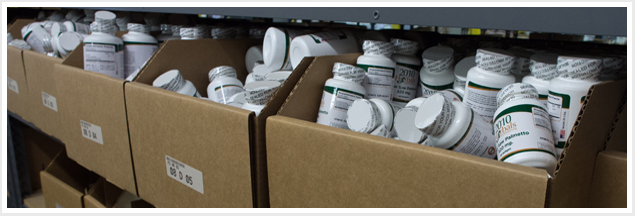
A direct-to-consumer supplement seller ran an influencer promotion without accounting for the demand spike in their reorder timing. Four days before the campaign launched, their DIH for the hero SKU sat at 4 days. By day two of the promotion, the product showed as available on backorder.
Showing as backorder cut their conversion rate by an estimated 35% for the rest of the campaign. Customers hit the product page and left without buying. Several reviewed it negatively citing the wait. The seller lost an estimated $18,000 in potential revenue during that window.
After the campaign, they set a rule: no promotional spend on any SKU below 30 days of inventory on hand. They added a safety stock layer covering average supplier lead time plus 10 days. Their top five SKUs have stayed above 25 days DIH since.
Working with a 3PL that imposes no minimum order requirements gives smaller merchants the flexibility to adjust reorder quantities as their DIH data changes, rather than being forced to overbuy to hit a volume threshold. eFulfillment Service offers eCommerce fulfillment with no setup fees, no minimum order requirements, and no long-term contracts, making it a practical option for sellers who want to shift toward tighter, data-driven inventory management without the risk of unmet demand when orders do come in. Get a free quote to see what that looks like for your business.
Seasonal Inventory Planning: How Days Inventory on Hand Fluctuates Throughout the Year
DIH moves with your demand calendar. Set it intentionally.

Why Your DIH Target Should Be Higher Going Into Peak Season
Going into a high-demand period, build inventory above your baseline target. A seller heading into Q4 might push DIH to 60–90 days by late October. November and December sales velocity will absorb that stock.
Running out of stock during your highest-volume weeks costs more than holding a few extra weeks of inventory. Arrive at peak with enough stock to last the window without emergency restocking at premium freight rates.
Post-Season Drawdown: Avoiding the Overstock Hangover
Sellers who build for Q4 and don’t exit cleanly end up in February with 90+ days of stock on items past their peak demand moment.
Draw DIH down to 20–30 days in January through promotions, bundle offers, or paused reorders. That frees the cash that runs Q1 and Q2. Third-party warehouse storage rates often soften post-season, but holding costs still accumulate and capital tied up in slow stock earns nothing.
Building a Simple Seasonal DIH Calendar for Your Store
A quarter-by-quarter DIH target for a general eCommerce seller:
- Q1 (January–March): Target 20–35 days — drawdown mode, preserve cash, minimal reorders
- Q2 (April–June): Target 30–45 days — steady replenishment, rebuild velocity data
- Q3 (July–September): Target 40–60 days — begin building pre-peak inventory for Q4
- Q4 (October–December): Target 60–90 days — fully stocked for peak demand window
Shopify’s sales velocity reports let you forecast demand by SKU and set seasonal reorder points that shift your effective DIH target as demand changes. Prior-year velocity data for the same period beats intuition for pre-season build targets.
Fulfillment with a Personal Touch.
See How Using a 3PL like eFulfillment Service sellers saves time. Get a Free Quote from eFulfillment Service Today!
How to Improve Your Days Inventory on Hand Without Triggering Stockouts
Improving DIH is a sequencing problem. Cut stock levels too fast and you’ll stock out before the next order arrives.

Step 1: Identify Which SKUs Are Dragging Your DIH Up
Sort your SKU list by DIH, highest to lowest. Flag every SKU above 1.5 times your category benchmark. One high-DIH SKU can distort your blended inventory days on hand and hide the healthy performance of faster movers.
Look for patterns among the flagged SKUs. Slow movers concentrated in a single category, price point, or supplier point to where the buying process broke.
Step 2: Set SKU-Level Reorder Points Based on Your DIH Target
A reorder point is the inventory level that triggers a new order. Set it based on your DIH target and supplier lead time.
The formula: Reorder Point = (Daily Sales Rate × Lead Time in Days) + Safety Stock. If you sell 10 units per day, your supplier takes 14 days to deliver, and you want a 7-day safety buffer, your reorder point is (10 × 14) + 70 = 210 units.
Step 3: Use Digital Inventory Tools to Automate DIH Tracking
Monthly spreadsheet calculations show you problems that already cost you money. Digital inventory management platforms track DIH by SKU in real time and flag exceptions as they develop.
Linnworks and Extensiv (formerly Skubana) integrate across sales channels and warehouses, giving multi-channel sellers a unified view of stock levels and velocity without manual reconciliation. Single-channel Shopify sellers can use Shopify’s built-in inventory analytics for sales velocity data by SKU.
Step 4: Align Your Reorder Quantities With Your Actual Storage Costs
Knowing your cost per unit lets you calculate what each extra day of DIH costs in real dollars.
Use this formula:
Daily Holding Cost = (Cost Per Unit × Units on Hand) ÷ DIH
If your cost per unit formula gives you $8.00 per unit, you have 500 units on hand, and your current DIH is 80 days:
Daily Holding Cost = ($8.00 × 500) ÷ 80 = $50 per day
Each day past your DIH target costs $50 in capital and storage. Running a markdown to clear slow movers starts looking obvious. Use EFS’s storage cost calculator to put real numbers to your per-day holding cost.
Is Your Business Ready for Professional Order Fulfillment Services?
Take our 3-minute assessment to discover if partnering with a fulfillment service could help scale your business.
Storage Solutions
Optimize your inventory management
Scale Operations
Support your business growth
Save Time
Focus on core business activities
Improve Accuracy
Enhance customer satisfaction
Takes 3 minutes • Get instant results • Free analysis
Business Metrics
Assessment Questions (1-4)
Assessment Questions (5-8)
Assessment Results
Frequently Asked Questions About Days Inventory on Hand
What is a good days inventory on hand ratio for eCommerce?
For most eCommerce categories, 30 to 60 days is healthy. Electronics sellers target 15–30 days due to depreciation risk. Home goods sellers often run 45–90 days. Your target depends on category, supplier lead times, and seasonal position.
How is days inventory on hand different from inventory turnover?
Inventory turnover counts how many times you sell through your full inventory in a year. A higher number means faster movement. Days inventory on hand is the inverse: it counts how many days your current stock will last. If inventory turns 6 times per year, DIH is approximately 365 ÷ 6 = 61 days.
What causes days inventory on hand to increase suddenly?
A sudden DIH increase means one of two things: sales slowed, or a recent purchase order brought in more stock than demand can absorb. Seasonal demand drops, a failed promotion, a competitor’s price cut, or an early supplier delivery all trigger this. Tracking DIH by SKU isolates which products are responsible.
How often should I recalculate my days inventory on hand?
Recalculate monthly at minimum. Weekly SKU-level tracking is more useful for active sellers. Automated inventory tools surface DIH changes in real time, which matters most during promotions or when a large supplier delivery shifts your position overnight.
Can I have a days inventory on hand that is too low?
Yes. A DIH below your supplier lead time means you’ll stock out before new inventory arrives. Listings shift to backorder, conversion rates drop, and some customers go elsewhere. For most eCommerce sellers, a DIH below 14–21 days (depending on lead times) needs an immediate reorder.
Summary: What is Days Inventory on Hand
Days inventory on hand is a cash flow metric: how much of your working capital is sitting on a shelf, and for how long. Category benchmarks matter more than any universal target because a healthy DIH for a supplement brand and a healthy DIH for an electronics seller are different numbers. Small adjustments to reorder timing, applied consistently, free working capital without changing your product mix or sales volume.
eFulfillment Service is a Michigan-based 3PL that has been helping ecommerce sellers ship smarter for over 25 years. We handle fulfillment for sellers of all sizes, with no setup fees and transparent pricing.



0 Comments