
It’s Tuesday, 10:40 a.m., and a customer service email is sitting at the top of the queue: “Can you send me the certificate of analysis (COA) for lot #4471? My coach wants to see it before I take this pre-workout to a tested meet.”
Simple request. Except nobody on the team can say with certainty which lot shipped to that customer, because the warehouse doesn’t track lot numbers down to the order level. The fulfillment center just picks whatever’s closest to the front of the shelf.
Swap the tested-meet coach for a pediatrician’s office asking about a prenatal vitamin’s batch, or a retail buyer wanting documentation before a shelf reset, and it’s the same gap: a fulfillment operation that was never built to answer the question. This guide covers what fulfillment actually has to do differently for supplements and nutraceuticals, whatever’s on your label: the compliance layer, lot and expiration tracking, subscription mechanics, returns, restricted ingredients, and how to vet a 3PL that has actually done this before.
Not sure your fulfillment partner can actually produce this paperwork?
Ask directly: can your 3PL pull every order that shipped from a specific lot, going back two years or more? eFulfillment Service tracks lot and expiration dates as standard practice, with FEFO rotation applied automatically rather than as a special request, following handling protocols aligned with FDA and GMP expectations.
What supplement and nutraceutical fulfillment actually requires
General ecommerce fulfillment moves boxes from a shelf to a shipping label. Supplement fulfillment adds a layer most 3PLs never have to think about: the product itself is regulated as a food under the Dietary Supplement Health and Education Act (DSHEA), manufactured under FDA current Good Manufacturing Practice rules (21 CFR Part 111), and sold to a customer who is putting it in their body.

A general 3PL asks one question: does it have space for the units, and can it ship them fast? A supplement-capable 3PL asks a longer list before it ever touches your inventory:
|
Question |
Why it matters |
|---|---|
|
What’s the shelf life on this SKU? |
Determines rotation method and how long inventory can sit before it’s a liability |
|
What lot is at the front of the pick face right now? |
Confirms FEFO rotation is actually happening, not just FIFO |
|
Does this product need climate control? |
Heat and humidity degrade probiotics, softgels, and powders |
|
Can you produce a chain-of-custody record for any unit ever shipped? |
The difference between a routine request and a recall you can’t contain |
The same applies to natural products and nutraceuticals more broadly. Herbal compounds, functional beverages, and topicals carry a lot of the same regulatory weight even when they’re not technically “dietary supplements” under DSHEA.
Where cGMP liability actually sits
Here’s the detail that catches operator-founders off guard most often: cGMP places the legal responsibility for label accuracy and product quality on the brand owner, not the contract manufacturer, even if the brand never touches the formulation itself.
FDA enforcement doesn’t always land in the same place, though. A Form 483 typically goes to whichever facility was actually inspected, often the contract manufacturer rather than the brand. A warning letter or a mandated recall, by contrast, more often targets the brand whose name is on the label, since DSHEA puts final responsibility for label accuracy there regardless of who mixed the powder.
Fulfillment doesn’t cause that liability. But sloppy fulfillment, meaning mixed lots, missing expiration tracking, no way to trace a shipped unit back to its batch, turns a contained, one-SKU issue into a full-catalog nightmare when a recall actually happens.
The cGMP compliance layer: storage, labeling, and record retention
Three regulatory details shape how a warehouse should physically handle your inventory, and most general fulfillment centers don’t know any of them exist.

|
Requirement |
What it actually says |
Why it’s a fulfillment issue |
|---|---|---|
|
Storage temperature & humidity (USP <659>) |
“Controlled Room Temperature” averages 20 to 25°C (68 to 77°F), 15 to 30°C allowable range; “dry” storage stays under 40% average relative humidity (Source: USP Chapter <659>) |
Not automatically mandatory for supplements the way it is for a USP-monograph drug, but the benchmark most cGMP-focused facilities hold to. A warehouse with no climate monitoring can’t tell you if a batch of probiotics sat above that range during a July heat spell |
|
Structure/function claim disclosures |
Any claim like “supports immune health” needs an FDA disclaimer and notification within 30 days of first marketing (Source: FDA Structure/Function Claims guidance) |
A labeling issue, not a warehouse one, but the same regulatory environment your 3PL needs to understand for relabeling or private-label runs |
|
Record retention (21 CFR 111.605) |
Records kept one year past shelf-life date, or two years from last distribution, whichever is longer (Source: eCFR, 21 CFR 111.605) |
If your 3PL can’t produce a shipment history for a specific lot going back that far, you’re carrying that compliance gap alone |
Lot and batch tracking: the difference between a small recall and a full-catalog one
Every supplement SKU should carry a lot number from the moment it’s received into the warehouse, and that number needs to travel with the product through every pick, pack, and ship event. Lot tracking is the single operational habit that separates a contained problem from a catalog-wide one.

Here’s why it matters in practice:
- If a single ingredient lot fails a third-party test after the product has already shipped, clean lot tracking lets your 3PL put a hold on just that lot. Every other unit of the same SKU, from a different batch, keeps shipping normally.
- Without lot tracking, the only safe move is to pull the entire SKU, sometimes the entire product line, because nobody can say which units came from which batch.
- FEFO (first-expired, first-out) rotation, not FIFO, is the correct method for anything with an expiration date. Shipping whatever arrived first, rather than whatever expires soonest, is how brands end up with customers receiving product 30 days from its expiration date sitting next to fresher stock on the same shelf.
Ask any provider you’re evaluating: “If lot #4471 needed to be quarantined right now, how would you identify every order it shipped in, and how long would that take?” A capable answer names a specific system and a specific turnaround time, usually same-day. A vague answer, or one that involves “checking with the warehouse team,” tells you the lot tracking doesn’t exist at the granularity a recall requires.
Selling supplements on Amazon and your own site?
eFulfillment Service handles FBA prep and direct-to-consumer fulfillment out of the same facility, with lot-level tracking that follows the product across both channels.
COAs, certifications, and staying off Amazon’s suspension list
Amazon’s dietary supplements policy, in effect since April 8, 2024, requires sellers to submit a finished-product Certificate of Analysis (COA) to an Amazon-approved testing, inspection, and certification (TIC) verifier (Source: NSF, “Compliance with Amazon’s Dietary Supplements Policy FAQ”). That COA has to meet a specific bar:
- Issued by an ISO/IEC 17025-accredited lab
- Dated within the past 12 months
- Includes the complete product name and batch number
- Submitted to an Amazon-approved TIC verifier, not just kept on file
The practical fulfillment implication: your 3PL needs to hand you a current, properly formatted COA for any lot on demand, matched to the specific batch actually on the shelf, not a COA from a prior production run that happens to be the one on file. If a customer, a gym, or an Amazon compliance review asks for documentation, the gap between “we have a COA somewhere” and “here’s the COA for the exact lot you received” is the gap between a routine request and a suspended listing.

NSF Certified for Sport and Informed Sport: what they mean for fulfillment
That customer service email from the intro is really asking about a narrower thing than a general COA: whether the product is safe for a drug-tested athlete. The two certifications that actually answer that are NSF Certified for Sport and Informed Sport, both of which test specifically for banned substances (roughly 280 to 290, depending on the program) rather than just confirming label accuracy. NSF Certified for Sport is the program USADA, MLB, the NHL, and the CFL point athletes toward (Source: NSF, USADA Supplement Connect). If your brand carries either certification, your fulfillment operation needs lot tracking precise enough to confirm the specific bottle a customer received actually came from a certified production run, not a pre-certification batch still working through the warehouse.
NOW Foods and Fungi Perfecti have both publicly documented counterfeit versions of their products sold on Amazon under their brand names, in NOW’s case, capsules that tested positive for rice flour filler and undisclosed pharmaceutical ingredients (Source: NOW Health Group, Nutritional Outlook). Using Fulfillment by Amazon with brand registry and serialized units makes counterfeiting harder, since Amazon can trace inventory back to an authorized shipment. Amazon also stopped offering its own FBA prep services to sellers as of January 1, 2026, pushing that work back onto brands and their third-party partners.
Running FBA and DTC out of the same warehouse?
eFulfillment Service handles Amazon FBA prep and direct-to-consumer fulfillment under one roof, without treating them as the same workflow. Keep your marketplace and owned-channel orders both moving without picking a single lane.
Subscription and auto-ship fulfillment: cadence, chargebacks, and the high-risk label
Most supplement brands run on repeat purchase, and a meaningful share of that is subscription or auto-ship. That’s also exactly what makes payment processors nervous: nutraceutical and supplement merchants get classified as high-risk by card networks largely because of chargeback exposure. Auto-ship and free-trial continuity programs generate dispute rates that regularly exceed standard thresholds, and processors like Stripe, Square, and PayPal will terminate accounts, sometimes freezing funds, when that ratio climbs too high. For a deeper look at what processors actually evaluate, see this merchant processing Q&A for high-risk sellers.

Fulfillment execution is a direct lever on that number. A subscription order that ships late, ships the wrong item, or ships without a lot number the customer can look up if something seems off is a chargeback waiting to happen. A clean, on-time, accurately picked subscription shipment removes one of the most common chargeback triggers before it starts.
A commonly cited benchmark for replenishment-category DTC subscriptions generally, not supplements specifically, is 4 to 7% monthly churn as healthy. Supplement-specific churn data is harder to pin down publicly, but the underlying logic still applies: a mismatch between the product’s actual consumption rate and the subscription’s ship interval trains customers to cancel.
A 30-day supply that actually lasts 45 to 50 days trains customers to cancel before their next charge. That’s a product and marketing decision, but your fulfillment partner needs to support whatever cadence you land on, including mid-cycle frequency changes, pauses, and skip requests without manual rework on every order.
Get a fulfillment quote with no invoice surprises
eFulfillment Service provides transparent, itemized pricing before you sign — not after your first invoice. See exactly what storage, pick-and-pack, and shipping will cost at your actual volume.
Kitting, bundles, and stacks without creating a compliance headache
Bundling multiple SKUs into a “stack” (a pre-workout with a pump and a creatine, or a multivitamin with a probiotic) is common in this category, and it’s a real kitting operation, not just a listing trick.
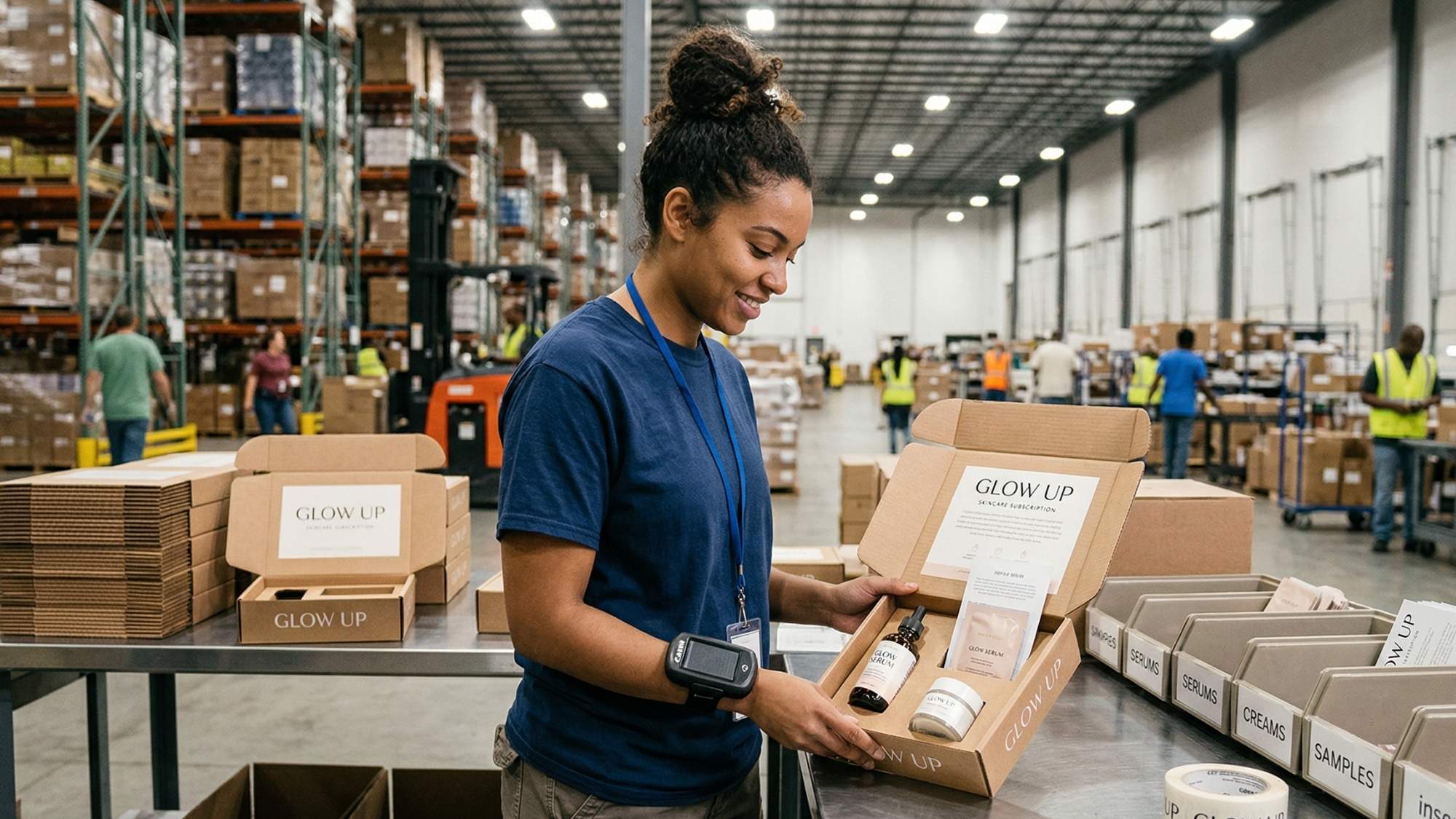
The compliance wrinkle is that a bundle now carries multiple lot numbers and multiple expiration dates under one SKU. A 3PL doing this correctly:
- Tracks the lot number of every individual component that goes into a kit, not just the finished kit SKU
- Assembles kits to order or in small batches, rather than pre-building large quantities that lock in an expiration date across every component
- Can tell you, for any kit already shipped, exactly which lots of which components went into it
Pre-building 10,000 units of a bundle sounds efficient until one component in the mix gets recalled, and the entire pre-built inventory of the bundle has to be broken down and rebuilt.
Ready to see how a supplement-specific 3PL actually operates?
eFulfillment Service has supported dietary supplement, nutraceutical, and natural product brands for more than 20 years, with lot tracking, FEFO rotation, kitting, and returns management as standard parts of the service, not upsells.
Packaging, tamper-evidence, and shipping without destroying the product

Supplements travel through a supply chain that general merchandise doesn’t have to survive: parcel trucks in July heat, unheated warehouses in January, and last-mile delivery vehicles that sit in direct sun for hours. Here’s what a supplement-aware fulfillment operation checks for:
|
Consideration |
Why it matters |
|---|---|
|
Tamper-evident seals |
Ingestible products need visible proof of an unopened container; missing or broken seals are a return and trust problem |
|
Insulated packaging for heat-sensitive SKUs |
Probiotics, softgels, and gummies can degrade or fuse in transit-level heat |
|
Moisture-barrier packaging |
Powders and effervescent tablets are especially vulnerable to humidity during transit |
|
Correct orientation for liquids |
Tinctures and droppers shipped upside-down or loose in a box are a common damage-claim driver |
None of this is exotic. It’s the difference between a warehouse that treats a bottle of capsules like a phone case, and one that treats it like what it actually is: something a customer is going to ingest.
Supplement returns and non-restockable inventory
Returns work differently for ingestible products than for almost anything else a 3PL handles. Once a seal is broken, nobody downstream can verify what happened to the product between the customer’s hands and the warehouse dock.
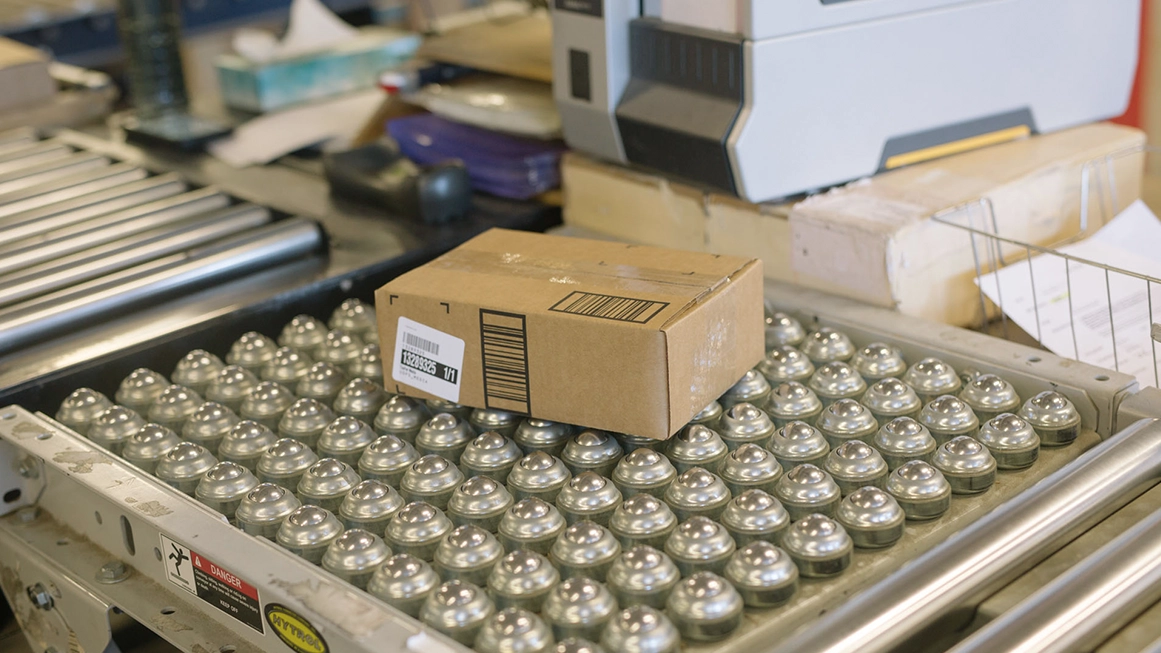
Non-resalable: any opened container, regardless of how much product remains, for straightforward safety and liability reasons rather than a single blanket FDA rule specific to dietary supplements.
Possibly restockable: an unopened container with an intact tamper-evident seal and a verifiable, non-recalled lot number.
That distinction is why tamper-evidence and lot verification, covered above, are the deciding factor in a returns process. A 3PL that can confirm a returned unit’s seal is intact and match it to a valid, non-recalled lot can make a real restock-or-scrap decision. One that can’t is stuck scrapping everything that comes back, a margin hit that compounds at subscription volume, since auto-ship programs generate a steady trickle of returns from cancellations, address issues, and damaged-in-transit claims.
Ask a prospective 3PL directly how they handle returns processing for ingestible SKUs specifically: what gets automatically scrapped, what gets inspected for possible restock, and how that decision gets documented.
The legal patchwork: kratom, DMAA, and other restricted ingredients
Some categories inside “nutraceuticals” carry a legal status that varies by state, not just by federal rule, and that patchwork is a fulfillment and shipping problem, not just a marketing one.

Kratom is the clearest example. It remains federally legal with no scheduling under the Controlled Substances Act, but state law is a patchwork (Source: state kratom legality trackers, July 2026):
- Nine states ban it outright as of July 2026: Alabama, Arkansas, Connecticut, Indiana, Kansas, Louisiana, Tennessee, Vermont, and Wisconsin
- Kansas and Tennessee’s bans both took effect July 1, 2026
- California has a de facto commercial ban through a state health department action, not a statute
- Rhode Island reversed its own 2017 ban on April 1, 2026, the first state ever to do so
Sellers generally block shipments to banned states, and often to specific cities and counties with local bans even inside states where kratom is otherwise legal, such as Denver and Sarasota County.
DMAA-containing pre-workouts and hemp-derived cannabinoid products face a similar, if less precisely mapped, patchwork: legality and marketplace acceptance vary by state and by platform, and payment processors and marketplaces frequently restrict these categories independent of what state law technically allows.
If you sell anything in this territory, your 3PL’s shipping software needs to enforce address-level shipping blocks automatically, not rely on someone remembering to check a list before every order goes out. Ask specifically whether a prospective provider’s system can restrict shipments by SKU and destination together, rather than just by SKU or just by destination.
FBA vs. FBM for supplements
The Amazon decision for supplement brands comes down to exposure as much as cost.

FBA (Fulfilled by Amazon) gets you Prime eligibility and Amazon’s logistics network, but Amazon controls storage conditions, and commingled inventory, when a seller hasn’t opted out of it, means a customer might receive a unit from a different seller’s batch entirely. That’s a real problem if you need lot-level traceability for a recall, though brand registry and unique FNSKU labeling let a seller opt out of commingling for exactly this reason.
FBM (Fulfilled by Merchant), run through a supplement-capable 3PL, keeps lot control and COA matching entirely in your hands, at the cost of losing some of Amazon’s built-in reach and Prime badge advantages.
Many supplement brands run both: FBA for marketplace velocity on stable, well-tested SKUs, and FBM through their own 3PL for new product launches, subscription-heavy SKUs, or anything where lot-level control matters more than Prime eligibility.
What supplement fulfillment costs, and how sourcing swings it

Supplement-specific pricing isn’t published the way general 3PL pricing is, since quotes vary by SKU format, kitting needs, and whether climate-controlled storage is required. As a general, non-supplement-specific baseline (see this breakdown of 3PL cost structures for the full picture):
|
Cost component |
Typical range |
|---|---|
|
Storage |
$0.45 to $0.75 per cubic foot per month |
|
Pick and pack |
$2.50 to $4.50 per order |
Supplement SKUs usually land above that baseline for three concrete reasons: kitting labor for stacks and bundles, a premium for climate-controlled or lot-tracked storage zones, and the administrative work of matching COAs to specific batches on request. A 3PL set up for this category should itemize each of those separately in a quote rather than folding them into one blended rate you can’t audit.
Sourcing adds another wrinkle to that math. Brands importing raw materials or finished product have been ordering further ahead and holding larger safety-stock positions to manage tariff and supply-chain risk, which means more months of storage on hand than usual. A 3PL with no minimum-order or minimum-monthly-fee requirement, which is how eFulfillment Service structures its pricing, lets that buffer flex up or down with actual need instead of penalizing a slower month with a flat fee regardless of volume.
Vetting a 3PL for supplements: the questions you should ask
Generic fulfillment vetting advice, like checking pricing, integrations, and warehouse locations, doesn’t surface the gaps that actually hurt supplement brands. These questions do.

|
Ask this |
Weak answer |
What you want to hear |
|---|---|---|
|
How do you track lot numbers down to the individual order? |
“We track lots at the SKU level” |
A specific system that ties every shipped unit to its originating lot |
|
What’s your storage temperature and humidity monitoring? |
No monitoring, or “climate controlled” with no data |
Logged, reportable temperature/humidity data by storage zone |
|
What’s your named turnaround time to produce a COA for a specific lot? |
“We can find that eventually” |
A specific process and a named turnaround commitment |
|
How do you handle FEFO rotation? |
Unfamiliar with the term |
Confirms FEFO is standard practice for expiration-dated SKUs |
|
Have you handled a supplement recall before? |
No direct experience |
A specific example of lot isolation and customer notification |
|
If we carry NSF Certified for Sport or a similar certification, can you track which lots came from certified runs? |
No distinction made between certified and non-certified inventory |
A clear process for separating and tracking certified production |
A provider that answers all six cleanly, in writing, before you sign a contract, has almost certainly done this before. A provider that gets vague on more than one of these is telling you where the gap is.
FAQs: Supplement & Nutraceutical Fulfillment
What makes supplement fulfillment different from regular ecommerce fulfillment?
The brand owner carries legal liability for label accuracy and safety even when using a contract manufacturer, so fulfillment has to support that with lot tracking, FEFO rotation, and climate-aware storage by default, not as an add-on.
Do I need a 3PL with special certifications to fulfill supplements?
There's no single mandatory certification, but your 3PL should demonstrate cGMP-aware handling, USP-aligned temperature and humidity monitoring, and lot-level traceability, including tracking which lots came from a certified run if your product carries NSF Certified for Sport or Informed Sport.
How long do I need to keep batch and lot records?
One year past the product's shelf-life date, or two years from the date the last batch was distributed, whichever is longer, per 21 CFR 111.605.
Can returned supplements be restocked and resold?
Generally no, once opened, for safety and liability reasons. Unopened returns with an intact tamper-evident seal and a verifiable, non-recalled lot are the realistic case for restocking.
Should I use FBA or my own 3PL for supplements?
FBA offers Prime eligibility and reach but can limit lot-level control unless you opt out of commingled inventory through brand registry. Many brands use FBA for stable SKUs and their own 3PL (FBM) for launches, subscriptions, or anything needing tighter lot control.
Are there ingredients my 3PL might not be able to ship to certain states?
Yes. Kratom is the clearest example, with nine states banning it outright as of July 2026. DMAA products and hemp-derived cannabinoids face a similar, less uniformly mapped patchwork.
I haven't launched yet. Does any of this apply to me?
Yes, and it's cheaper to build these habits before your first shipment than after a recall or an Amazon suspension forces the issue.
Key Takeaways
- Liability for label accuracy sits with the brand owner, not the contract manufacturer. FDA enforcement doesn’t always land in the same place, though: a Form 483 usually targets the inspected facility, while a warning letter or recall more often targets the brand on the label.
- Lot tracking has to reach the individual order, not just the SKU. Ask any 3PL for a named process and turnaround time to isolate every shipment from a specific lot.
- Record retention is one year past shelf life or two years from distribution, whichever is longer, per 21 CFR 111.605.
- Amazon’s COA policy is specific, not general. Since April 2024, it requires a COA from an ISO/IEC 17025-accredited lab, issued within the past 12 months, submitted to an Amazon-approved verifier.
- If your product carries NSF Certified for Sport or Informed Sport certification, fulfillment needs to track which lots came from certified runs, not just which lots exist.
- Opened ingestible returns are generally non-resalable, which makes tamper-evidence and lot verification the deciding factor in what can safely go back on the shelf.
- Restricted-ingredient categories like kratom need shipping software that blocks by SKU and destination together, not a manual checklist someone has to remember to run.
- Tariff-driven inventory buffering is a storage-cost question as much as a sourcing one. A 3PL with no volume minimums lets that buffer flex instead of penalizing a slow month.
Whatever stage you’re in, the fastest way to find out if a provider will actually deliver what they promise is to ask the questions in this guide before you sign, not after your first invoice arrives. eFulfillment Service will walk through exact, itemized pricing and a real point of contact from the first conversation. Get a free quote and see how DTC fulfillment works when nothing is hidden until month two.

0 Comments