
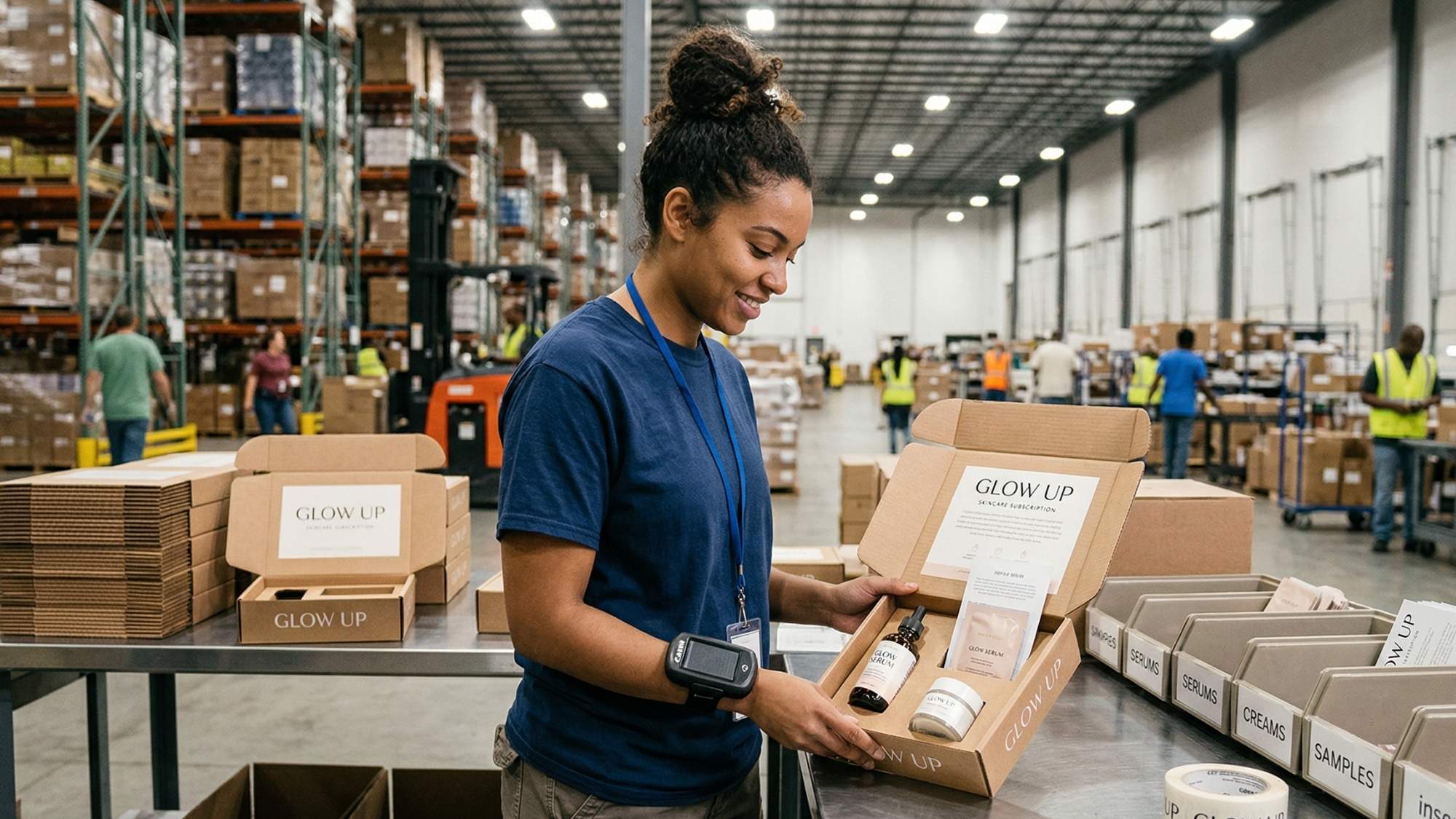
A shopper does not run a weighted average across twelve touchpoints. They open the box, register a feeling in roughly two seconds, and file you accordingly.
Undoing that impression later costs far more than earning it correctly the first time, which is why the packaging line item deserves more than a procurement conversation about cost per unit.
This is about what happens after checkout, and what those decisions are quietly telling people about you.
What Customers Actually Expect Now
Accuracy. Speed. Being told what is happening without having to ask.
That is the floor, not the ceiling.
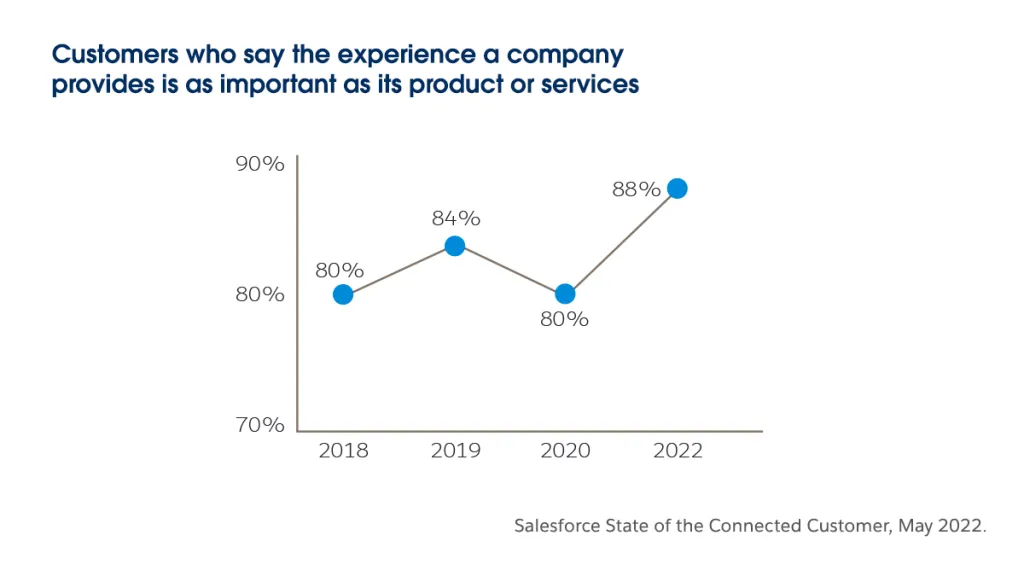
Research from Salesforce found that 88% of customers say the experience a company provides matters as much as its products or services. Read that carefully, because it is easy to nod past. It means your product can be excellent and your brand can still lose on the delivery.
Cost enters the picture before the order even exists. Baymard’s long-running cart abandonment research shows that extra costs like shipping remain the single biggest reason people walk away at checkout. The shipping decision is not a fulfillment decision that happens after the sale. It is a conversion decision that happens during it.
And the loyalty math is not complicated. On-time, undamaged, exactly-as-ordered builds trust. Late, wrong, or crushed destroys it. What makes this dangerous is the asymmetry: one bad delivery undoes a lot of good ones, and the customer rarely tells you. They just stop.
A 2026 survey of 408 consumers found positive reviews are the single biggest factor turning discovery into a purchase, cited by 42%, and that 71% of people go on to recommend brands they found online. Both are downstream of the box arriving correctly.
Fulfillment with a Personal Touch.
See How Using a 3PL like eFulfillment Service sellers saves time. Get a Free Quote from eFulfillment Service Today!
The Gap Between Your Brand Deck and Your Pick Line
Every company describes itself in words like care, craft, sustainable, effortless. Very few audit whether the warehouse floor agrees.
Jason Ledbetter, Operator at Jason Ledbetter, an operator and advisor who writes about building durable B2B companies, spends a lot of time in the space between what a company says and what it actually does.
He says, “Marketing writes the promise and operations has to pay for it, and most of the friction I see in growing companies lives in that gap. When the brand story says effortless but the fulfillment process is held together by three people improvising, customers feel the difference long before anyone internally admits there is a problem.”
Some brands do close the gap.
Patagonia’s repair and reuse programs make returns, exchanges, and repairs part of a longer product life rather than a cost to be minimized.
Allbirds signals its environmental commitments through minimal packaging before the shoe is ever unwrapped. Neither is a marketing tweak. Both are supply chain design choices that happened to become brand assets.
An audit you can run this week
Nothing here requires a consultant or a budget line.
- Walk the floor with your brand values written on a piece of paper in your hand, and note every place reality disagrees
- Hold your packaging up against your sustainability claims, honestly, including the void fill
- Pull five random orders off the line and inspect them the way a customer would
- Process a return yourself, start to finish, from request to refund landing
- Ask the people who pick and pack what gets in the way of doing it properly, then sit with the answers instead of defending against them
That last one surfaces more than the other four combined. Frontline staff already know where the brand breaks. They have usually stopped mentioning it because nothing changed the last three times.
Inventory Accuracy Is a Brand Promise
Selling something you cannot ship is the fastest way to spend credibility you spent months earning.
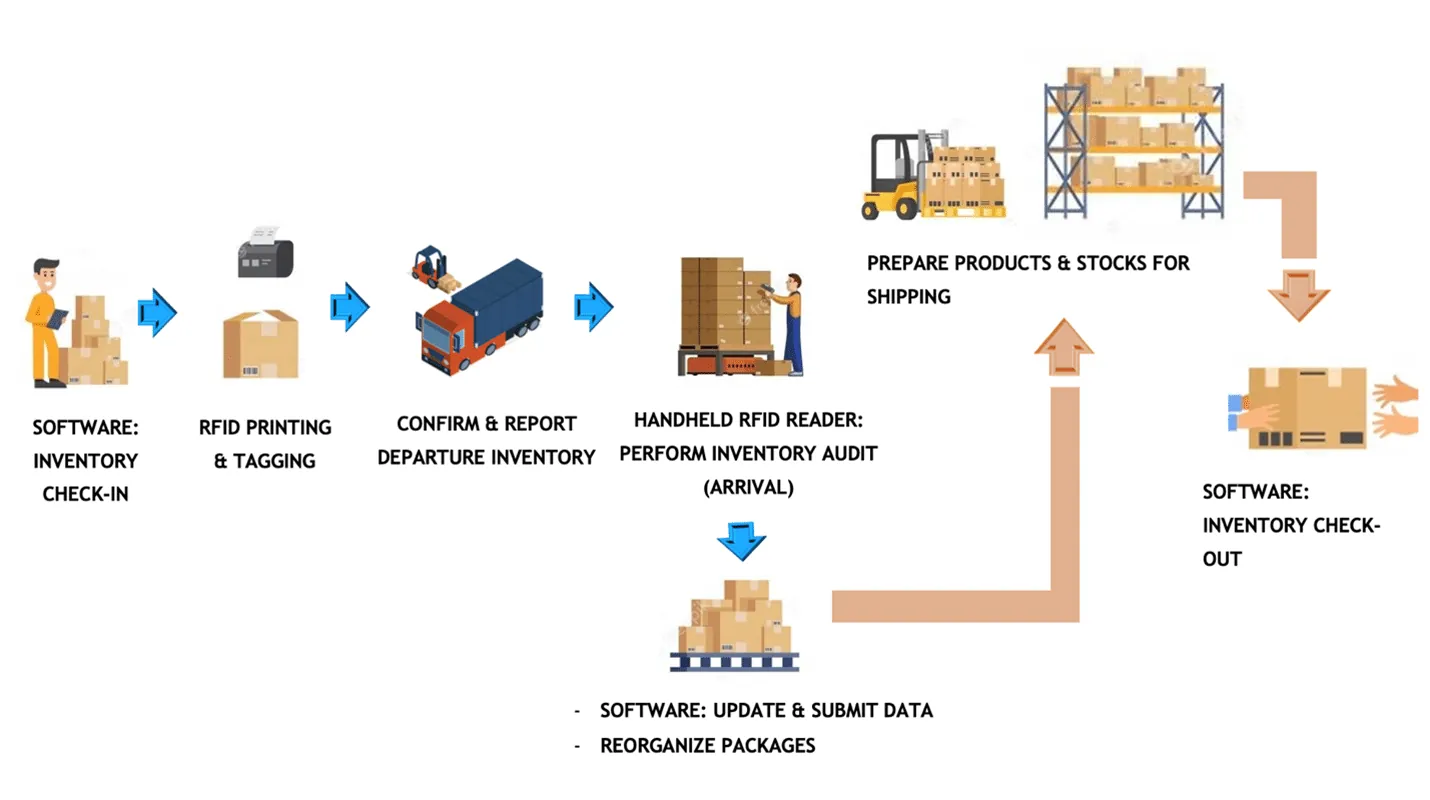
Here is the number that should bother you: typical retail inventory accuracy without modern tooling sits around 65%, while RFID and disciplined process can push it past 95%. At 65%, roughly a third of what your system tells you is fiction. Your website is making promises on top of that fiction. Your customer service team is apologizing for it.
The oversell email is a specific kind of damage. It arrives after the customer has already felt the small pleasure of buying, and it takes that back. Most people forgive a slow delivery. Fewer forgive being told the thing they bought never existed.
Cycle counting is boring. Slotting discipline is boring. Both are worth more to your brand than a rebrand.
Speed, and What It Signals
Speed is not really about speed. It is about what the customer infers from it.
An order that ships within hours reads as competence. An order that sits for three days reads as indifference, even when the delay was reasonable and even when the shipping estimate technically covered it. People are not evaluating your operations. They are evaluating whether you seem to care, and processing time is the clearest proxy they have.
For some categories, the stakes climb sharply. When the shipment is medication rather than merchandise, a delay is an interruption in someone’s treatment.
Bryan Henry, President of PeterMD, a telehealth practice delivering testosterone replacement therapy and men’s hormone care, thinks about fulfillment in clinical terms rather than commercial ones.
He says, “When a patient is on a protocol, the refill arriving on schedule is part of the treatment, not a service detail attached to it. A shipping delay in our world means a missed dose and a disrupted plan, so we treat delivery reliability with the same seriousness we treat the medicine itself.”
The levers for getting faster are unglamorous and well understood. Clean order data, smart batching, pick path optimization, and enable zone picking where volume justifies it. A WMS that removes the manual steps people currently absorb through effort.
What separates the operations that actually get faster from the ones that just talk about it is rhythm. Fast should feel calm.
Packaging Is the Handshake
This is the moment your digital brand becomes a physical object in someone’s hands.
Get it wrong, and it is memorable for the wrong reasons: a small item rattling around in an oversized box, three yards of plastic film, a mailer that arrived already split. Get it right, and it does not even register as packaging. It just feels considered.
There is a waste dimension that customers increasingly notice. Containers and packaging make up roughly a quarter of municipal solid waste in the United States by weight. Right-sized boxes, recyclable or compostable materials, and paper-based void fill cut both cost and footprint at the same time, which is a rarer alignment than it sounds.
Branded touches do not need to be elaborate. A printed interior, a well-set thank you card, a sticker. Restraint reads as confidence. Excess reads as compensation.
One practical note that saves real money: standardize your pack-outs by SKU family. When every packer protects a given product the same way, damage rates drop, material spend becomes predictable, and the unboxing experience stops depending on who happened to be at that bench.
Returns Are Where Loyalty Gets Decided
Returns feel like failure, so most companies design them defensively. A person returning something is a person deciding whether to buy from you again. Make it painless, and you often keep them. Make them find a printer, chase a label, and wait eleven days for a refund, and you have converted a neutral event into a grievance.
What good looks like:
- A policy written in plain language that a customer can understand on the first read
- Prepaid labels or QR code drop-off, with no printer required
- Refunds issued on receipt at the warehouse rather than after full processing
- Smart dispositioning so returned goods get back to sellable stock fast instead of aging on a pallet
- Return reason data flowing back into product pages and sizing guides
That last point is where the money is. If 40% of returns on one SKU say “smaller than expected,” you do not have a returns problem. You have a product page problem that is being paid for by your logistics budget.
Technology That Earns Its Place
Tools are not the goal. Reliability is, which tools help with:
- WMS and OMS platforms keep orders moving.
- Barcode and RFID lift accuracy.
- Robotics and automated sortation raise throughput without grinding people down.
All useful, none of it magic, and all of it capable of becoming an expensive distraction if deployed before the underlying process is sound.
Amazon’s robotics program pairs mobile robots with human pickers to gain speed and safety at scale.
Ocado runs high-density automation with orchestration software built for grocery’s brutal margins and short shelf lives.
You are almost certainly not building either. The transferable principle is narrower and more useful: automate the repeatable, expose clean data, and keep people on the judgment calls.
Start light. Mobile scanners, pick-to-light, pack verification scales. Small systems that catch errors before they reach a customer tend to outperform large systems that promise to transform everything.
The Numbers That Tell You the Truth
If the warehouse is part of the brand, then warehouse metrics are brand metrics. Most companies review them in an operations meeting and never bring them anywhere near a marketing conversation, which is how you end up with a campaign about reliability running the same week your on-time ship rate falls to 82%.
Metrics worth watching:
- Order accuracy rate and mis-pick rate
- Fulfillment cycle time and on-time ship rate
- Perfect order rate, meaning complete, on time, undamaged, correctly documented
- Inventory accuracy and out-of-stock rate
- Lines picked per labor hour, and dock-to-stock time
- Damage rate and packaging cost per order
- Return rate with top return reasons broken out
- Estimated delivery date adherence and carrier performance
- Post-delivery CSAT
Perfect order rate deserves special attention because it is the only one that approximates what the customer actually experiences. You can hit strong numbers on every individual metric and still deliver a mediocre order, since the failures compound rather than average out.
Where to Start
Pick one thing. One measurable change with a visible owner.
Then walk the floor again in six weeks and see whether the brand you describe in the deck is any closer to the one arriving on doorsteps. If it is, do it again with the next thing. If it is not, you learned something more valuable than the change you attempted.
For teams that would rather not build this capability from scratch, eFulfillment Service works with brands on exactly this alignment between fulfillment operations and the experience customers are promised.

About the Author
Jesse Galanis is a professional writer whose aim is to make complex concepts easy to understand. He strives to provide quality content that assists people in everyday life.

0 Comments