Economic nexus catches a lot of growing sellers off guard: once your sales to customers in a state cross that state’s threshold, it can require you to register and collect sales tax there — even if you’ve never opened a store, rented a warehouse, or set foot in the state yourself. Many sellers only find out after a letter arrives from that state’s tax office asking why they haven’t registered.
We see this often enough with our own ecommerce fulfillment clients that we wanted an answer for it. That’s why we decided to partner with Yonda Tax, a company that handles sales tax and VAT compliance. Yonda watches for new nexus, registers you in new states, files your returns, and sends your payments. Plus, you get a dedicated account manager who assists you along the way, rather than leaving you to set up their software on your own.
This article explains what nexus means for a fulfillment client and what Yonda Tax does to help ecommerce clients untangle the complexities of sales tax compliance.
What nexus actually means once your inventory is warehoused
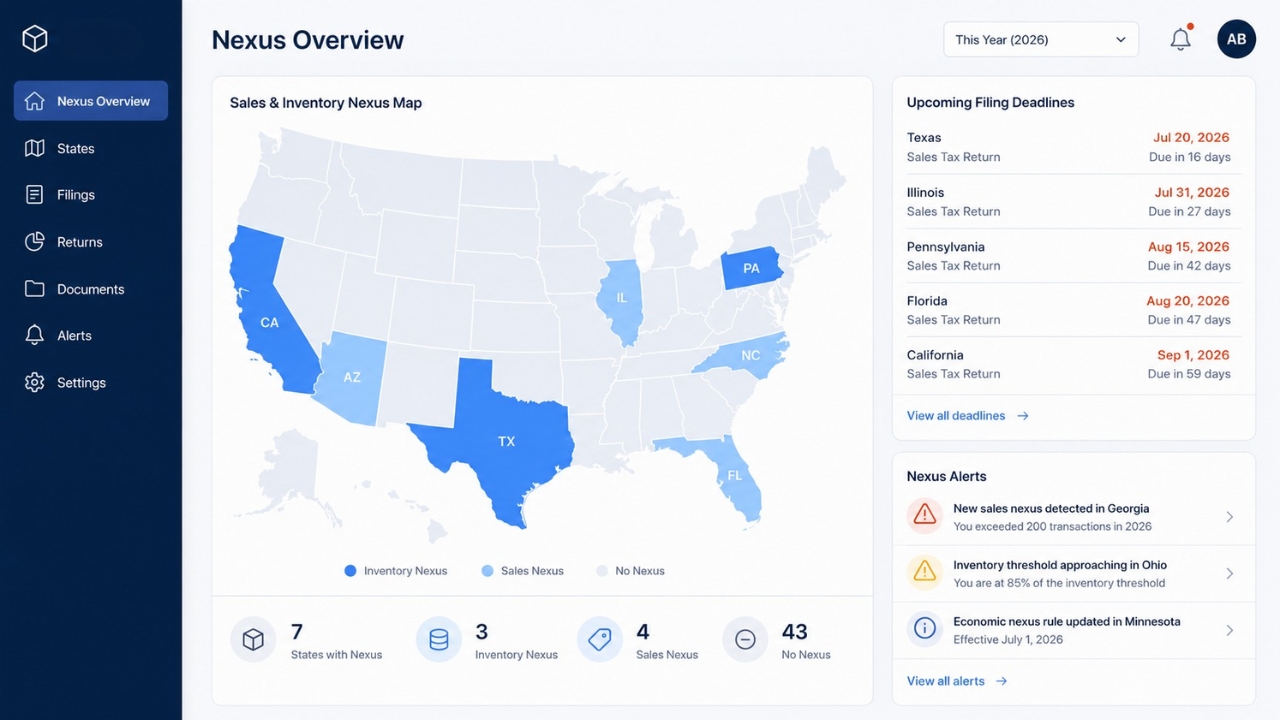
“Nexus” is the legal threshold that determines whether a state can require you to collect and remit its sales tax. There are two ways to trip it:
- Economic nexus: you cross a sales or transaction threshold in a state, regardless of physical presence. Since the South Dakota v. Wayfair Supreme Court decision, most states enforce some version of this, commonly built around figures like $100,000 in sales or 200 transactions. (The full case history is a law-school reading assignment on its own; we’re keeping this to what changes your filing obligations.) The exact numbers and thresholds vary considerably from state to state, so treat any single figure as a rough starting point.
- Physical nexus: you have a physical presence in the state. Inventory sitting in a warehouse counts, even if you never set foot there yourself. Every EFS client has this in Michigan already, since your inventory sits in our warehouse there — registering and collecting tax on Michigan sales is a baseline compliance step, not something that only kicks in with a second warehouse.
Every EFS client starts with one confirmed physical nexus: Michigan, where your inventory is warehoused. That obligation doesn’t depend on your sales volume — it’s created the moment your goods sit on our shelves. From there, economic nexus is what varies and is worth watching closest, since it tracks your sales rather than your warehouse footprint and can create obligations in states you’ve never shipped from. Physical nexus can expand further if your own setup includes more than one fulfillment location. Either way, you can end up with a taxable presence in a state without realizing it.
The problem compounds because nobody tells you when it happens. There’s no notification when your sales cross a state’s threshold, or when inventory crosses a state line into a new fulfillment center. The first signal is often a letter from that state’s department of revenue, months or years after the obligation started, sometimes with penalties and interest already attached.
Why we partnered with Yonda Tax
A few things about Yonda stood out to us:
- It’s built around the exact scenario our clients face. Yonda’s platform monitors nexus thresholds automatically and flags new obligations before they become penalties, whether the exposure comes from sales volume or from a client adding a second fulfillment location somewhere down the line.
- It’s a managed service. A dedicated account manager runs the day-to-day work, so you’re not left configuring a dashboard and tracking a compliance calendar yourself.
- It covers more than US sales tax. Yonda manages US Sales Tax, UK and EU VAT, and Canadian and Australian GST from one platform, which helps for clients who ship internationally or are starting to.
Multi-state tax law is still complicated on its own. What changes is who’s tracking it. If you’re already using a software-only tool and it’s filing correctly for every state you owe in, that’s fine too. This is worth a look mainly when you’re not confident that’s the case.
Curious what your own nexus exposure looks like?
If you’re using multiple fulfillment locations, Yonda Tax can walk through your specific footprint and what it means for your filing obligations.
What Yonda Tax actually does
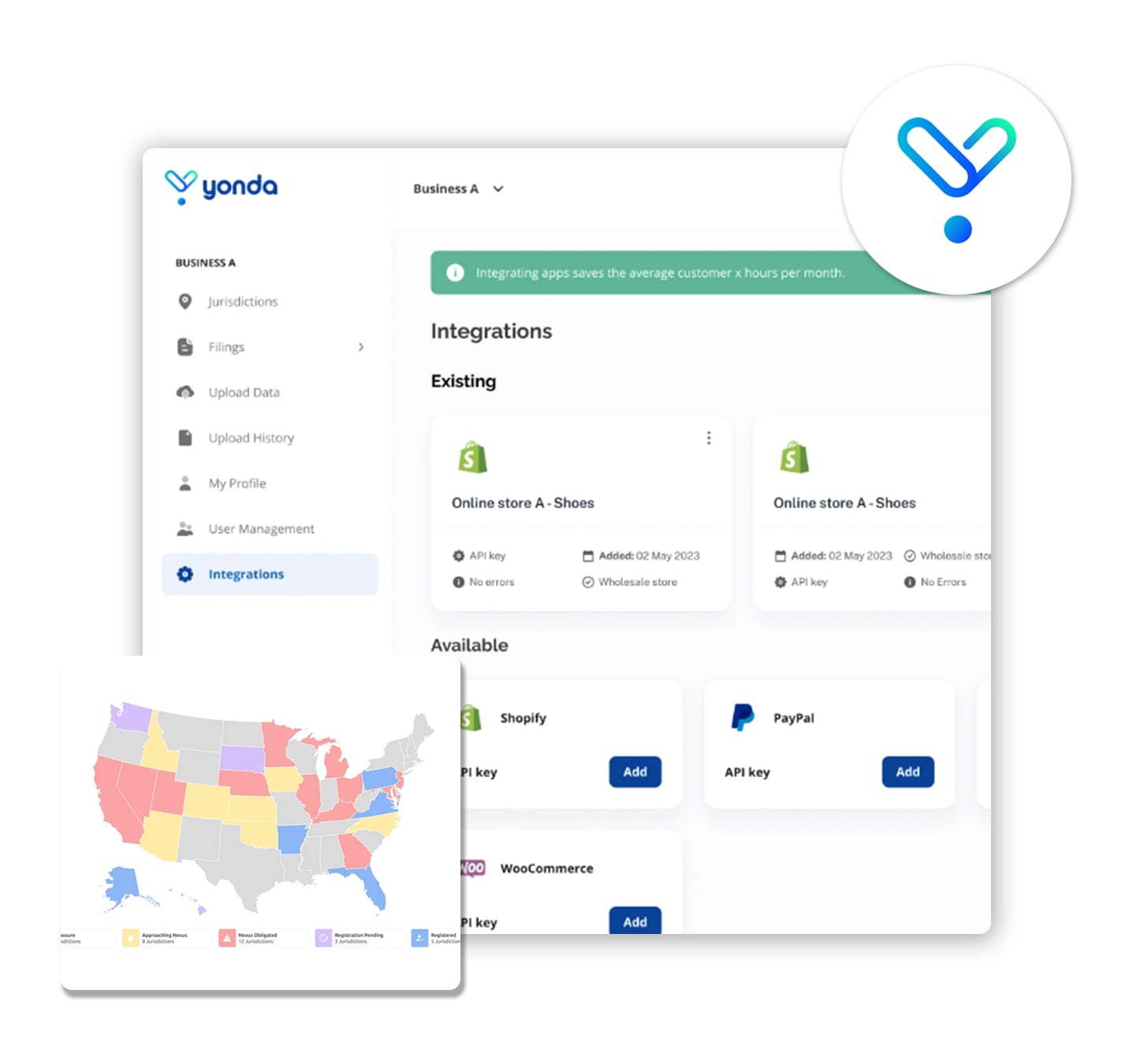
Yonda’s service breaks down into four pieces:
- Nexus monitoring. The platform tracks where your inventory sits and where your sales are landing, and flags the moment either one crosses a threshold that creates a new filing obligation.
- Registration. Once a new obligation is identified, Yonda handles the state registration paperwork rather than leaving you to research each state’s process individually.
- Calculation and filing. Sales tax is calculated and filed, with remittance submitted on the applicable schedule for every state you’re registered in.
- A single point of contact. One dashboard and one account manager are accountable for every deadline, across every state you’re registered in.
Yonda also integrates with Shopify and the other ecommerce and accounting platforms our clients run, so it fits into what you’re already using.
Ready to stop tracking filing deadlines yourself?
Hand registration, filing, and remittance to a dedicated account manager instead of a spreadsheet. Yonda Tax’s team takes it from here.
Getting started: a free nexus audit
If you’re not sure whether your current fulfillment footprint has already created a nexus obligation you haven’t registered for, that’s the first thing worth finding out before a state tells you.
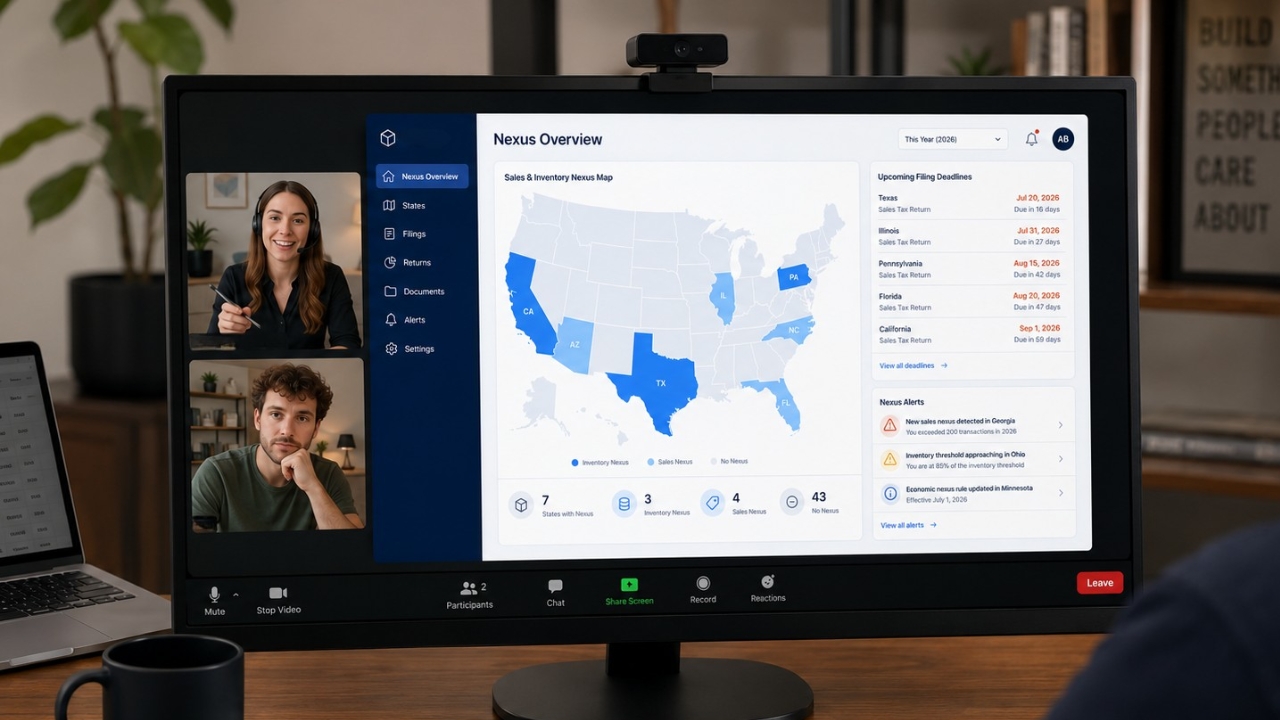
Not sure if you already have nexus somewhere?
Yonda Tax offers a free nexus consultation to review where your inventory and sales activity may have already created a filing obligation you don’t know about yet.
Frequently Asked Questions
Does this partnership cost eFulfillment Service clients anything to use?
No. Yonda Tax is a separate service you engage directly with them; there's no requirement to use it as an EFS client, and no bundled fee. The initial nexus analysis is complimentary, so you can see where you may have exposure before any paid filing work begins. Pricing beyond that is quote-based and scoped to your specific filing needs.
I only ship from one EFS warehouse. Do I still need to worry about nexus?
Possibly, through economic nexus. If your sales volume or transaction count in a given state crosses that state's threshold, you can owe sales tax there even without any physical presence. It's less common with a single warehouse than a multi-node setup, but it's worth checking rather than assuming.
How is this different from just using TaxJar or Avalara myself?
Software-only tools calculate tax and often support filing, but you're still the one watching for changes. Yonda pairs the platform with a dedicated account manager who handles the compliance work end to end, closer to outsourcing the function than adding another tool to your stack.
What happens if I've already missed a filing obligation in a state?
That's a conversation to have directly with Yonda or a tax professional. Some states offer voluntary disclosure programs that can reduce penalties for sellers who come forward before being audited, which is a good reason to get ahead of this rather than wait for a notice.
Does this cover international sales too?
Yes. Yonda's platform also manages UK and EU VAT and Canadian and Australian GST, which matters if you're shipping internationally or considering it.
Key Takeaways
- Storing inventory across multiple states can create sales tax nexus you didn’t choose. A multi-node fulfillment strategy that improves shipping times can quietly create tax obligations in states you’ve never sold to directly.
- Every EFS client has physical nexus in Michigan already. Storing inventory in our warehouse creates a registration and collection obligation there from day one. Adding more warehouses elsewhere can further create tax obligations in states you’ve never sold to directly.
- The first sign of a missed obligation is often a penalty notice. There’s no automatic alert when your inventory crosses a state line into a new one; Yonda’s monitoring exists to close that gap.
- Yonda Tax is a fully managed service. A dedicated account manager handles registration, filing, and remittance for you.
- Coverage extends beyond US sales tax. UK/EU VAT and Canadian/Australian GST are handled on the same platform for sellers shipping internationally.
- A free nexus audit is the lowest-friction way to find out where you stand. It costs nothing to check whether your current footprint has already created an obligation you don’t know about.



0 Comments