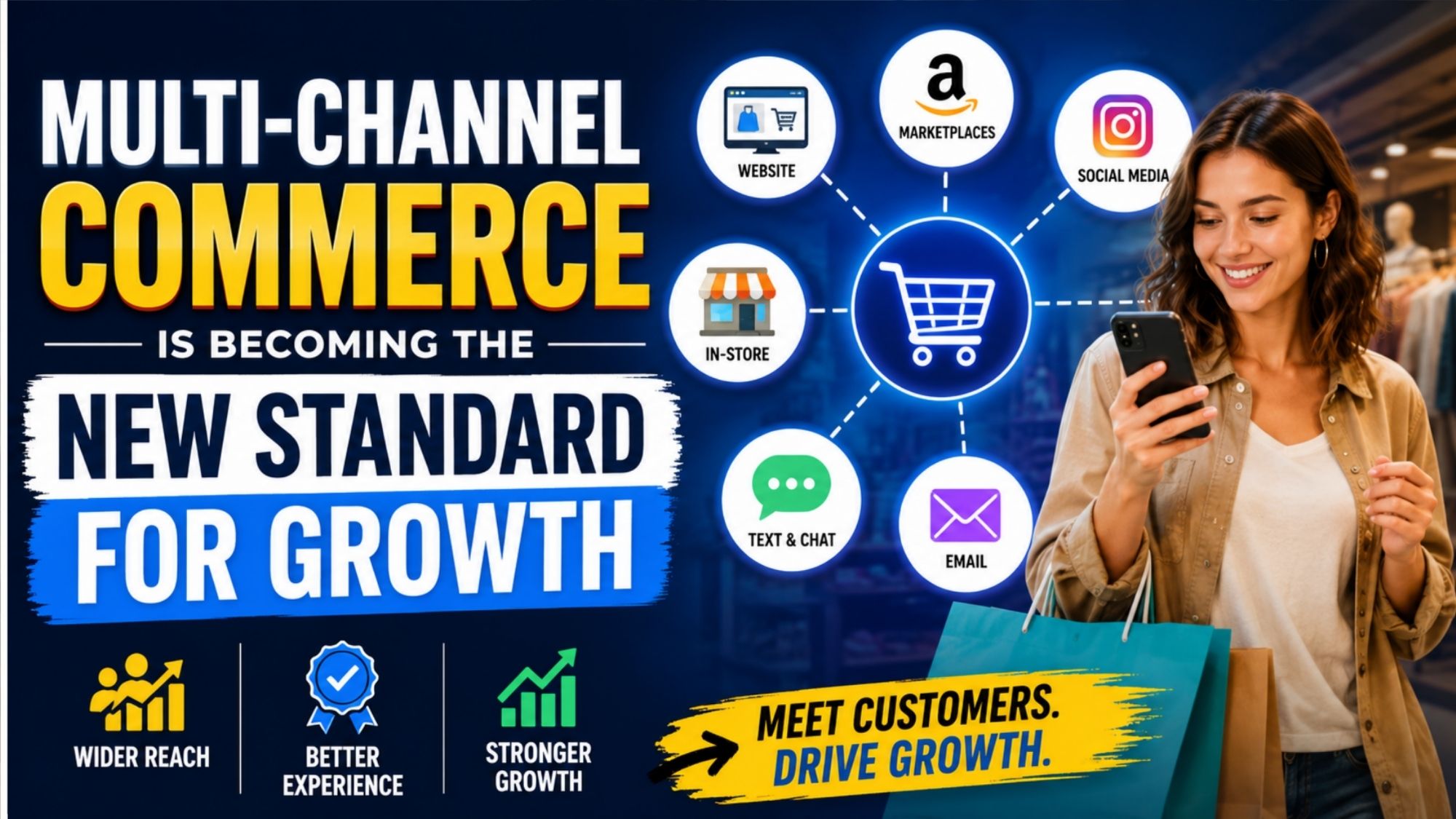
Multi-channel commerce means selling and engaging with customers across multiple channels simultaneously. Your website, marketplaces like Amazon, brick-and-mortar, social media, even text and email. It’s no longer a side project. It’s how retail works now.
Shoppers don’t move in straight lines. They see a product on Instagram, compare prices on a marketplace, read reviews on your site, then walk into a store to try it on.
Salesforce found that people now use an average of nine channels to interact with brands across their shopping journeys. That’s not chaos. It’s just modern shopping behavior.
This shift didn’t happen in a vacuum. Faster phones, slicker checkout experiences, better logistics, and more set expectations sky-high.
Multi-channel commerce is becoming the default because it meets customers where they already are and makes it easy for them to buy. Keep reading to learn why it’s becoming the new growth standard.
The Evolution of Retail: From Single-Channel to Multi-Channel
Not long ago, most retailers lived and died by a single channel. Think:
- A store on Main Street
- A catalog
- A single e-commerce site
Sure, it was simpler. However, it also puts a hard cap on reach and resilience. If foot traffic dipped and ad performance stalled, the whole business felt it.
Then a few things clicked:
- Secure online payments took off
- Marketplaces gave brands turnkey access to millions of shoppers
- Social platforms turned discovery into a direct path to purchase
Now, a brand might sell through its own site, Amazon, social checkout, and in-store, often at the same time.
BTS, technology made that possible:
- APIs
- Order management systems
- Mobile-first design
- Headless commerce architectures
They all helped businesses connect inventory and checkout wherever customers show up.
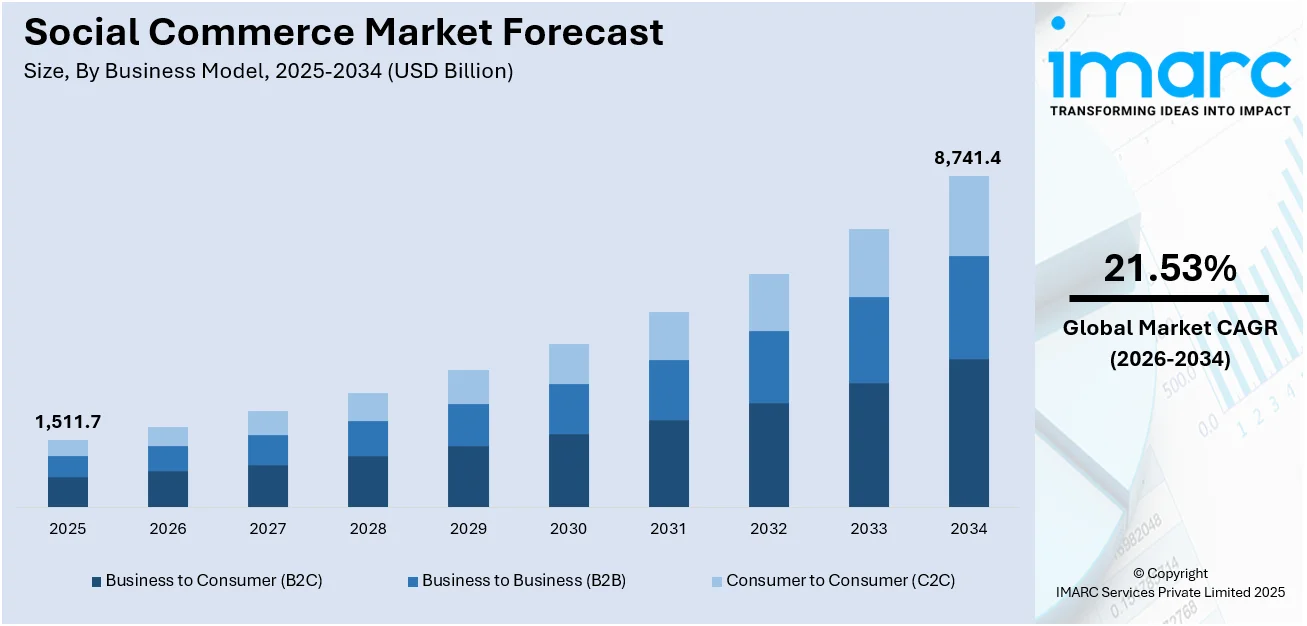
Social commerce, in particular, has grown rapidly. Its worldwide market could grow from $1.51 trillion in 2025 to $8.74 trillion by 2034 and expand at a 21.53% compound annual growth rate (CAGR).
Fulfillment with a Personal Touch.
See How Using a 3PL like eFulfillment Service sellers saves time. Get a Free Quote from eFulfillment Service Today!
The Pros and Cons of Multi-Channel Commerce for Businesses
Multi-channel commerce offers clear upside but also adds real operational complexity. Looking at both sides helps businesses grow in a more controlled and intentional way.
The infographic below gives a quick snapshot of the main benefits and challenges of multi-channel commerce:
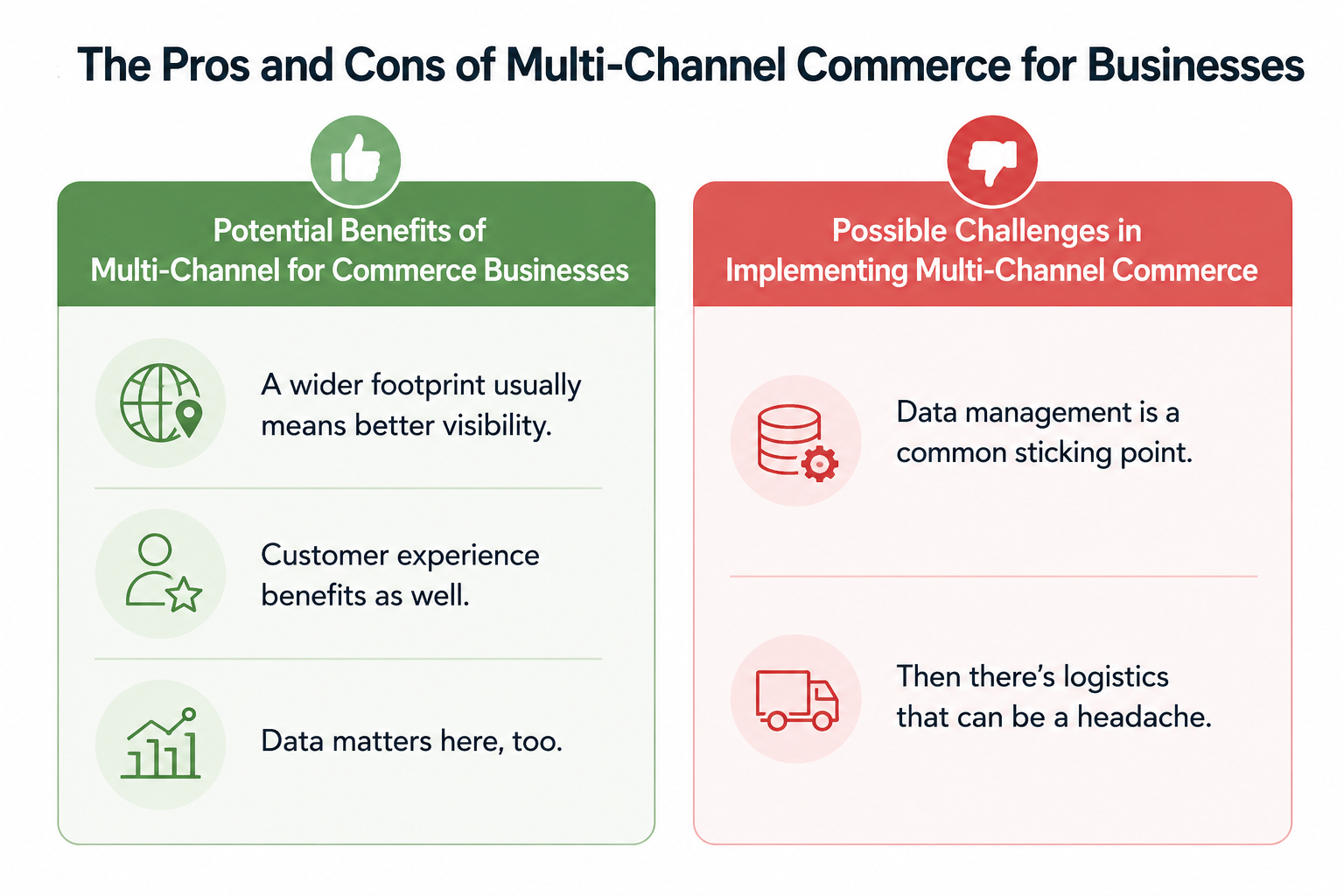
Image source: Generated by the author via ChatGPT
Let’s expound on each of them:
Potential benefits of multi-channel for commerce businesses
The upside is straightforward. More ways to be found and more ways to say yes when a customer is ready to buy.
- A wider footprint usually means better visibility. It also makes your business less vulnerable to algorithm changes and seasonal slowdowns in any one place. There’s a compounding effect, too. Harvard Business Review studied 46,000 shoppers and found that omnichannel customers spend more and stick around longer.
- Customer experience benefits as well. Some folks want to chat with a person in a store. Others want to buy on TikTok in 30 seconds. Many want to order online and pick up in stores. Meeting those preferences makes buying feel easy. When the experience is consistent across channels, you build trust.
- Data matters here, too. Each channel surfaces different clues about intent. Put together, those clues mean smarter merchandising, more relevant marketing, better inventory allocation. You’re not just growing. You can actually see what’s working in real time and adjust.
The upside is straightforward. More ways to be found and more ways to say yes when a customer is ready to buy.
Conrad Wang, Managing Director of EnableU, focuses on simplifying and unifying multi-channel operations. That way, brands can serve customers more consistently.
Wang says, “Multi-channel success isn’t really about being everywhere. It’s about making every channel aware of the others. When systems are connected, customers move more smoothly from discovery to purchase…that’s where growth starts to compound!”
A wider footprint usually means better visibility. It also makes your business less vulnerable to algorithm changes and seasonal slowdowns in any one place.
Possible challenges in implementing multi-channel Commerce
Adding channels adds complexity. It’s not just another storefront. It’s another set of listings, ads, returns, promotions, and service scripts to keep in sync.
- Data management is a common sticking point. If your POS says one thing, your marketplace says another, you’ll frustrate customers and your teams. Marketing can run into brand consistency gaps, too. Especially when product content and pricing live in different tools owned by different teams.
- There’s logistics, which can be a headache. More channels usually mean more SKUs in more places with more delivery promises to keep. If you don’t have clear rules, the operational noise grows quickly. And if your online and offline operations aren’t aligned, you’ll feel friction where customers expect flow.
Ryan Beattie, Director of Business Development at UK SARMs, works closely with scaling businesses and often highlights how quickly operational gaps appear when teams expand into multiple sales channels without unified processes.
Beattie explains, “Most businesses underestimate how fast things break when each channel runs on its own system. What looks like growth on the surface often turns into confusion behind the scenes. Without clear structure, even small inconsistencies in pricing or messaging can erode customer trust.”
As a result, businesses often find that multi-channel expansion exposes operational weaknesses that need to be addressed before real scale can be achieved.
Strategies for Successful Multi-Channel Integrations
You can build multi-channel capability without overhauling everything at once. Start by mapping your real customer journeys. Not the idealized ones.
The questions are: Where do people discover you today? Where are they dropping off? Tighten the experience in those moments first. That’s what it takes to scale your ecommerce business.
A few practical moves:
- Centralize your product and inventory data. That way, all channels read from one source of truth.
- Use an order management system. That’s to handle routing, split shipments, backorders automatically.
- Standardize product content and pricing rules. The goal is to keep your brand consistent across listings and ads.
- Align service policies for commerce operations. Think shipping thresholds, returns windows, warranties. That way, customers don’t get mixed messages.
- Pilot new channels with a limited catalog. While at it, measure early signals, then scaling what’s working
On the marketing side:
- Connect your email, SMS, paid social, and retargeting. That way, they talk to each other.
- Use consistent naming and UTM tagging. The goal is to track performance across platforms.
- Tie loyalty and referrals to identities that travel with the customer. Do so, whether they’re buying on your site, in-store, on a marketplace, or other ecommerce platforms.
Case in point:
If you’re selling custom hoodies, for example, make sure your website, marketplace listings, and social shop all pull from the same inventory and product information. So, customers see consistent pricing, content, design, and availability everywhere.
You can test a new sales channel with a few best-selling hoodies first. Also, track where orders come from as well as connect your email, SMS, and social campaigns. That way, customers get a seamless experience whether they discover you on Instagram, TikTok, a marketplace, or your actual online store.
In the end, a connected experience makes it easier for customers to engage with your brand wherever they choose to shop.
The Role of E-Fulfillment in Multi-Channel Commerce
Fulfillment is where promises get kept. You can have the best product pages and clever ads. But if the package arrives late or wrong, customers remember.
Working with an experienced e-fulfillment partner like eFulfillment Service can help you stitch together the messy middle:
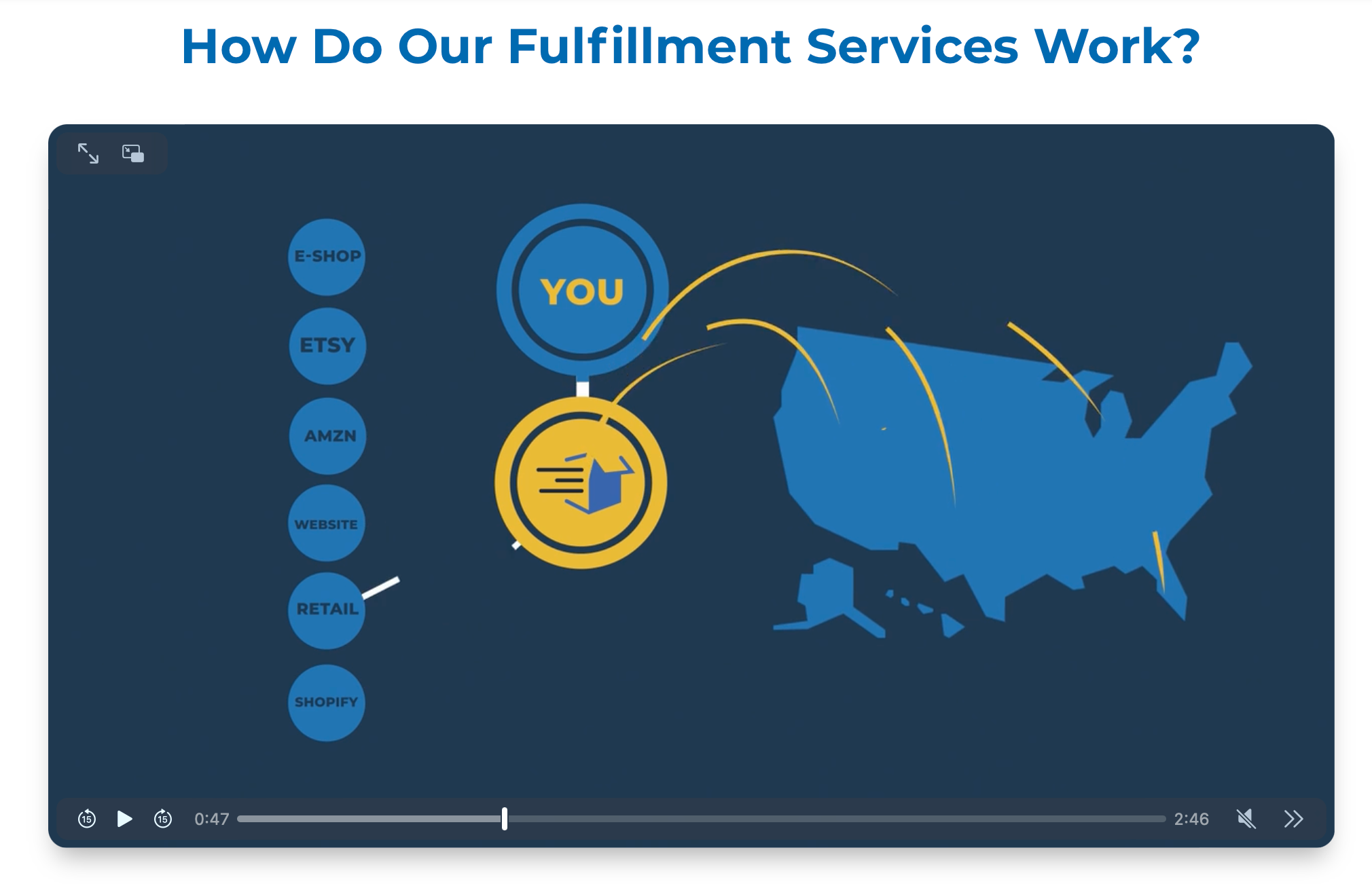
- Receiving inventory from various suppliers
- Syncing stock levels across channels
- Picking and packing accurately
- Shipping on time without burning out your team
It’s the kind of behind-the-scenes work that makes the customer-facing experience feel simple.
There’s a measurable payoff. Delivery speed and clarity affect conversion and repeat purchases.
Research from Baymard shows that slow delivery is a key contributor to cart abandonment among online shoppers (Baymard Institute). On the flip side, clear delivery options, accurate ETAs, and seamless returns reduce anxiety and increase follow-through.
Bryan Henry, President of PeterMD, focuses on how operational reliability directly shapes customer trust in multi-channel commerce. This is especially true as businesses expand across multiple fulfillment and sales environments.
Henry shares, “If you’re selling across multiple channels, fulfillment ops also become your source of truth for what’s available where. That matters when you’re balancing preorder campaigns, marketplace allocations, even in-store stock. Without that clarity, scaling just creates more confusion instead of more revenue.”
He concludes, “The tighter your fulfillment operation, the easier it is to offer capabilities like buy online or pick up in store. These are the kinds of experiences customers now expect because they save time and offer flexibility.”
Ultimately, strong fulfillment systems don’t just support operations. They shape what kind of commerce experiences a brand can realistically deliver at scale.
Future Trends in Multi-Channel Commerce
It’s best to anticipate future social and ecommerce trends. The next wave of multi-channel won’t be about adding more channels. It’ll be about making the ones you have feel smarter and more personal.
The next wave of AI-driven commerce intelligence
You can already see AI quietly doing useful work:
- Predicting which SKUs to replenish
- Recommending products that actually convert
- Flagging orders that might be risky, and powering service chat that resolves questions quickly.
That’s going to accelerate.
Mobile and social commerce convergence
Mobile and social commerce will continue to blur the lines between discovery and checkout.
- Platforms are racing to improve native shopping tools.
- Creators are building trust with niche audiences.
- Younger buyers are comfortable making big decisions on small screens.
Think with Google has long shown how local and mobile behavior is tightly linked. Many people who search for a nearby option on a phone end up visiting or calling within a day. That pattern favors brands that connect digital signals to local inventory and fulfillment.
Sustainability and ethical commerce as standard expectations
Sustainability and ethical commerce are rising from nice-to-have to expected. Think of local supplies, greener fulfillment, sustainable packaging, and efficient delivery as perfect examples.
Buyers want to know where products come from. How returns are handled. And what the environmental impact looks like.
Multi-channel can support that by:
- Making greener choices visible at checkout
- Offering consolidated shipments
- Surfacing local pickup where it makes sense
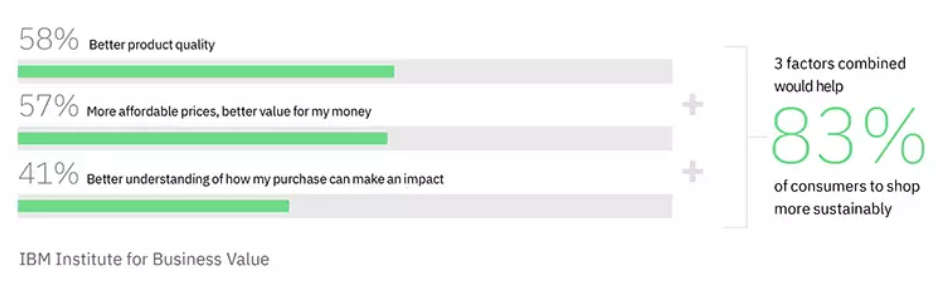
IBM’s research strikes a balance between sustainability and profitability (see the multiplier effect below). It highlights that a growing share of consumers seek out brands that align with their values and are willing to change shopping habits accordingly.
Summary
Multi-channel commerce has moved from strategy deck to day-to-day reality. Customers shop across a patchwork of touchpoints. And businesses that meet them there consistently and reliably earn more orders and more loyalty.
Start by mapping your actual customer journeys and identifying where expectations aren’t being met. Make sure your data has one home. Your brand story travels well. And your logistics can keep promises across every channel.
And if you’re ready to simplify operations, explore how a specialized partner like eFulfillment Service can help you scale. When the back end works smoothly, growth tends to follow. Get a quote today!

About the Author
Brooke Webber is a passionate advocate for a people-first strategy in HR. Her major focus areas are workplace psychology and employee listening, where she has already accumulated five years of writing experience.



0 Comments