

One social media post, a creator’s shoutout, a lucky stitch on TikTok, and suddenly your product is selling out everywhere. Viral launches are modern retail’s slot machine; they can transform a quiet shop into a household name in a snap. It’s every brand’s dream, but without the right inventory strategy, that success can quickly turn into frustrated customers and missed sales.
Brands can get burned by their own success. Your product launch may have gone viral, but when customers can’t buy what they came for, buzz fades fast. To succeed, you need to be prepared to fulfill every order the moment attention hits.
When buzz hits, awareness and sales can go sky-high within hours. Take, for example, Popeyes’ chicken sandwich in 2019. In just two weeks after its launch, it sold out nationwide. It generated massive demand that outstripped supply. The sandwiches sold out so fast that Popeye’s had to pause the launch and rebuild supply before bringing it back with better planning in place.
The opportunity is huge. The challenge is matching that interest with product inventory that you can actually deliver right away, without risking everything on a trend that might fade as quickly as it caught fire.
Understanding Demand Forecasting
Demand forecasting is all about figuring out how much of a product you’ll need to satisfy your customers over a certain period of time. It’s a mix of careful calculations and informed predictions. Kind of like trying to predict the weather. It’s about creating a reasonable estimate so you can plan your inventory and production smoothly and avoid unexpected hiccups along the way.
There are two general methods for demand forecasting:
- Quantitative: time-series models, regression, and increasingly, machine learning approaches that look at historical sales, promotions, seasonality, and lead times to project forward
- Qualitative: creator partnerships on the calendar, press coverage in the pipeline, community feedback, field sales intel, prelaunch signups, and waitlist momentum
Most teams do best with a hybrid. Those that rely on only one approach tend to fail. The best forecasts combine solid historical data with the insights your team gathers from the market. It’s about looking at the numbers while also listening to what people are saying on the ground.
If you’re launching a brand-new product, it’s helpful to look at similar items you’ve sold in the past. You may also look at launches from other brands in your industry. Pay attention to how those went.
Take note of early signs of interest, like how many people are adding your product to their carts, signing up for emails, or engaging with creators. This information can help you adjust your expectations as launch day gets closer.
Challenges of Inventory Management During Viral Launches
Viral demand isn’t a neat, upward curve. It’s jagged, emotional, and can swing by the hour. That volatility amplifies the classic inventory risks.
Understock and you hand customers to competitors and risk negative reviews. Overstock and you tie up cash and warehouse space in units that may not move once the trend cools.
Carrying inventory is expensive. Between capital costs, storage, insurance, and shrink, many retailers see inventory carrying costs in the 20-30% range annually, which adds up fast if you go too deep on a fad. There’s also the bullwhip effect to contend with; small changes in consumer demand can ripple upstream into huge swings, straining suppliers and leaving you with mismatched stock.
Strategies for Effective Inventory Planning
You can’t make viral demand predictable. You can make your supply chain more flexible.
Start with agile inventory management. Break big bets into staged buys, set dynamic reorder triggers, and postpone final product configuration when you can.
For example, hold unlabeled base units and apply colorways or packaging later, after you see which variants are surging. Fast-moving 3PL partners can help you kit or rework on the fly so inventory follows real demand, not a January spreadsheet.
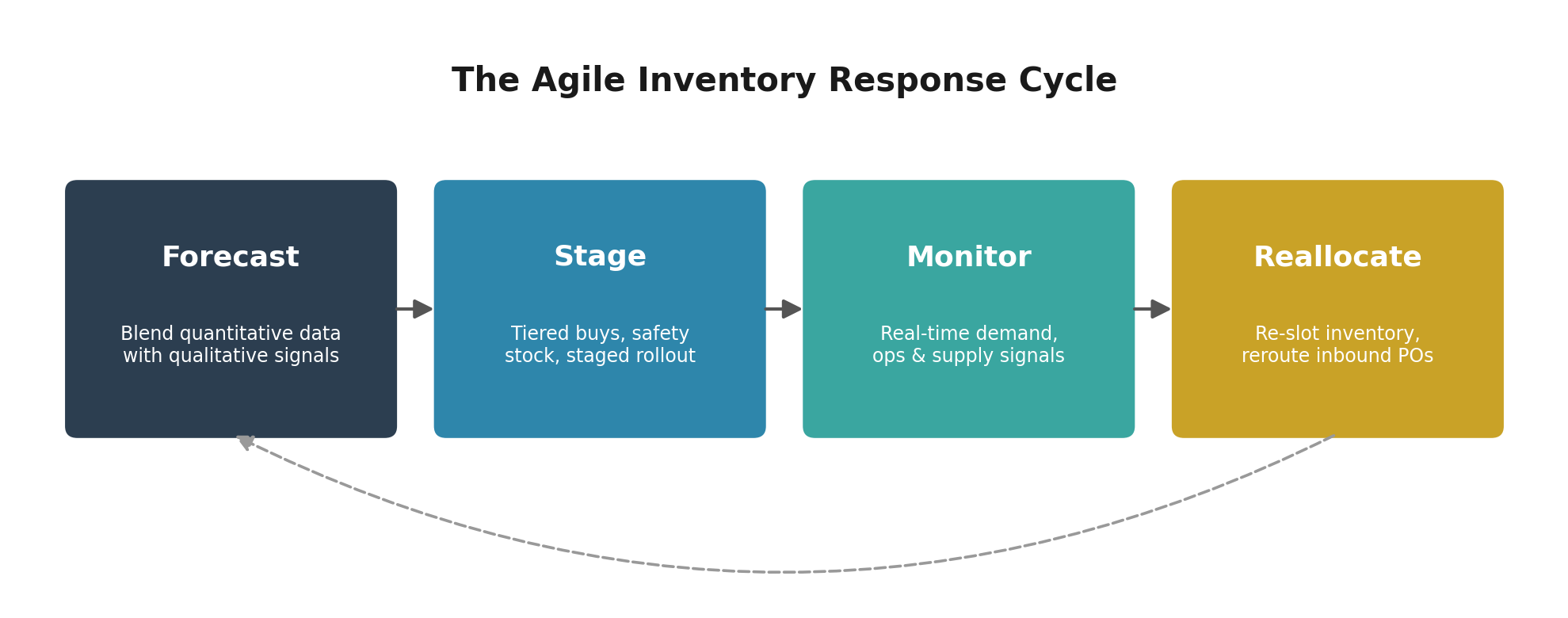
A few practical moves:
1. Build tiered scenarios
Create conservative, base, and viral-upside forecasts and align inventory buys and marketing levers to each tier. You can throttle spend if supply is tight or lean into the moment if you’ve got depth.
2. Use safety stock intentionally
Set buffers by SKU based on lead time variability and service-level goals, with larger buffers on hero SKUs and smaller ones on long-tail variants.
3. Stage your launch
Rolling drops by color or size, or region-by-region rollouts, help you learn quickly and redirect inventory to where it’s actually moving.
4. Offer transparent preorders
Clear delivery timelines give you demand signals without overcommitting inventory. Just make sure your estimated ship dates are honest.
5. Design your digital shelves to flex
Dynamic allocation rules can steer orders to the closest node, split orders when needed, and prioritize high-margin SKUs when inventory is constrained. Not glamorous, but it keeps carts converting while you catch up.
Fulfillment with a Personal Touch.
See How Using a 3PL like eFulfillment Service sellers saves time. Get a Free Quote from eFulfillment Service Today!
Collaborating with Suppliers
Speed in a viral moment starts months earlier, with supplier relationships that can flex under pressure. You can’t negotiate a strong supplier relationship in the middle of a crisis.
It’s important to invest in trust and transparency long before the launch. When your suppliers understand your roadmap, they can flex production with you and protect quality even under pressure.
David Lamulle, Owner of Lamulle Construction, sees the same principle play out on every job site. “You can’t call a supplier for the first time during a shortage and expect them to prioritize you,” he says. “The relationships you build when things are calm are what get you flexibility when they’re not.”
A few ways to make that real:
- Share demand scenarios and promotional calendars ahead of time so suppliers can plan labor and materials.
- Set flexible capacity reservations or option contracts that you can exercise if your upside hits.
- Dual-source critical components when feasible, which helps you balance cost against the risk of a single point of failure.
- Align on quality gates and clear specs so speed doesn’t erode standards.
- If you use just-in-time inventory, pair it with contingency buffers for key SKUs so a delayed truck doesn’t stall your bestseller.
When you involve your suppliers in your launch plans from the beginning, you typically experience quicker transitions, clearer insights into lead times, and fewer unexpected issues on the production floor. Collaborate with them early to create a smoother path for everyone involved and make the entire process more efficient.
Leveraging Data and Analytics
You can’t manage what you can’t see. Real-time data turns a chaotic launch into a controlled sprint.
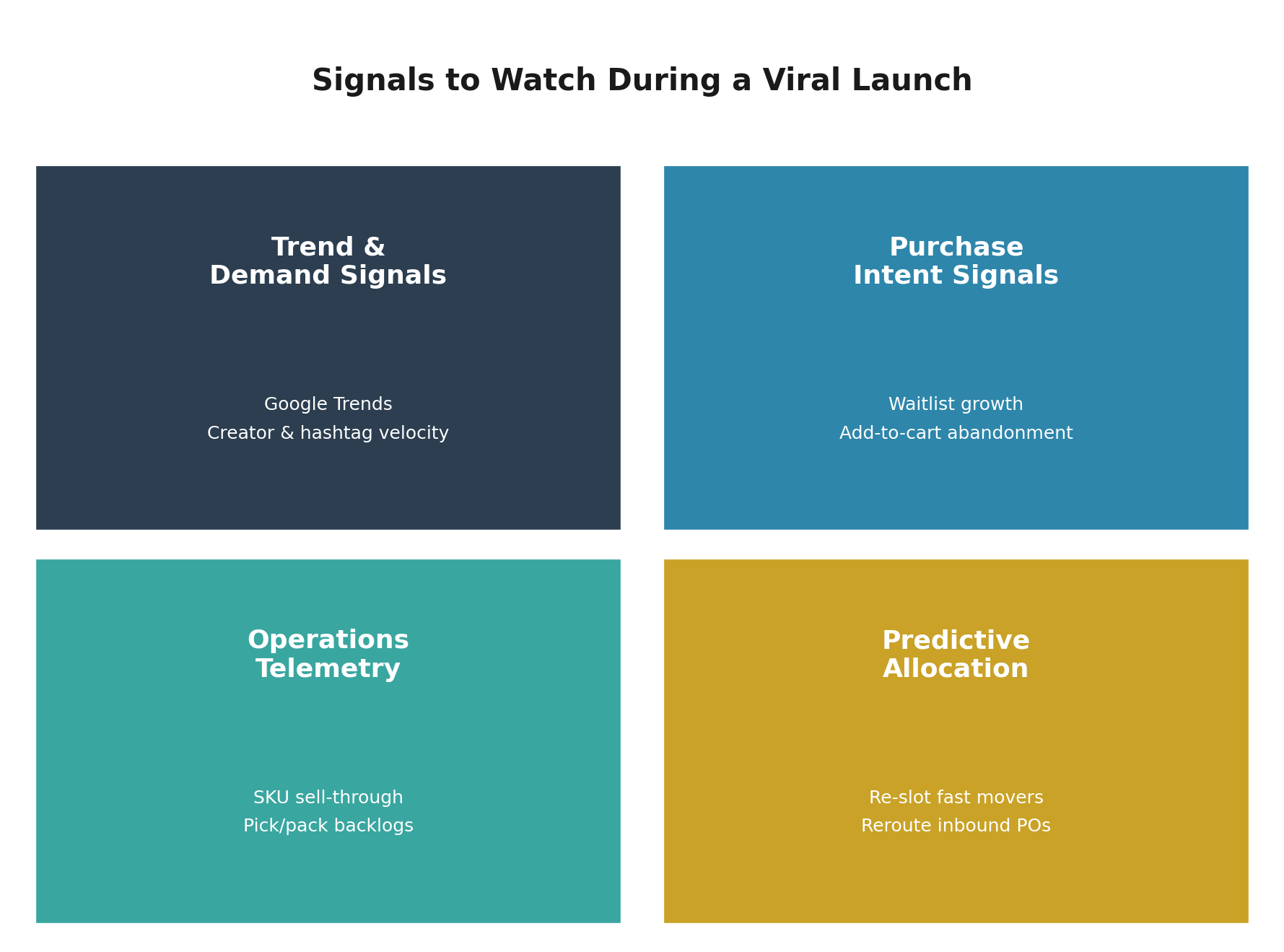
Useful tools and signals:
- Search and social trend data. Keep an eye on category keywords in Google Trends to spot momentum and regional hot spots. Track creator content and hashtag velocity in platforms’ trend hubs like TikTok’s Creative Center.
- Intent metrics. Waitlist growth, notify-me signups, add-to-cart abandonment by SKU, and PDP scroll depth often move before orders do.
- Operations telemetry. SKU-level sell-through, pick/pack backlogs, carrier scan times, and return reasons help you shift inventory, labor, and packaging in near real time.
- Predictive allocation. As certain variants or regions heat up, re-slot fast movers closer to pack stations, move inventory between nodes, and reroute inbound POs to the facilities that need them most.
Bring these feeds into a single dashboard your ops, marketing, and finance teams share. When everyone is looking at the same live picture, decisions get faster and better.
If your business also depends on land availability, regional expansion, or agricultural supply chains, public data sources such as Land Portal can complement your operational analytics. You get insights into land use, ownership, and governance that may influence long-term inventory and distribution planning.
Ready for the Next Wave?
Viral product launches present both opportunities and challenges. While receiving huge demand overnight sounds like success, you need to make sure you can meet it first. That’s why effective inventory management is crucial. And it requires a combination of demand forecasting methods to align stock levels with anticipated consumer interest.
Brands must implement agile inventory strategies, such as staged purchases and transparent preorders. Collaborate closely with suppliers and be flexible with inventory allocation so you can navigate the complexities of fulfilling orders promptly while managing costs and risks associated with overstocking or understocking.

About the Author
Brooke Webber is a passionate content writer who loves storytelling. She has six years of experience crafting compelling narratives that resonate with audiences across industries. A total coffee addict, she immerses herself in literature in her spare time.



0 Comments