
How to Sell Supplements on Shopify: Platform Rules & Fulfillment
Shopify will let almost anyone open a store and list a supplement for sale. Getting approved for Shopify Payments is a separate question, decided under different rules, and that approval can be paused, held, or restricted after the store is already live and taking orders.
The storefront goes up, the first few sales come in, and then a document request lands in the inbox, or funds stop showing up on schedule. A clean, compliant product page doesn’t settle the payments question. That approval runs on its own separate timeline, underneath whatever the storefront itself already passed.
Not sure your fulfillment partner can actually produce this paperwork?
Ask directly: can your 3PL pull every order that shipped from a specific lot, going back two years or more? eFulfillment Service tracks lot and expiration dates as standard practice, with FEFO rotation applied automatically rather than as a special request, following handling protocols aligned with FDA and GMP expectations.
Can you sell supplements on Shopify?
Yes, with conditions. Shopify’s Acceptable Use Policy allows dietary supplements as a product category, but it draws a hard line around how they’re marketed rather than what’s inside the bottle.
What gets a store flagged or shut down:
- Claims that a product treats, cures, or prevents a disease
- Language copied from FDA warning letters issued to other brands (a common and avoidable mistake reviewers do catch)
- Ingredients on Shopify’s prohibited list, including certain stimulants and unapproved research chemicals
- Substances the FDA has specifically banned from dietary supplements, ephedra being the best-known example
- Missing or vague ingredient disclosure on the product page
What’s fine: structure/function language, such as “supports immune health” or “promotes healthy digestion,” paired with the standard Dietary Supplement Health and Education Act (DSHEA) disclaimer and kept clear of any disease claim. The distinction is narrower than it first appears, and it follows the same line the FDA and FTC already draw.
The ephedra ban itself dates to 2004, one of the few times the FDA has pulled a supplement ingredient from the market outright. Most enforcement since then has focused on labeling and health claims rather than banning ingredients.
Why this catches sellers off guard
The policy language sounds like it targets outright fraud. In practice, the store review looks closely at ordinary DTC marketing habits: a testimonial that says a supplement “cured my joint pain,” a comparison chart implying a product outperforms a prescription drug, or ad copy repurposed from a competitor without checking whether that competitor already got a warning letter for it.
Bad intent isn’t the common thread. A product page written by someone optimizing for conversion instead of compliance is enough on its own, and that describes most new supplement stores in month one.
The payments problem nobody mentions in the setup guides

This is the part that stops supplement brands, and it shows up well after launch, once the store is already live and taking orders.
Shopify Payments, the built-in processor most stores use by default, treats supplements as a gray-area category under its eligibility rules, which restrict “pseudo pharmaceuticals”: products that make or imply a health claim without the regulatory approval typically expected of a drug. A supplement store with clean, disclaimer-backed structure/function claims can usually pass. One with even slightly aggressive marketing copy can get flagged for the exact same product. Approving the store and approving its payments are two different reviews, run by two different systems: the payment rail sits with the processor’s own underwriting rather than with Shopify’s content moderation team.
What that looks like in practice:
| Signal that triggers review | Common outcome |
|---|---|
| Sudden order volume spike from a viral post or a successful ad | Payouts paused pending documentation |
| High chargeback rate in a rolling window | Rolling reserve (explained below) |
| New subscription-based revenue model | Extra underwriting scrutiny on recurring billing |
| First 90 days of a new high-volume subscription store | Elevated risk of a fund hold with no advance notice |
High-risk merchant accounts generally hold 5-10% of each day’s sales for 90 to 180 days on a rolling basis. Shopify doesn’t publish supplement-specific reserve terms, but there’s no reason to expect the general high-risk mechanics work any differently here. Either way, a meaningful share of revenue sits frozen while the supplier invoices don’t stop coming.
There’s no public figure for how many supplement brands get caught by a rolling reserve in a given year; payment processors don’t release that data. Whatever the real number is, the exposure holds for any brand mid-review.
The workaround
If Shopify Payments won’t approve a supplement store, or approves it and then flags it later, the fix isn’t leaving Shopify. It’s routing around the built-in processor: Settings → Payments → Third-party providers, connecting a high-risk-friendly gateway instead.
None of this fixes the underlying payments problem, to be fair. A backup gateway keeps orders flowing, but it won’t get Shopify Payments to release a reserve any faster, and it won’t make the underwriting review any less opaque.
The tradeoff: third-party gateways built for high-risk categories typically charge higher per-transaction rates than Shopify Payments’ standard pricing. Budget for that difference before launch rather than discovering it after switching processors mid-crisis.
Selling supplements on Amazon and your own site?
eFulfillment Service handles FBA prep and direct-to-consumer fulfillment out of the same facility, with lot-level tracking that follows the product across both channels.
Building a product page that survives review
A supplement product page has to do two jobs a normal DTC listing doesn’t: sell the product, and hold up if an FDA or FTC reviewer, or Shopify’s own trust and safety team, reads it literally.

The requirements:
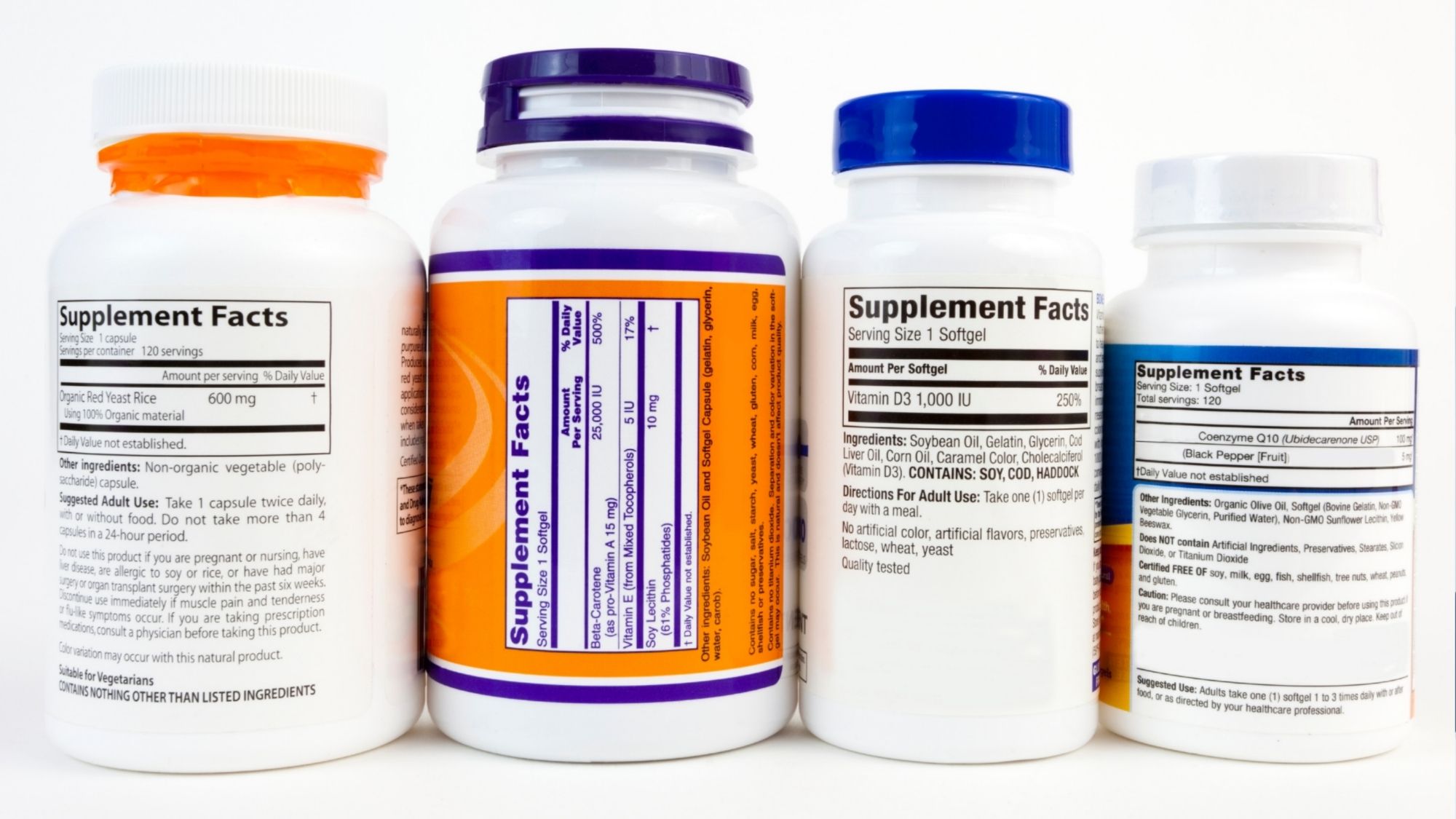
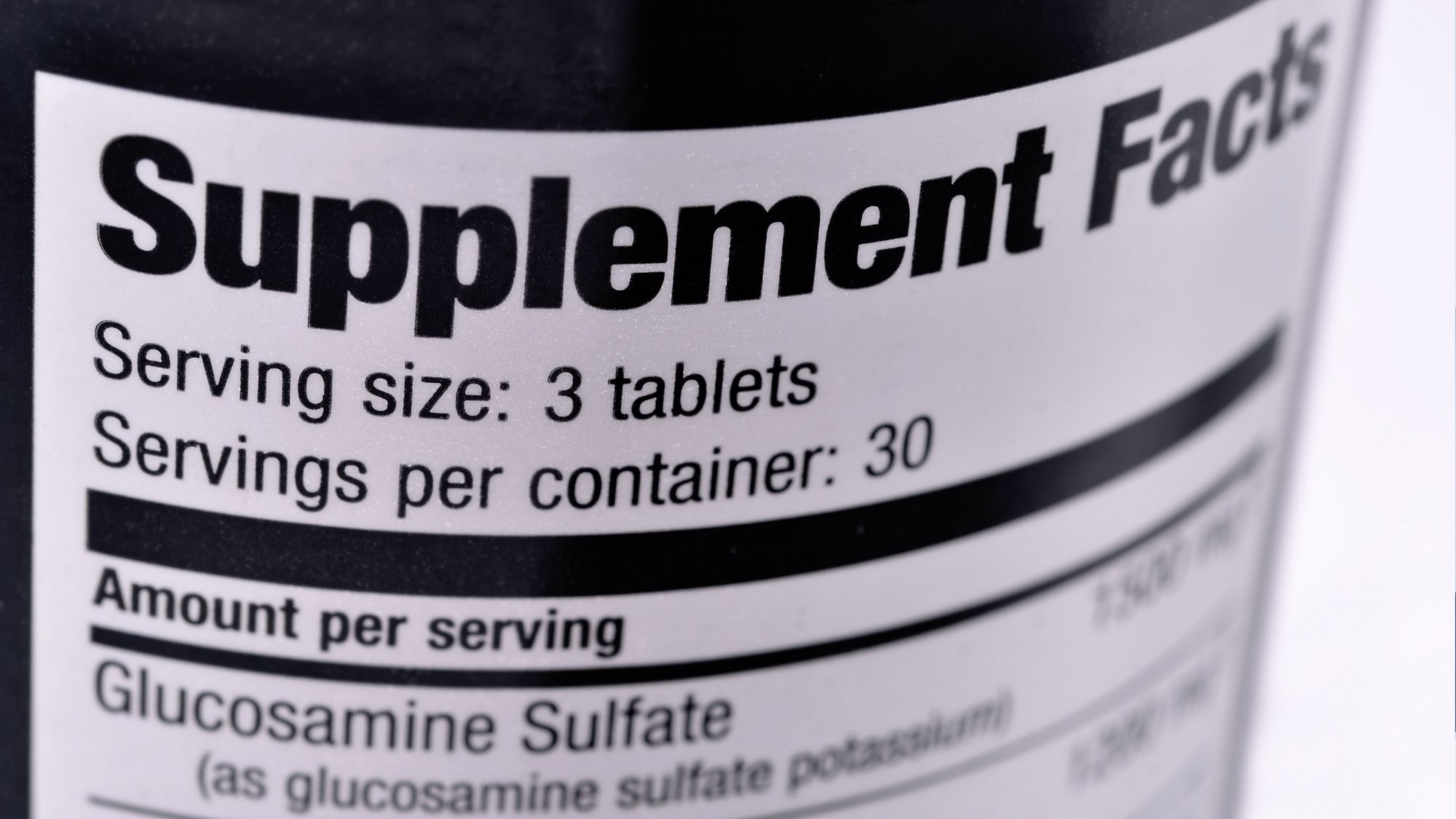
- Full ingredient disclosure, including the Supplement Facts panel image rather than a marketing-friendly ingredient summary alone
- The DSHEA disclaimer on every page making a structure/function claim: “This statement has not been evaluated by the Food and Drug Administration. This product is not intended to diagnose, treat, cure, or prevent any disease.”
- No disease claims, direct or implied. This includes customer review sections and Q&A widgets. Brands often forget to moderate these as carefully as their own copy.
- Age or health-condition gating where the product category calls for it (stimulant-heavy pre-workouts, certain hormone-adjacent supplements)
- Lot number visibility somewhere in the fulfillment chain, even if not on the customer-facing page. This becomes critical the first time a customer service ticket asks for a Certificate of Analysis on a specific bottle.
Where founders cut corners without meaning to
Most brands do get their main product description reviewed by a compliance-aware copywriter or an attorney early on. The gaps show up everywhere else: the FAQ page, the About page origin story, a founder’s Instagram bio linked from the store, and testimonial carousels pulled from social media without a second compliance pass. Reviewers and regulators read all of it rather than only the primary listing.
Running FBA and DTC out of the same warehouse?
eFulfillment Service handles Amazon FBA prep and direct-to-consumer fulfillment under one roof, without treating them as the same workflow. Keep your marketplace and owned-channel orders both moving without picking a single lane.
Choosing a subscription app that doesn’t fight your fulfillment
Supplement brands live and die by Subscribe & Save, and Shopify’s subscription layer runs almost entirely through third-party apps: ReCharge, Skio, and Loop are the three most common in this category. The app choice matters less for the storefront experience and more for what happens on the warehouse side.

What to check before committing to one:
- Does it sync skip/pause/swap states to your third-party logistics provider (3PL) in real time? A subscriber who skips a cycle and gets shipped anyway is the single most damaging fulfillment failure in a subscription business. The cost lands on a retained relationship, well beyond a single order.
- Can it handle flavor and variant swaps between cycles without manual intervention from your team?
- Does it support bundle contents changing between shipments, if your subscription includes rotating or seasonal products?
- What’s the API/webhook reliability like under order-volume spikes? The same spikes that can trigger a Shopify Payments review are the moments your subscription sync is most likely to lag or drop events.
A feature comparison chart won’t surface any of this until it fails in production. The right question to ask any subscription app vendor, or any 3PL evaluating whether they can support it, isn’t “do you integrate with Shopify.” Every app does. It’s “what happens to a skip request that arrives after the pick list has already been generated for that cycle.”
Not sure what's actually in your greens powder or plant protein?
Heavy metal testing is outside what a 3PL does, but clean lot tracking is what lets you act fast if a specific batch needs a warning label added or gets pulled. See how lot-level tracking works for exactly this kind of situation.
Fulfillment mistakes new Shopify supplement sellers make
- Treating fulfillment as a Shopify app decision instead of a compliance decision. Installing a shipping app solves label printing, nothing more. Storage compliant with current Good Manufacturing Practice (cGMP) rules, lot tracking, and First Expired, First Out (FEFO) picking are requirements tied to the product category, and no shipping app checks for those automatically.
- Not asking a 3PL about facility registration before signing. Any facility that manufactures, processes, packs, or holds food, including dietary supplements, for U.S. commerce needs [Bioterrorism Act facility registration with the FDA](https://www.fda.gov/food/guidance-regulation-food-and-dietary-supplements/registration-food-facilities-and-other-submissions). A 3PL that’s never been asked the question may not have it, and an audit or a recall is the worst possible moment to learn that.
- Launching Subscribe & Save before confirming warehouse-level sync. The Shopify subscription app can look fully configured on the storefront side while the warehouse still has no visibility into skip/pause states. That gap stays invisible until a subscriber complains about a shipment they explicitly canceled.
- Assuming Shopify order data alone satisfies traceability requirements. A Shopify order number tells you what was ordered. It doesn’t tell an FDA investigator which lot shipped to which customer. That mapping has to happen at the fulfillment layer, order by order.
Ready to see how a supplement-specific 3PL actually operates?
eFulfillment Service has supported dietary supplement, nutraceutical, and natural product brands for more than 20 years, with lot tracking, FEFO rotation, kitting, and returns management as standard parts of the service, not upsells.
Frequently asked questions
Do I need FDA approval before selling supplements on Shopify?
No. Under DSHEA, the FDA is not authorized to approve dietary supplements for safety and effectiveness before they're marketed, and in most cases a brand can lawfully introduce a supplement without even notifying the FDA first. The burden is on the manufacturer to ensure safety and accurate labeling before market, with FDA enforcement happening after the fact rather than through a pre-approval process.
Why was my Shopify Payments application rejected even though my store is live?
Shopify Payments underwriting for restricted categories like supplements happens separately from store approval, and it can change after launch: a volume spike or a rising chargeback rate can trigger a hold even on an account that was previously approved.
Can I sell supplements internationally through Shopify Markets?
Yes, but ingredient legality varies significantly by country. A compound that's perfectly legal in a U.S. supplement can be restricted or banned elsewhere. There's no single data source listing every country's restricted-ingredient rules in one place, either, so check the destination country's own rules before enabling a market rather than after the first international order ships.
What's the difference between Shopify's content policy and my FTC obligations?
Shopify's Acceptable Use Policy is a platform rule that can get a store suspended for violations. FTC health-claim substantiation requirements are a separate federal obligation that exists regardless of which platform you sell on. Passing Shopify's review doesn't mean a claim is FTC-compliant, and vice versa.
Does my 3PL need to be cGMP certified, or just my manufacturer?
Both, for different reasons. Your manufacturer's cGMP compliance covers how the product was made. Your fulfillment facility needs its own compliant storage and handling practices, separate from that: temperature control, lot segregation, FEFO rotation. A compliant product can still be compromised by non-compliant storage after it leaves the factory.