
How Much Does Supplement Fulfillment Cost? A Pricing Guide for DTC Brands
A supplement 3PL quote reads like any other fulfillment quote until two line items behave differently. Returns don’t go back on the shelf once a seal is broken, so there’s no markdown-and-restock recovery the way there is with a shirt or a book. Climate control isn’t an optional upgrade, either. The moment a SKU is heat- or humidity-sensitive, the provider has to charge for it, whether the brand budgeted for that line or not.
Those two differences are where a supplement cost breakdown diverges from a generic ecommerce pricing guide, and they’re also the two line items DTC founders most often underestimate before the first invoice arrives. This guide breaks down what supplement and nutraceutical fulfillment costs, from self-fulfillment through a general 3PL to a supplement-specialized one. It’s a companion piece to our complete guide to supplement and nutraceutical fulfillment which covers the compliance and operational landscape end to end. This piece narrows in on the money.
Not sure your fulfillment partner can actually produce this paperwork?
Ask directly: can your 3PL pull every order that shipped from a specific lot, going back two years or more? eFulfillment Service tracks lot and expiration dates as standard practice, with FEFO rotation applied automatically rather than as a special request, following handling protocols aligned with FDA and GMP expectations.
What actually shows up on a supplement fulfillment invoice

The cost categories are mostly the same ones any DTC brand sees on a 3PL quote. Supplements add a handful of line items a general ecommerce cost guide won’t mention at all, and change the economics of one category that looks routine everywhere else: returns.
- Receiving: checking in new stock and shelving it, typically billed by the hour or the unit, with lot-level verification adding time a non-regulated product doesn’t require
- Storage: rent for the space inventory sits in, billed per cubic foot or per pallet, with a separate rate for climate-controlled zones
- Lot tracking and COA administration: the system and staff time behind matching every shipped unit back to its originating batch and producing a certificate of analysis on request
- Kitting: assembly labor for stacks and bundles that combine multiple SKUs, each carrying its own lot number, under one kit SKU
- Pick and pack: labor to pull and box an order, priced per order with additional items usually cheaper than the first
- Outbound shipping: passed through at whatever carrier rate applies, plus insulated or moisture-barrier packaging for sensitive SKUs
- Returns processing: inspecting whatever comes back and making a restock-or-scrap call, covered in its own section below, since the math here works differently than in most other categories
- Account or minimum fee: a flat monthly floor some providers charge regardless of order volume
Our general guide to 3PL cost and fee structures goes deeper on how to read a quote across categories that apply to any ecommerce brand. What follows covers the numbers specific to supplements.
What self-fulfillment really costs
DIY fulfillment looks free because there’s no invoice. The cost is still there. For a supplements brand specifically, it shows up as retail-rate shipping and mistakes, plus the compliance exposure of doing lot tracking by hand.
Retail shipping costs more than commercial or negotiated rates. A one-pound package at the USPS retail counter runs about $10.95 for Zone 5 Ground Advantage, against roughly $8.74 at commercial pricing. No volume requirement or contract is needed to get commercial pricing, just an account with shipping software. A 3PL’s own negotiated carrier rates can sometimes beat that commercial number too, depending on the provider’s volume with each carrier — there’s no published figure for how much, since it’s specific to each provider’s contracts. Paying retail, one label at a time, across hundreds of subscription cycles a year, adds up faster than founders expect regardless.
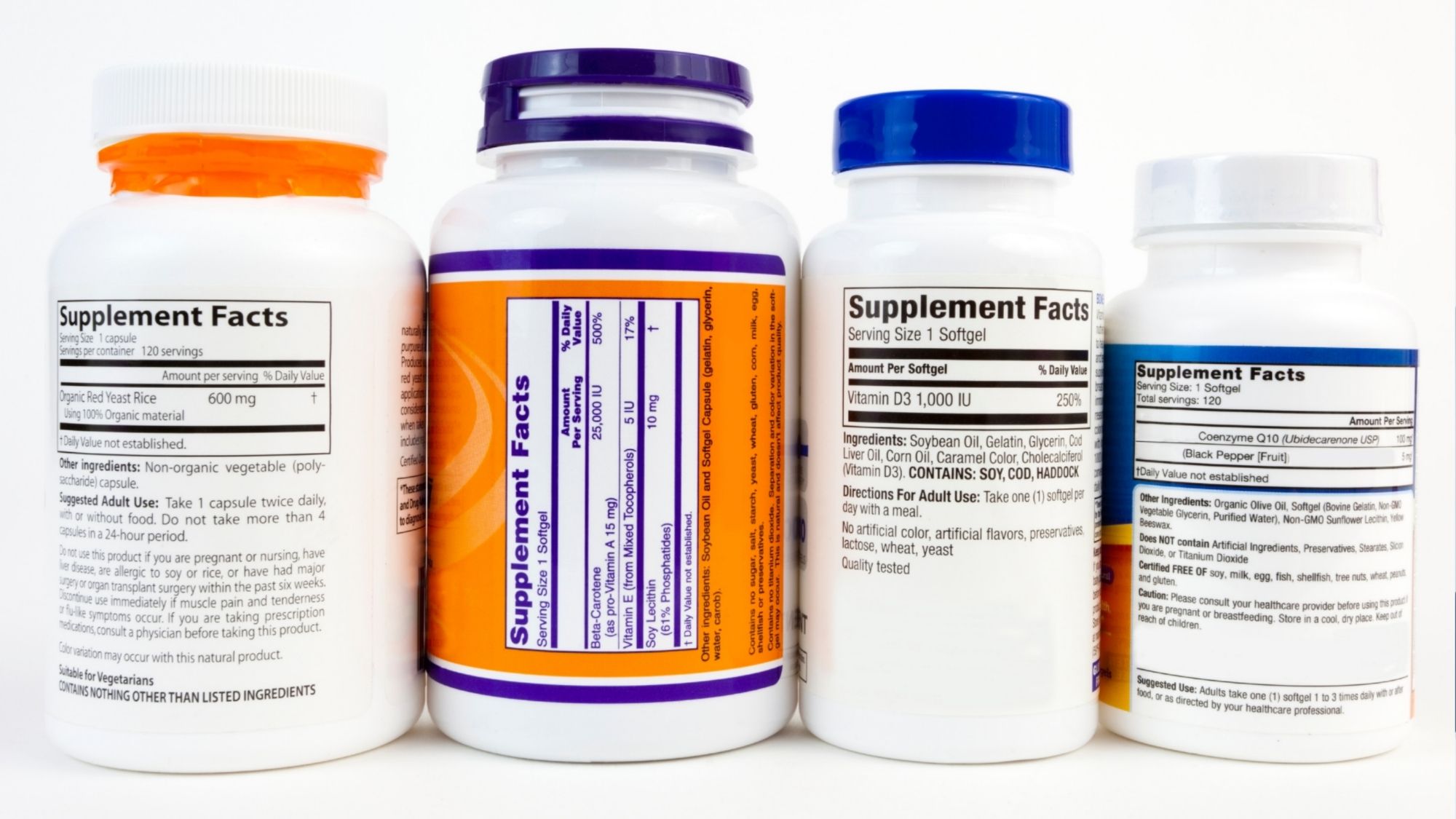
Manual lot tracking is a spreadsheet held together by discipline. Without a warehouse management system enforcing FEFO (first-expired, first-out) picking, a founder is relying on someone remembering to check expiration dates before every pick. That works until volume climbs past what one person can track by hand. Past that point, the failure mode is an expired unit shipped to a subscriber, or a COA request that takes days to answer instead of minutes because nobody logged which lot went into which order. (This isn’t unique to supplements, for what it’s worth — any category with an expiration date on the label runs into the same wall eventually. Supplements just hit it earlier, because the regulatory stakes are higher.)
Insulated packaging and moisture-barrier materials cost more at retail prices, and buying in bulk to get a better per-unit rate requires storage space most home-based operations don’t have.
A founder-led brand shipping under 300 orders a month (the Emerging stage referenced throughout this guide) can usually absorb that time cost, so DIY still makes sense there. That line shifts with SKU count, how many components a subscription program bundles into a kit, and how much of the catalog needs climate control.
What a 3PL charges for supplements specifically
A general 3PL’s rate card and a supplement-specialized one look similar on the pick-and-pack and storage lines. Lot-tracking, climate-control and kitting are where the two diverge. A provider that can’t itemize those lines separately usually can’t do them well either.

Note: the pricing below does not reflect that of eFulfillment Service, but average costs across other 3PLs in 2026. Oftentimes, eFulfillment Service’s pricing beats the pricing listed below in most cases.
| Cost category | Typical range | Notes |
|---|---|---|
| Standard (ambient) storage | ~$0.45–$0.75 per cubic foot/month | Baseline rate for non-sensitive SKUs |
| Climate-controlled storage | Meaningful premium over ambient, often billed per unit rather than per cubic foot | Required for probiotics, gummies, softgels, and liquids where potency claims depend on storage conditions |
| Pick and pack | ~$2.50–$4.50 per order | Supplement-specific baseline; runs above general ecommerce averages due to lot-level pick verification |
| Kitting/bundling | Priced per kit, above a standard single-SKU pick | Covers assembly labor for stacks that combine multiple lot-tracked components |
| Lot tracking / COA administration | Rarely broken out as its own line, but should be itemized or explained | The administrative cost of matching shipped units to batches on request |
| Monthly minimum | Varies by provider | Charged regardless of order volume — confirm before signing |
The climate-controlled storage row is the one most general-purpose 3PLs either can’t quote accurately or fold silently into a “premium storage” tier without explaining why. There’s no clean industry figure for exactly how much that premium runs; it varies by provider and by how the zone gets metered, which is itself a reason to ask directly what triggers the rate and how it’s calculated, rather than accepting a blended number you can’t audit.
Curious what your own SKU mix would actually cost?
eFulfillment Service can quote your order volume, kit complexity, and climate-control needs as separate, itemized lines instead of one blended “premium storage” number.
The line item other categories don’t have: non-restockable returns
Most fulfillment cost guides treat returns as a processing fee: receive it, inspect it, decide whether it goes back on the shelf. Supplements break that model.
Once a seal is broken, nobody downstream can verify what happened to the product between the customer’s hands and the warehouse dock. That gap is a genuine safety and liability exposure, which is why any opened container gets treated as non-resalable no matter how much product remains inside.
The cost math is different because of it. A returned apparel item that gets cleaned and restocked recovers most of its value. A returned supplement bottle with a broken seal recovers none of it. The brand eats full COGS on that unit, on top of whatever the return shipping and inspection labor cost.
The cost math is different because of it. A returned apparel item that gets cleaned and restocked recovers most of its value. A returned supplement bottle with a broken seal recovers none of it. The brand eats full COGS on that unit, on top of whatever the return shipping and inspection labor cost.
Only an unopened container with an intact tamper-evident seal and a verifiable, non-recalled lot number is a candidate for restock. That narrow window is why lot verification and tamper-evidence checking are what determine whether a 3PL is saving a brand money on this line, versus just processing paperwork on units that were always headed for the trash.
Subscription programs make the non-restockable math worse. Auto-ship generates a steady trickle of returns from cancellations and address issues, plus damaged-in-transit claims. Every one of those follows the same non-restockable math. Our breakdown of returns and order processing covers how that inspection-and-disposition decision should work.
Returns quietly eating more margin than the invoice shows?
A returns fee doesn’t capture the full cost when the product can’t go back on the shelf. See how eFulfillment Service verifies seals and lot numbers to catch the units that actually can be restocked.
What a chargeback costs beyond the dispute itself
Card networks classify nutraceutical and supplement merchants as high-risk largely because of chargeback exposure, and auto-ship or free-trial continuity programs are a well-known driver of that exposure industry-wide. Processors terminate accounts, sometimes freezing funds, when a merchant’s dispute rate climbs too high. This merchant processing Q&A for high-risk sellers covers what processors evaluate in more depth.

Fulfillment execution is a direct lever on that dispute rate, and that makes fulfillment quality a real cost line, even though it never appears on a 3PL rate card. A late shipment or a wrong-item pick is a chargeback waiting to happen. So is a subscription order that ships without a checkable lot number. Each dispute carries a processing fee on top of the lost revenue, and enough of them can put a merchant account itself at risk.
A clean, on-time, accurately picked subscription shipment removes one of the most common chargeback triggers before it starts. Few brands price that into their cost comparison up front, but it belongs in the math alongside storage and pick fees.
A skip or pause request that ships anyway carries a similar hidden cost. The unit’s COGS and its outbound shipping are wasted, and a reship or refund is needed to fix it. On top of that, the subscriber now has a concrete reason to distrust the brand’s auto-ship reliability, and none of it shows up as a line item until it happens.
Worried fulfillment mistakes are quietly driving your chargeback rate?
eFulfillment Service syncs directly with subscription platforms so skip, pause, and swap requests actually reach the warehouse before the order ships.
Cost comparison by order volume
The right answer changes as volume grows, and the tiers that matter for supplements track subscription maturity more than order count alone.
| Stage | Monthly order volume | Cheapest option (usually) | Why |
|---|---|---|---|
| Emerging | Under 300 orders | DIY or a lightweight fulfillment app | Time cost and lot-tracking risk stay manageable at this scale; provider minimums aren’t worth paying against this little volume |
| Growth | 300–3,000 orders | Depends on Subscribe & Save volume and SKU/kit complexity | This is where manual lot tracking and non-restockable returns start costing more than a specialized 3PL’s fees, especially once auto-ship makes up a large slice of revenue |
| Scale | 3,000+ orders, or multichannel (DTC + Amazon + retail) | Supplement-specialized 3PL | Compliance documentation and omnichannel inventory allocation compound faster than a generic rate card accounts for |
At the Growth stage, the framing matters more than the math: the question worth asking is what fulfillment costs per subscriber per year, not per shipment, since it’s now a recurring line item tied to retention rather than a one-time cost per customer.
Not sure which tier your Subscribe & Save program is in?
Get a quote built around your actual order volume, kit complexity, and climate-control needs — not a generic per-order estimate.

A handful of costs tend to surface only after the contract is signed.
- Kitting fees for stacks and bundles. A pre-workout bundled with a pump and a creatine isn’t a single-SKU pick. Assembly labor for a kit is priced separately, and a 3PL that pre-builds large batches of a kit risks locking in an expiration date across every component, which becomes expensive fast if one component gets recalled.
- COA turnaround time as an unpriced service level. Two providers can quote the same per-order rate and still differ enormously in how fast either can produce a certificate of analysis for a specific lot on request. That gap only shows up when a customer, a retailer, or an auditor asks for one.
- Dimensional-weight shipping surcharges. A quote based on weight alone often misses what the invoice charges once box size and insulated packaging factor into the carrier’s rate.
- Restricted-ingredient shipping blocks. SKUs containing kratom, DMAA, or hemp-derived cannabinoids need address-level shipping restrictions enforced automatically. A provider whose system can’t do that by SKU and destination together risks a compliance failure that costs far more than any per-order fee.
Asking any provider for a fully loaded sample invoice, beyond the quoted rate card, is the most reliable way to catch these before they become a surprise on the first bill.
When each option makes financial sense

- Choose DIY or a lightweight app if order volume is under 300 a month, the SKU count is simple, and there’s no meaningful climate-control requirement yet.
- Choose a general 3PL if the catalog is shelf-stable with no climate-control needs and pricing matters more than supplement-specific compliance depth.
- Choose a supplement-specialized 3PL if Subscribe & Save drives a meaningful share of revenue, any SKU requires climate control, or the brand is navigating cGMP compliance and can’t afford a lot-tracking gap.
These choices tend to shift over time rather than lock in at day one. Plenty of brands start DIY, move to a general 3PL once order volume crosses the point where manual tracking becomes unreliable, then shift to a supplement-specialized provider once Subscribe & Save volume or a compliance scare makes generic fulfillment insufficient. Exactly where that first crossover lands for a given brand is hard to say without knowing its SKU mix and kit complexity — the 300-order marker used throughout this guide is a starting point for that conversation, not a formula.
Key Takeaways
- Supplements break the standard returns math. A returned apparel item or book gets cleaned and restocked. A returned supplement bottle with a broken seal recovers none of its COGS, since an opened container is a safety and liability problem, not a resalable one.
- Climate control is priced in, whether a founder asks for it or not. Probiotics, gummies, softgels and liquids all carry a storage premium the moment potency depends on temperature or humidity, typically billed per unit rather than per cubic foot.
- Chargeback risk is a fulfillment-execution problem as much as a payments one. High-risk merchant classification means a late or inaccurate subscription shipment can put the entire merchant account at risk, well beyond the cost of that single order.
- A skip or pause request that ships anyway wastes money twice. The COGS and shipping on the unwanted shipment are gone, and the reship or refund needed to fix it is a second cost on top, before counting the subscriber trust it burns.
- Frame the comparison as cost per subscriber per year. Fulfillment is a recurring line item once Subscribe & Save is a meaningful share of revenue, so it competes directly with CAC in the margin equation.
- A fully loaded sample invoice beats a rate card. Kitting fees, COA turnaround time, and monthly minimums rarely show up until the first bill arrives.
Whatever stage you’re in, the fastest way to find out if a provider will actually deliver what they promise is to ask the questions in this guide before you sign, not after your first invoice arrives. eFulfillment Service will walk through exact, itemized pricing and a real point of contact from the first conversation. Get a free quote and see how DTC fulfillment works when nothing is hidden until month two.


0 Comments