
If the past few years have taught fulfillment teams anything, it’s that calm conditions don’t last. Ocean spot rates hit record highs during the pandemic. They then eased, only to jump again with Red Sea disruptions in late 2023 and early 2024 as vessels rerouted around the Cape of Good Hope.
Freightos tracking shows container prices doubled or more on key lanes in a matter of weeks (see Freightos’ weekly updates below). This happened as carriers diverted ships and capacity tightened, with ripple effects on schedules and reliability across networks. Those swings don’t just mess with budgets; they also force hard choices about pricing and customer promises.

In fulfillment and shipping, you need more than a Plan B. You also need Plan C and D, not to mention a clear trigger for switching between them. Scenario planning helps you sketch out what-if situations ahead of time and decide how you’ll respond. When you map out multiple futures, you build the flexibility to pivot quickly when market conditions shift.
Instead of reacting, you’re ready.
This page tackles what you need to know about scenario planning in fulfillment. Read on to learn how to plan for the possibility that shipping costs spike again.
Understanding Scenario Planning
Scenario planning is a structured approach to exploring and preparing for multiple plausible futures.
Instead of betting on a single forecast, you craft a small set of narratives and map how each one would affect your operations and customer experience. The goal isn’t to predict perfectly but to practice how you’ll adapt.
Think of when moderate shipping cost increases or sharp spikes tied to fuel prices. Factor in extended surcharges from parcel carriers. That’s when you need scenario planning.
Key benefits of a business strategy
When you build scenarios and decide on your moves ahead of time, you reduce the chaos. You can:
- Stress test margins and make smart calls on pricing or free-shipping thresholds
- Pre-negotiate with carriers, so you’re not stuck when surcharges roll in.
- Set inventory placement strategies that shorten shipping zones and reduce exposure.
- Align teams on clear playbooks and communication steps.
The outcome is a sturdier strategy that holds up under changing conditions. It’s also easier on your team, as they can act with confidence rather than scrambling.
Historical Analysis: Shipping Cost Fluctuations
Shipping cost spikes are nothing new. Looking at past disruptions, from pandemics to geopolitical conflicts, helps you understand how quickly freight rates can surge and why. Reviewing these historical trends offers valuable lessons for spotting early warning signs and preparing for future volatility.
Here’s what you need to know:
Past Trends and Spikes
We’ve seen a few clear chapters of volatility:
- 2020–2022 pandemic era: Global port congestion and equipment imbalances pushed container rates to record highs. Drewry’s World Container Index shows spot rates on major routes climbing to more than $10,000 per FEU at the peak, many times higher than pre-pandemic norms.
- 2022 fuel shocks: Geopolitical tensions, especially after Russia’s invasion of Ukraine, drove marine fuel prices up and filtered into ocean and air surcharges. The International Energy Agency (IEA) chronicled significant energy price volatility in 2022 that fed through to transport costs.
- 2023–2024 Red Sea reroutes: Security risks in the Red Sea led many carriers to avoid the Suez Canal. These added thousands of nautical miles and weeks of transit time, not to mention higher costs. Global media and analytics firms tracked sharp rate increases and widespread schedule changes as this unfolded in early 2024.
UNCTAD has also highlighted how shipping cost spikes can push consumer prices higher months later. It shows the real downstream impact when logistics bills balloon. See UNCTAD’s 2021–2022 analysis on elevated freight rates and consumer prices below:

Lessons learned
Two themes keep popping up:
- Over-reliance on a single lane, mode, or partner makes you vulnerable.
- Fast, clear decision rules beat seat-of-the-pants reacting.
Take it from Sixin Zhou, Marketing Manager at LDShop. He closely tracks logistics trends because shipping costs directly affect eCommerce profitability and fulfillment planning.
Zhou says, “Major shipping cost spikes often follow recognizable patterns. By studying events like the 2021 container shortage and fuel price surges, businesses can identify early warning signals and build appropriate buffers.”
He adds that reviewing past disruptions helps companies adjust inventory strategies and prepare contingency plans before costs spiral out of control.
Potential Scenarios for Shipping Cost Spikes
Shipping costs can rise quickly when market conditions shift. Several factors can drive sudden increases in freight and logistics expenses. Here are some possible scenarios:

Image source: Generated by author via ChatGPT
Economic factors
Economic shifts often influence shipping costs. These happen due to changes in fuel prices and trade policies. Even carrier capacity directly affects freight rates.
Fuel price jumps: Marine fuel costs (including low-sulfur fuels required by IMO 2020 rules) flow directly into bunker surcharges. A sudden spike can quickly lift ocean and air rates. See the five beneficial changes from IMO’s Sulphur limit for ships’ fuel oil:

- Tariffs and trade policy: New tariffs and retaliatory measures can add line-item costs on top of freight. That is not to mention changes to de minimis rules, squeezing landed margins.
- Capacity cycles: Carrier orderbooks and blank sailings (even idle capacity) can tighten markets faster than you think when demand snaps back.
Is Your Business Ready for Professional Order Fulfillment Services?
Take our 3-minute assessment to discover if partnering with a fulfillment service could help scale your business.
Storage Solutions
Optimize your inventory management
Scale Operations
Support your business growth
Save Time
Focus on core business activities
Improve Accuracy
Enhance customer satisfaction
Takes 3 minutes • Get instant results • Free analysis
Business Metrics
Assessment Questions (1-4)
Assessment Questions (5-8)
Assessment Results
Global events
Major global disruptions can quickly affect international shipping. These force route changes and limiting capacities, thus pushing rates even higher.
- Geopolitical flashpoints: Conflicts near chokepoints like the Suez or Panama Canals can spark reroutes and price surges.
- Pandemics and labor disruptions: Labor availability, from port shutdowns to strikes, can constrict throughput. This can drive up rates for weeks or months.
- Extreme weather: Hurricanes, floods, and drought (think Panama Canal draft restrictions) can reduce capacity on critical corridors and raise costs. These can lead to shipping exceptions and increased costs.
Technological and regulatory changes
Advances in technology and evolving regulations can reshape shipping operations. While these can sometimes lower costs, they can also introduce new expenses and risks.
- Environmental regulations: Emissions caps and carbon pricing can increase operating costs and extend transit times.
- Parcel surcharges and dimensional weight changes: Carriers regularly update demand surcharges and DIM rules. These can swing parcel spend significantly.
- Tech-driven efficiencies or failures: Automation and predictive tools can lower costs, but cyber incidents or tech outages can do the opposite.
How To Implement Scenario Planning and Mitigate Shipping Costs
Shipping costs can change quickly, so it’s better to plan ahead than to react at the last minute.
Scenario planning lets you prepare for different disruptions and set clear response strategies. It helps you make faster decisions when costs start to rise.
Here’s how to anticipate risks and reduce the impact of shipping cost spikes.
1. Build different scenarios
Start simple. Pick three to five scenarios based on the triggers you watch most:
- Fuel spike: Bunker fuel up 30% in 60 days; Air surcharges rise in tandem
- Demand surge: Holiday shopping starts early; Carriers add peak surcharges and cap volume.
- Chokepoint disruption: Suez or Panama constraints add two weeks to transit and increase costs 40% on affected lanes
- Parcel DIM change: Major carrier updates dimensional divisor, pushing average parcel cost up 12%
For each scenario, define:
- Lead indicators – Freight indexes (FBX, Drewry), port dwell times, carrier on-time performance, bunker price benchmarks, posted surcharges.
- Exposure – SKUs at risk, origin-destination pairs, customer promises that get tight.
- Decision thresholds – The exact numbers that trigger a move. For example: If Asia–US West Coast spot rates exceed $5,000/FEU for three weeks, shift 30% to rail/air and raise the free-shipping threshold by $10.
2. Set response strategies
Map tailored plays, such as:
- Mode shifts: Pre-approve lanes where you’ll switch from ocean to rail or air for priority SKUs.
- Network tweaks: Pull inventory forward to regional nodes to cut zones and speed up the final mile.
- Packaging moves: Switch to right-sized packaging or SIOC (ship in own container) to dodge DIM penalties. Packaging consolidation is key!
- Commercial levers: Consider a temporary surcharge on oversized items or promotional shifts toward lighter SKUs.
- Customer comms: Send clear delivery-time messaging on PDP and checkout, plus proactive delay notices.
Learn from Kashif Ali, Growth Specialist at PsychologySchoolGuide.net. He emphasizes the value of preparation when managing logistics costs and operational risks.
Ali explains, “We walk through specific cost spike scenarios and validate response protocols. This practice keeps strategies relevant and teams prepared.”
He says that regular stress tests help teams react faster and align decision-making. This avoids costly last-minute adjustments when shipping conditions change.
3. Employ continuous monitoring
Build a lightweight dashboard with:
- Spot rate indexes for key lanes
- Carrier surcharge trackers
- On-time delivery and WISMO (where is my order) trends
- Inventory days-on-hand by region
- SLA risk alerts
Decide who watches which metric and how often, including what happens when a threshold is hit. Keep it simple and visible, that’s tied to action.
4. Diversify shipping methods and partners
Diversification spreads risk. Mix carriers and modes. Blend regional parcel carriers with national networks. Build optionality to route the ocean through different gateways or switch lanes when congestion hits.
Companies with diversified shipping portfolios weather cost spikes significantly better than those dependent on single providers. However, more shipping options aren’t always better. So, having a handful of reliable carriers is key!
Tactically, you can also:
- Set up zone-skipping or consolidation flows to reduce the number of parcel zones.
- Keep backup labels and API connections hot with at least two parcel carriers.
- Maintain contracts for both ocean and expedited air/rail as surge options.
5. Leverage tools and technology
The right tools make trade-offs clear in real time. Think of multi-carrier shipping software, TMS platforms, optimization tools, and other technologies. They can automatically rate shops and model slowdowns. They can even flag better options when capacity tightens.
Learn from Paxton Luke, General Manager at Rogue Valley Heating, Cooling & Electrical. He has also experienced working with fulfillment companies on digital optimization.
Luke shares, “Advanced shipping optimization platforms can analyze thousands of variables in real-time to identify the most cost-effective routes and carriers. These tools help businesses make data-driven decisions that minimize the impact of price fluctuations while maintaining service quality.”
On the warehouse floor, small tech wins add up:
- Cartonization to avoid DIM penalties
- Automated weight verification to prevent audit fees
- Pick-path optimization to keep labor costs steady when freight isn’t
Take eCommerce Fulfillment & Shipping Services, for example. As you can see, fast and reliable fulfillment and shipping are crucial for any ecommerce business. With eFulfillment Service, you can focus on growing your business while working with a trusted partner.
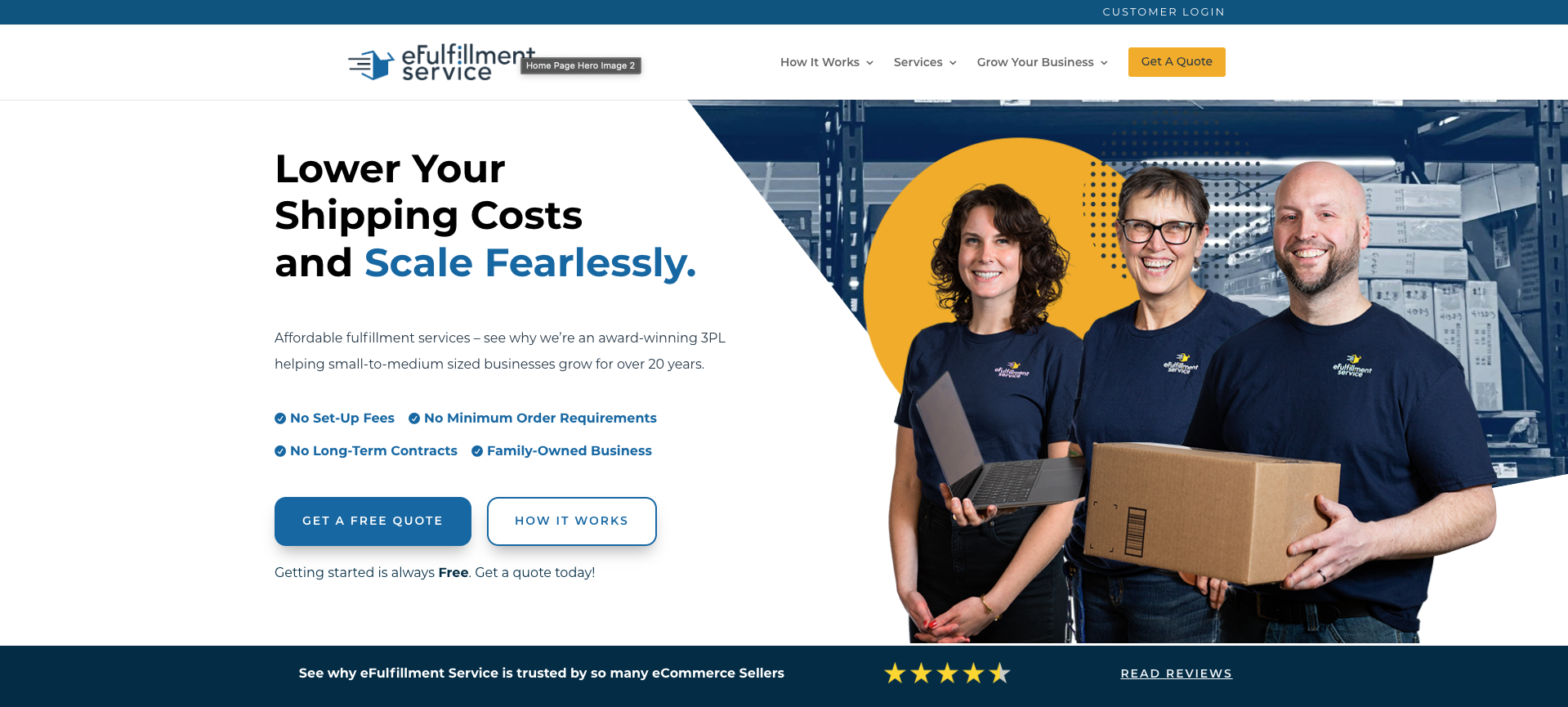
Generally, its order fulfillment software helps you stay in control of your operations. With it, you can:
- Monitor inventory, orders, and shipments 24/7
- Forecast inventory needs
- Receive low-stock alerts
- Manage returns
- View backorders
- Access invoices
- Track shipments in real time
- Manage shopping cart integrations.
6. Establish long-term contract negotiations
Longer-term contracts can stabilize price and space, especially if you:
- Use index-linked formulas with caps and collars.
- Trade some volume commitments for accessorial protections.
- Negotiate the language for peak and demand surcharges in advance.
- Include service-level remedies tied to on-time performance.
Aim for flexibility clauses, too. Think of the ability to reallocate volume among regions or modes when conditions change. Using contract management software can also help you track terms and monitor compliance. With this in place, you can quickly adjust agreements as shipping conditions evolve.
Fulfillment with a Personal Touch.
See How Using a 3PL like eFulfillment Service sellers saves time. Get a Free Quote from eFulfillment Service Today!
Summary
Shipping cost volatility isn’t a one-time shock. It’s a recurring feature of global trade. The companies that navigate it best don’t guess; they prepare better.
They review a short list of indicators and build 2 or 3 concrete scenarios. They agree on the exact moves they’ll make when triggers hit. They diversify carriers and modes, use technology to spot options, as well as lock in contracts that balance stability with flexibility.
If you run fulfillment, this is your moment to get plans on paper while conditions are relatively steady. When the next swell arrives (and it will), you’ll already know what to do. Want to dig deeper into building practical scenarios for your operation? Explore more insights on the eFulfillment Service blog and share them with your team.
If you’re evaluating how a multi-node 3PL, smarter packaging, or multi-carrier parcel strategies could reduce your exposure to shipping cost spikes, consider their order fulfillment services. Get a quote today!

About the Author
Brooke Webber is a passionate advocate for a people-first strategy in HR. Her major focus areas are workplace psychology and employee listening, where she has already accumulated five years of writing experience.



0 Comments