
Something’s changing in e-commerce, and you can see it if you look past the usual playbook. For years, success meant one thing: manage orders well. Drive traffic, convert it, ship it, and repeat until you run out of ad budget or patience.
The retailers pulling ahead now are doing something different. They’re not just moving units. They’re building brands people give a damn about.
This isn’t some soft pivot into feel-good territory. It’s practical. Brands with real equity get better margins and more predictable revenue. They don’t have to outbid everyone else for every single customer.
Operations and logistics still matter, obviously. But fulfillment has become more than just the last step. It’s where your brand promise either holds up or falls apart. Right there on someone’s doorstep. Read on to learn how to shift from managing orders to growing brands.
The Shift from Order Management to Brand Growth
The shift from order management to brand growth is one of the retail and e-commerce trends this year. And for good reason.
As customer acquisition costs rise and competition intensifies, more retailers are realizing that operational efficiency alone isn’t enough to drive long-term success.
The shift starts with looking beyond individual transactions and creating experiences that keep customers coming back.
Here’s what you need to know:
The traditional focus of managing orders
The order-centric model is simple enough. Buy ads, run promotions, minimize cost per order, ship fast, and cross your fingers that customers come back.
The problem is, everyone’s playing the same game. Competition gets nasty, and customers don’t stick around. You end up stuck on a treadmill of transactional tactics.
Margins shrink. Your team spends all day firefighting. Think inventory turns, pick-pack-ship speed, stock levels, and carrier issues.
That work has to get done. But if that’s all you’re doing, you’re optimizing for speed and cost while the actual experience (the thing that keeps customers) gets neglected.
Fulfillment with a Personal Touch.
See How Using a 3PL like eFulfillment Service sellers saves time. Get a Free Quote from eFulfillment Service Today!
The imperative of brand growth
Brand growth is about building something more durable than a transaction. It’s the story customers tell themselves when they pick you over something similar.
In practice: that means higher repeat rates, word of mouth that actually moves the needle, the freedom to maintain or raise prices without bleeding customers.
The math works out:
- Harvard Business Review found that acquiring a new customer costs 5 to 25 times more than retaining an existing one. And a 5% bump in retention can lift profits by 25% to 95%.
- McKinsey’s research shows that companies good at personalization see 40% more revenue from it. And 71% of consumers now expect it.
Social proof matters, too:

- The Spiegel Research Center found that displaying online reviews can boost conversion by up to 270%. Especially for brands people haven’t heard of.
- Salesforce research shows 88% of customers say the experience matters as much as the product itself.
Learn from Gregor Emmian, Deputy Chief Digital Growth Officer at Rise. He believes long-term growth comes from building a brand that customers trust and return to. Not just optimizing for one-time sales.
Emmian says, “The brands that grow consistently focus on the entire customer journey…not just the point of purchase. When you deliver a great experience and give customers a reason to come back, what happens? You build loyalty that drives sustainable growth and stronger long-term results.”
In the end, brand growth isn’t about winning a single sale. It’s about creating experiences that keep customers coming back.
Key Strategies for Transitioning to Brand Growth
Making the shift from managing orders to growing a brand doesn’t require reinventing your business overnight.
It starts with adopting effective order management strategies to build brand loyalty and drive growth while creating experiences customers remember long after a purchase.
The following strategies can help you build stronger customer relationships, increase retention, and create a brand people choose on purpose.

Image source: Generated by the author via ChatGPT
1. Build a strong brand identity
A brand identity isn’t your logo. It’s the story you tell and the promises you keep. Even the values that actually guide what you do. From sourcing to customer support.
The best stories are simple and true. If you can’t explain why you exist in a few plain sentences, you’ve got work to do.
Learn from Tanyaporn Trirotanan, Vice President at Veerasak Gems. She emphasizes that strong brand identity comes from consistency across messaging, experience, and values. This is especially true in trust-driven industries like jewelry and luxury goods.
Trirotanan says, “A strong brand is built on clarity and consistency. Customers should be able to recognize your promise in everything you do…from how you communicate to how you deliver. When your identity is consistent, trust follows naturally.”
What to do:
- Start with a brand promise customers can repeat back to you.
- Write like a person (not a committee), so your voice is as recognizable as your visuals.
- Build a visual system that works across email and social.
- Put your values to work in ways customers can actually see. Materials you choose, policies you set, partners you work with.
2. Enhance customer experience
Experience compounds. Every interaction either builds trust or chips away at it. Fast shipping helps. Honest delivery estimates help more.
Baymard Institute’s research shows cart abandonment often comes down to fixable stuff: surprise costs, forced account creation, slow delivery. Fix those.
Dr. Theerapong Poonyakariyagorn, Founder of Interplast Clinic, recommends focusing on clarity and responsiveness at every customer touchpoint. He believes that small improvements in communication and service can significantly improve customer experience (CX).
Poonyakariyagorn explains, “Customer experience is built on expectations and how well a business meets them. When customers clearly understand what to expect and feel supported throughout the process, trust increases. Even small improvements in communication and after-sales care can have a lasting impact on loyalty.”
What to do:
- Set clear expectations before someone buys (delivery windows, costs, what returns look like, etc.).
- Personalize your messages. Especially the ones after purchase.
- Make returns easy and transparent; when returns are painless, people buy again.
- Train your support team to solve problems. Not recite scripts. Give them room to make things right.
3. Leverage data and technology
Data should clarify…not complicate. Focus on the signals that actually matter for brands: customer lifetime value, repeat purchase rate, time to second purchase, net promoter score. Then use technology to act on what the data tells you.
For instance, call tracking software can help you see which products drive repeat purchases and how orders move through fulfillment. You can use those insights to improve the customer experience and fix bottlenecks rather than relying on guesswork. Ultimately, you can make smarter decisions that support long-term brand growth.
Take it from Daniel Apke, Founder of Land Portal. He suggests that businesses should use data and technology to make decision-making clearer and more actionable. He advises focusing on metrics that directly reflect customer behavior and long-term value.
Apke shares, “Data only becomes valuable when it leads to action. The goal isn’t to track everything…but to focus on the signals that matter most for growth. When businesses connect data across systems and use it to guide customer experience, they move from reacting to problems to preventing them.”
What to do:
- Look at analytics by cohort. Not just by channel.
- Segment your messaging by where customers are in their journey. Not only what they bought.
- Connect your store and fulfillment data to spot friction.
- Use AI where it makes sense. Product recommendations, demand forecasting, support triage.
4. Utilize brand ambassadors and social proof
You don’t need celebrities. Real customers make the best advocates when you give them a reason and a way to talk about you. Online reviews, user content, and creator partnerships help people feel confident.
Let’s take promoting TRT online, for instance (see how PeterMD uses social proof, such as the client testimonials below). They show how social proof works in practice by highlighting real client testimonials, making the customer experience feel more authentic and relatable rather than purely promotional.
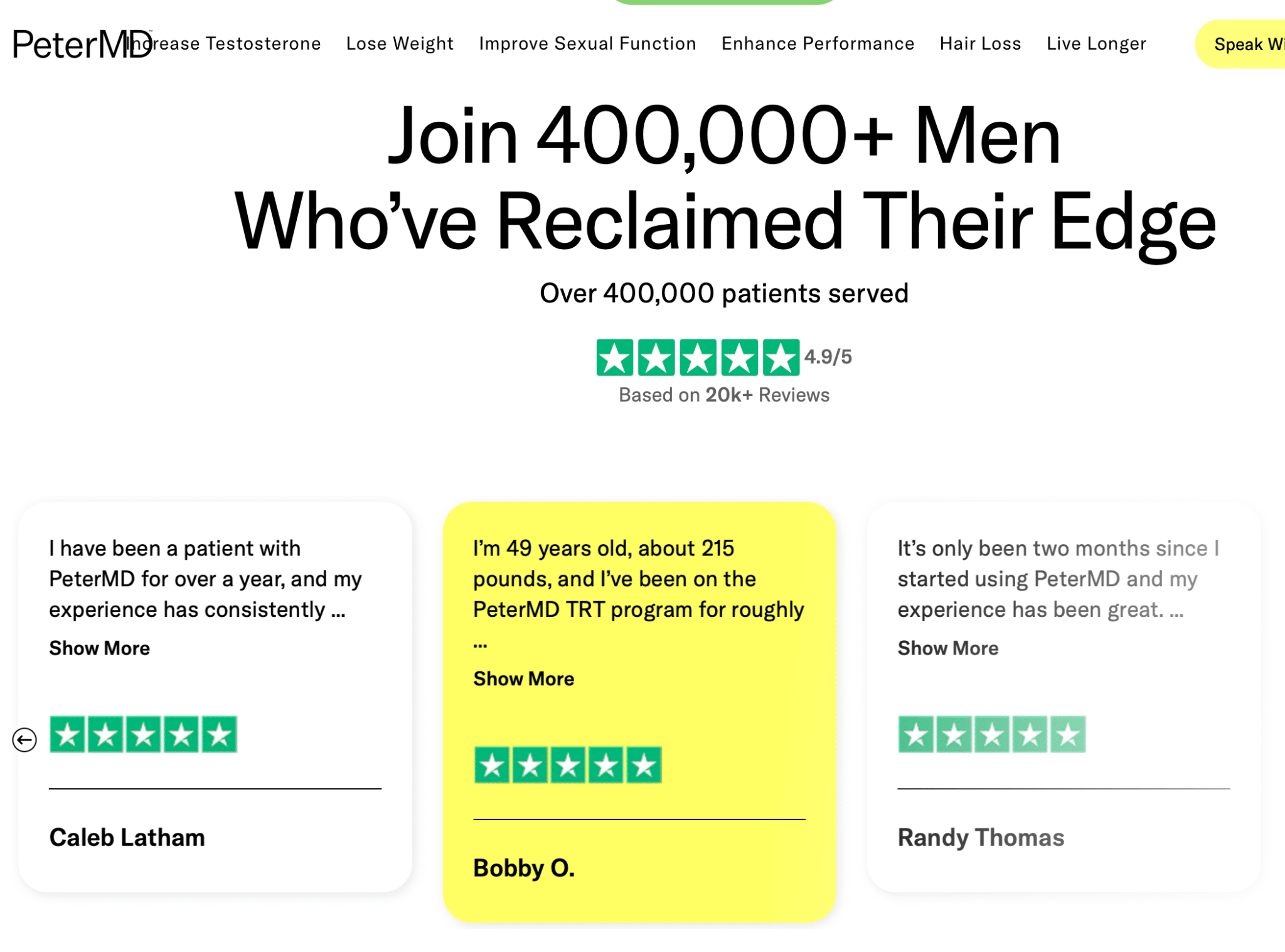
This approach helps potential buyers trust the brand more quickly. Why? Because they’re seeing real outcomes from real users. Not just marketing claims.
What to do:
- Make leaving reviews easy and put them. Where people can see them.
- Ask for user-generated content (UGC). With simple prompts and occasional spotlights.
- Pick ambassadors who actually use your product. Credibility beats follower count.
- Share real stories over polished ads. Authenticity spreads further.
Role of Fulfillment Services in Brand Growth
Fulfillment isn’t just logistics. It’s your brand in action.
When orders show up fast, complete, secure, and thoughtfully packed, that’s your brand talking. When tracking works, and you get ahead of problems, that’s your brand too. So, it’s crucial to set fulfillment strategies in place.
A good fulfillment partner like eFulfillment Service helps you scale without compromising your standards. Take a glimpse below:
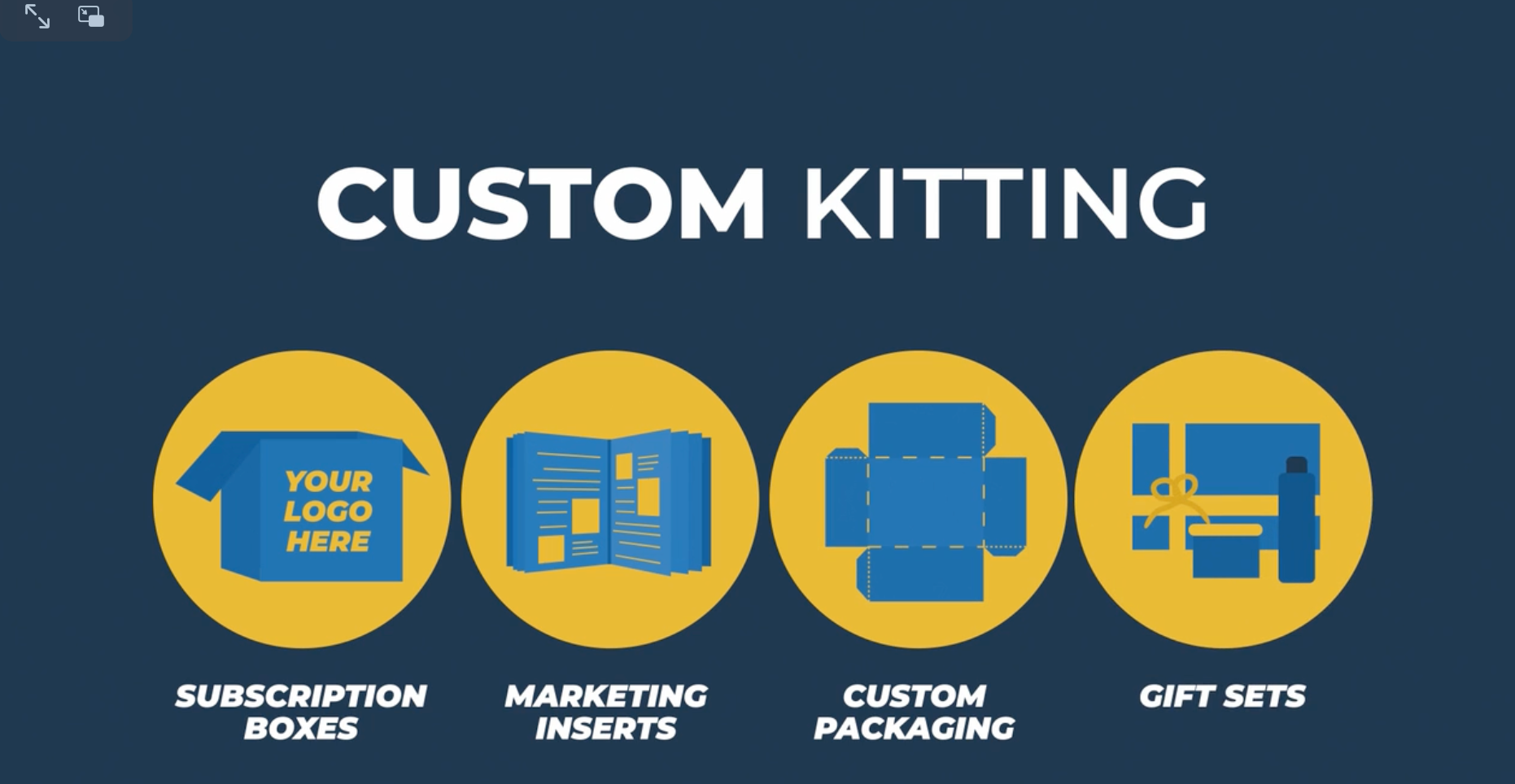
They bring reliable service levels and smart inventory placement. They offer systems that connect to your store. That matters when you’re launching products or selling across channels.
They also help you protect your brand after someone clicks buy:
- Packaging that matches your identity and values
- Kits and inserts that make unboxing feel intentional
- Tracking that’s accurate and proactive, cutting down on “where is my order” tickets.
- Returns that get processed quickly and fairly, so customers feel taken care of.
In addition, sustainability keeps coming up in purchase decisions. McKinsey found many consumers will pay more for sustainable packaging. The right fulfillment setup lets you act on that without adding chaos to your operations.
Final Note: Embracing a Brand-Centric Future
Order management isn’t going anywhere. But the retailers set up for the next decade are building brands people choose on purpose. Not by accident.
That means having a clear identity, creating experiences that matter, using data well, and letting proof do the talking. It also means treating fulfillment as part of your core promise. Not just the end of the line.
If rising acquisition costs and shrinking margins are squeezing you, pay attention. Look at where your team actually spends time and how you define success. Even what your fulfillment experience feels like from a customer’s perspective.
Then make one concrete change this month that shifts you from managing orders to growing a brand. The sooner you start, the sooner it compounds. If you need help with optimizing your order management with brand growth in mind, eFulfillment Service can help!

About the Author
Brooke Webber is a passionate advocate for a people-first strategy in HR. Her major focus areas are workplace psychology and employee listening, where she has built strong experience as a writer and industry voice.



0 Comments