
You’re reconciling last month’s invoice against the quote you signed six weeks ago. The numbers don’t match. Storage is higher than promised, there’s a dimensional-weight charge nobody explained, and the “dedicated account manager” who called you twice a week during the sales process hasn’t answered an email in eleven days.
This is the moment most DTC brands actually start searching for “DTC fulfillment.” Not out of curiosity, but because the fulfillment relationship they already have has stopped working. Sometimes it’s the invoice gap. Sometimes it’s a bad peak season. Sometimes it’s a founder taping boxes at 11pm, realizing the garage operation that worked at 30 orders a day is falling apart at 300.
This guide covers what DTC fulfillment actually means operationally, why it’s a different discipline than general warehousing, and how to vet a partner before you sign.
Not sure what's actually in your fulfillment quote?
Most 3PL pricing has more moving parts than the headline rate suggests. This breakdown of 3PL cost structures shows exactly what to ask for before you sign: storage, minimums, and the fees that don’t show up until invoice one.
What DTC fulfillment actually means
DTC fulfillment is the process of storing, picking, packing, and shipping orders that go directly from a brand to an individual customer, with no retailer, wholesaler, or marketplace intermediary in between. The order originates on the brand’s own site (usually Shopify) or app, and a single unit ships straight to a home address.
The category is big enough now to be its own logistics discipline. The global direct-to-consumer market is estimated at roughly $684 billion in 2025 (Source: IMARC Group, 2025), and most of that volume runs through exactly the kind of single-unit, parcel-level operation this guide covers.
That sounds close enough to “ecommerce fulfillment” that most brands assume the terms are interchangeable.
Ecommerce fulfillment is the umbrella term: it covers orders from a brand’s own site, Amazon, Walmart Marketplace, TikTok Shop, wherever. DTC fulfillment is specifically the direct-channel slice of that, where the brand owns the customer relationship, the packaging experience, and the data end to end.
That ownership is the entire point of going DTC in the first place. A brand selling through Amazon never sees the customer’s email address. A brand selling DTC owns it, along with every complaint, every reorder, and every packaging decision that shapes how the product is remembered.
Why a warehouse with a website isn’t the same thing
Here’s the distinction that actually separates a real DTC fulfillment operation from a general-purpose warehouse claiming to offer it: what the building was built to move.
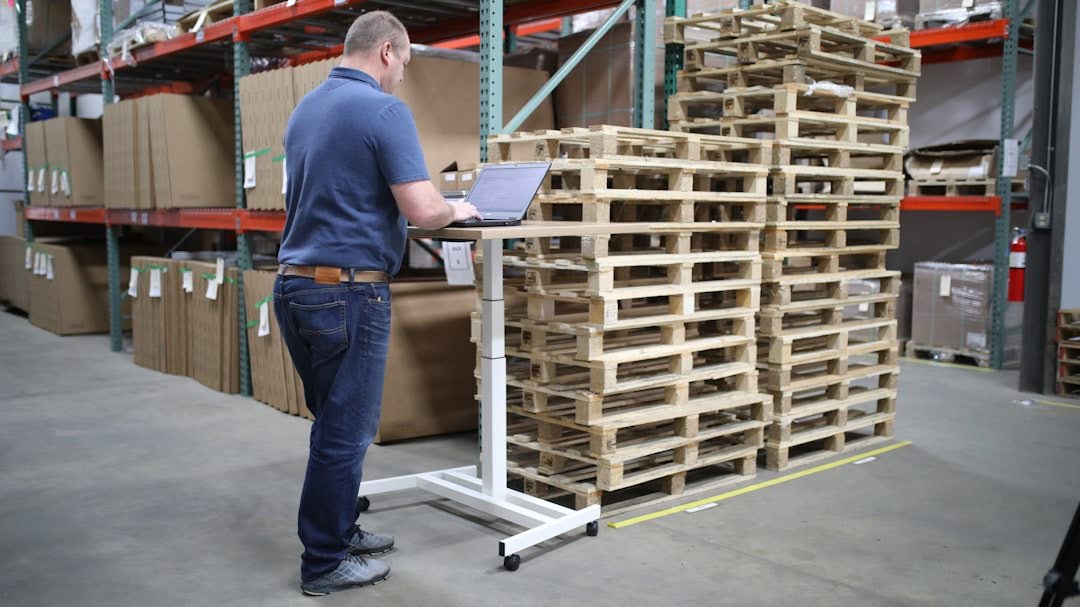
A traditional warehouse is built around pallets. It receives freight in bulk, stores it on racking, and ships it back out in cases or pallet loads to retail distribution centers. The rhythm is slow and predictable: fewer, larger transactions.
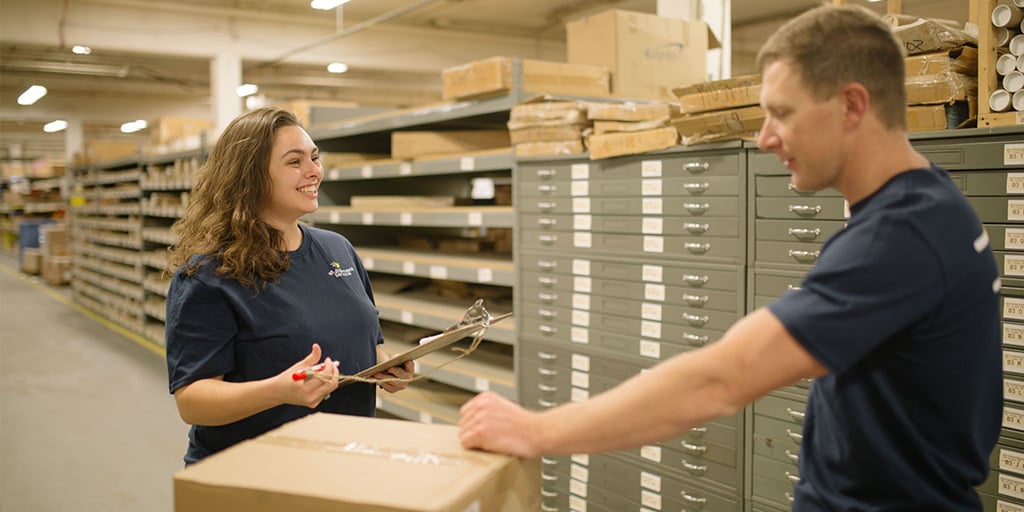
A DTC fulfillment center is built around parcels. It receives the same inventory, but ships it back out one unit at a time, to hundreds or thousands of different addresses, at a pace that spikes without warning around a promotion or a viral post.
Those are different operational disciplines, and the software underneath them is different too. A warehouse management system designed for pallet movement is not the same system that keeps single-unit pick accuracy above 99% at parcel speed.
The vetting question this creates
Ask any provider you’re evaluating for their error rate broken out by order type: pallet or case-pick versus single-unit parcel pick. A provider that blends the two numbers together is very likely hiding a weak spot in the parcel side, because a 1-2% mispick rate that’s tolerable in a B2B pallet operation is a steady stream of angry customers at DTC volume.
|
General warehouse |
DTC fulfillment center |
|
|---|---|---|
|
Built around |
Pallets, case quantities |
Single-unit parcels |
|
Typical order |
Fewer, larger |
Many, smaller |
|
Pricing model |
Space + labor |
Per order / per unit |
|
Software priority |
Inbound, storage |
Pick accuracy, pack speed |
|
Where it breaks |
Rarely, at DTC volume |
When retrofitted from a pallet operation |
If a provider can’t answer the error-rate-by-order-type question specifically, that’s the tell. Not the sales pitch, not the facility tour, but that one number.
The moment DTC brands actually start looking for a fulfillment partner
Nobody searches “DTC fulfillment” on a slow Tuesday. There’s almost always a specific trigger, and it tends to fall into one of three patterns.

1. Self-fulfillment stopped scaling. Most brands outgrow garage or back-office fulfillment somewhere between 50 and 200 orders a day. Below that threshold, a founder or a small team can absorb the manual work. Above it, error rates climb, staff time gets consumed entirely by packing tape and label printers, and nobody is left to run the business.
2. Peak season exposed the cracks. A fulfillment setup that handled 100 orders a week can fall apart completely at 5,000. Missed SLAs during Black Friday or a holiday rush don’t just cost a few late shipments. They generate the negative reviews and chargebacks that follow a brand for months.
3. The last 3PL didn’t deliver what the sales process promised. This is the trigger that shows up most often in brand owners’ own words, and it’s worth naming directly because it rarely gets addressed honestly in fulfillment content.

The account-manager problem nobody puts in the sales deck
Across founder communities where DTC brands compare notes on fulfillment, one complaint comes up more than anything else, including price: the dedicated account manager promised during the sales process isn’t the account manager you get after you sign.
The pattern shows up in a few recognizable shapes:
- A “dedicated” AM turns out to be a shared support inbox once the contract is signed.
- The account manager changes two or three times within a year, and the brand has to re-explain its entire setup (SKU quirks, packaging preferences, channel routing) from scratch each time.
- The salesperson who was in constant contact during evaluation goes quiet within weeks of the deal closing.
One brand owner, describing a two-year relationship with a national 3PL in a public review, put it this way: the sales process was “high touch,” full of promises of superior service. Once the contract was signed, the salesperson “vanished into thin air.” What followed were rejected warehouse appointments, damaged and lost inventory, and a payment system that occasionally halted shipments over a glitch, even with a valid card on file.
It’s not a rare story, either. Across the comparison threads and reviews brands leave behind, this is the single most cited pain point, ahead of complaints about price.
Tired of chasing your fulfillment provider for answers?
eFulfillment Service assigns a real point of contact who knows your account — not a rotating cast or a shared inbox. If your current setup has you re-explaining your business every quarter, that’s worth fixing before your next peak season.
3PL vetting questions that help you choose a DTC Fulfillment Provider
Most fulfillment comparison content tells you to check pricing, integrations, and warehouse locations. Those matter, but they’re not what separates a good partner from a bait-and-switch. These questions are.
| Ask this | Red flag answer | What you want to hear |
|---|---|---|
| What’s your mispick rate, broken out by parcel vs. case pick? | A single blended number, or hesitation | A specific parcel-only number, usually under 1% |
| How many accounts does my account manager handle? | “It depends” or no clear answer | A specific number, and a named person you can talk to before signing |
| What happens to my pricing once I’m past onboarding? | Vague, or “we’ll review it then” | A rate card, and clear triggers for any pricing change |
| How do you handle a missed SLA? | No defined process | A specific credit or remediation policy in writing |
A provider that answers these cleanly, in writing, before you sign, is telling you something. A provider that gets vague or redirects to “let’s get on a call” is telling you something too.
Running FBA and DTC out of the same warehouse?
eFulfillment Service handles Amazon FBA prep and direct-to-consumer fulfillment under one roof, without treating them as the same workflow. Keep your marketplace and owned-channel orders both moving without picking a single lane.
DTC fulfillment vs. Amazon FBA
A lot of brands searching for DTC fulfillment are really asking a narrower question: should we be relying on Amazon FBA (or Multi-Channel Fulfillment) at all, or does our own channel need its own infrastructure?

The trade-off is straightforward once you name it directly. Sell through Amazon FBA and you never get the buyer’s email address, can’t market to them directly after the sale, and don’t control the unboxing experience: custom inserts and branded boxes are limited or unavailable. Purchase history and repeat-buyer behavior stay inside Amazon’s ecosystem, too. DTC fulfillment hands all of that back to the brand, at the cost of building (or outsourcing) the infrastructure Amazon otherwise handles.
Many brands run both in parallel: FBA for marketplace reach, DTC fulfillment for the owned channel where the brand relationship actually gets built. The mistake is assuming one 3PL relationship needs to do both jobs identically. DTC fulfillment and FBA prep are different workflows with different priorities, even when the same facility handles both.
Get a fulfillment quote with no invoice surprises
eFulfillment Service provides transparent, itemized pricing before you sign — not after your first invoice. See exactly what storage, pick-and-pack, and shipping will cost at your actual volume.
The capital-constrained path: fulfillment for pre-launch and early-revenue brands
Not every DTC brand searching this term has an existing 3PL problem. A smaller, real segment is brand-new: importing from overseas manufacturers, still testing demand, and trying not to tie up cash in a large US inventory position before they know the product will sell.

For this group, the priority isn’t speed or brand polish. It’s minimum commitment. The questions that matter most:
- Is there a minimum order volume, or a minimum monthly fee, that penalizes low volume while you’re still testing?
- Can inventory land in smaller batches instead of a full container commitment?
- What does the cost structure look like at 20 orders a month versus 200?
This is a real dividing line between providers. Plenty of 3PLs enacted monthly invoice minimums of $1,000-$5,000 during the ecommerce growth years, specifically to push out low-volume accounts. A brand shipping 20 orders a month can end up owing the minimum anyway, whether or not the inventory moved.
The “best” fulfillment partner for a $5M brand with predictable volume is not automatically the best fit for a brand testing its first 500 units
Testing an idea before you commit real capital?
eFulfillment Service charges no monthly minimum and no order minimum — a rare setup built specifically for crowdfunders, early-revenue brands, and sellers who don’t yet have predictable volume.
What DTC fulfillment actually costs

Pricing is where the quote-to-invoice gap does the most damage, because most 3PL pricing structures have more moving parts than the initial quote suggests. The typical building blocks:
- Storage: roughly $0.45–$0.75 per cubic foot per month, billed separately from fulfillment
- Pick and pack: roughly $2.50–$4.50 per order for standard single-item orders
- Minimum monthly fees: many 3PLs charge $1,000-$5,000 regardless of volume. This is where low-volume months get expensive fast, and it’s worth asking directly whether a provider charges one at all
- Returns processing: $2–$6 per returned item, plus separate restock or disposal fees if the item can’t go back on the shelf
None of that is inherently unreasonable on its own. The trouble starts when a quote shows only the headline pick-and-pack rate and leaves storage, minimums, and dimensional-weight shipping surcharges to show up for the first time on an actual invoice.
Ask for a fully loaded sample invoice at your expected volume before signing anything. If a provider won’t produce one, that itself is the answer.
FAQs: DTC Fulfillment
What is DTC fulfillment?
DTC (direct-to-consumer) fulfillment is the process of storing, picking, packing, and shipping orders that go directly from a brand to an individual customer through the brand's own sales channel, without a retailer, wholesaler, or marketplace in between. It's a subset of ecommerce fulfillment specifically tied to the brand-owned channel.
What's the difference between DTC fulfillment and dropshipping?
In DTC fulfillment, the brand (or its 3PL) holds inventory and ships it directly once an order comes in. In dropshipping, the brand never holds inventory at all: the manufacturer or supplier ships directly to the customer on the brand's behalf, usually with less control over packaging, speed, or quality.
When should a DTC brand switch from self-fulfillment to a 3PL?
Most brands hit the wall somewhere between 50 and 200 orders a day, when manual packing starts consuming all available staff time and error rates begin climbing. A bad peak season is often the forcing event, but the underlying signal is simpler: if fulfillment work is crowding out time spent on product and marketing, it's time to look at outsourcing.
Is Amazon FBA a form of DTC fulfillment?
No. Amazon FBA fulfills orders placed on Amazon's marketplace, where Amazon, not the brand, owns the customer relationship and the data. DTC fulfillment specifically refers to orders placed through the brand's own channel, where the brand retains that relationship end to end.
What questions should I ask a 3PL before signing?
Ask for their mispick rate broken out by order type (not blended), how many accounts each account manager handles, for references at your specific order volume, what happens to pricing after onboarding, and their process for a missed SLA. Vague or evasive answers to any of these are the clearest warning sign available before you sign a contract.
Key Takeaways
- DTC fulfillment is a parcel discipline, not a warehousing one. A facility built for pallets and B2B replenishment will underperform at single-unit parcel accuracy, even if it markets itself as a fulfillment center.
- Ask for error rate by order type, not a blended number. This single question separates real DTC-capable operations from repurposed warehouses faster than a facility tour does.
- The account-manager bait-and-switch is the most common complaint, not price. A “dedicated” AM who becomes a shared inbox, or who churns repeatedly, is the pattern that pushes the most brands to switch providers.
- Get a fully loaded sample invoice before signing. Storage, minimums, and dimensional-weight surcharges are where quotes and actual bills diverge most often.
- Not every searcher is switching providers; some are testing an idea. Capital-constrained, pre-launch brands should prioritize low or no minimum-volume commitments over speed or polish.
- DTC fulfillment and Amazon FBA solve different problems. FBA trades customer ownership and data for Amazon’s built-in reach; DTC fulfillment gives both back, at the cost of building your own infrastructure.
Whatever stage you’re in, the fastest way to find out if a provider will actually deliver what they promise is to ask the questions in this guide before you sign, not after your first invoice arrives. eFulfillment Service will walk through exact, itemized pricing and a real point of contact from the first conversation. Get a free quote and see how DTC fulfillment works when nothing is hidden until month two.

0 Comments