
A product that suddenly sells three or four times faster than forecast will expose every weak point in a supply chain within days. Stock runs out, the next purchase order is weeks away, the warehouse falls behind on picking, and support fills up with “when will this be back?” messages.
Most of that damage can be prevented, but only with work done before the spike: inventory rules that adjust to demand, suppliers who can scale up, and a fulfillment operation that can add capacity quickly.
What a Demand Spike Looks Like
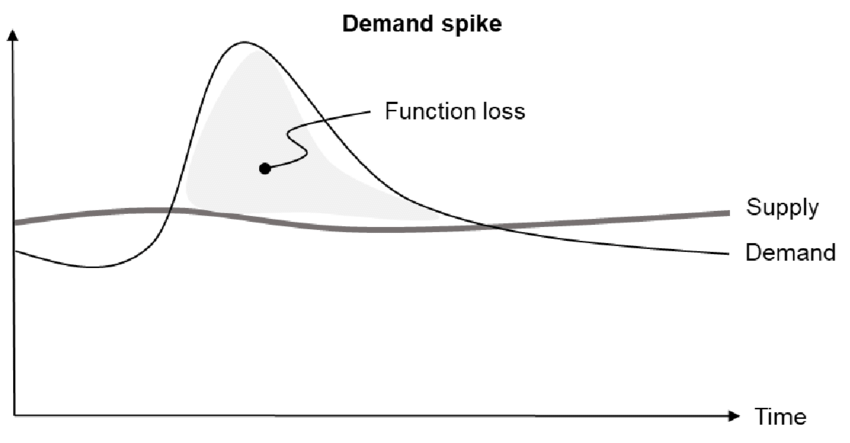
A demand spike is a sharp, short-term jump in orders for a product or category. It can last a few days or several weeks. Some are predictable, like a holiday rush. Others arrive with almost no warning.
Common triggers:
- A creator or influencer video that reaches a new audience
- Holidays and seasonal events that pack a month of demand into a few days
- Press coverage or an award
- A competitor running out of stock
- A promotion or price change that performs better than expected
- Weather, such as a heat wave or a storm
Echo Mao, Head of Marketing at AIReel, oversees marketing for an AI video generator that turns text prompts and product images into short videos.
She says, “A single short video can now take a product from steady sales to sold out in a weekend, and brands often don’t see it coming because the video wasn’t theirs. A creator posts, the platform’s algorithm picks it up, and orders follow within hours. Brands that check social mentions and search trends every day usually get a day or two of warning. That is often enough to place a reorder or set purchase limits before stock runs out.”
Well-known examples show the same pattern. When Popeyes launched its chicken sandwich in 2019, a social media frenzy sold out restaurants nationwide within about two weeks.
In 2020, pandemic demand left the Nintendo Switch and Peloton bikes backordered for months. In each case, the spike didn’t create new problems. It magnified existing ones: forecasts that updated slowly, suppliers with long lead times, and fulfillment without spare capacity.
Set Inventory Rules Before the Spike
Being ready for a spike doesn’t mean holding a warehouse full of extra stock. It means having clear rules for when to reorder and how much cushion to keep, and updating them as demand changes.
Safety stock
Safety stock is the buffer that covers the gap between expected and actual demand while a reorder is on its way. Hold more of it for fast-selling products and for products whose suppliers have unreliable lead times. Review the levels monthly, and weekly during a volatile period.
Reorder points
The basic formula is:
Reorder point = daily sales × supplier lead time in days + safety stock
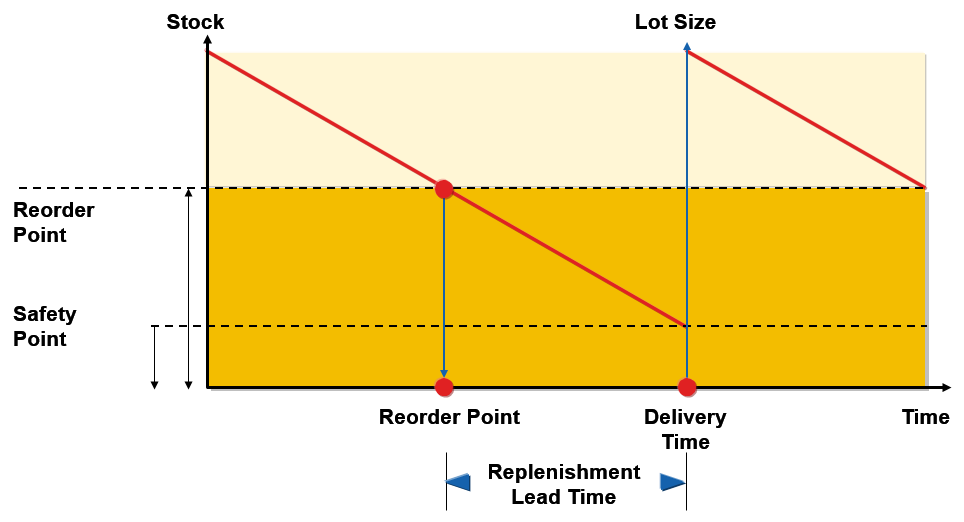
Take a product that normally sells 40 units a day, with a 15-day lead time and 200 units of safety stock. Its reorder point is 800 units. If a video pushes sales to 120 a day, the same calculation gives 2,000 units. A reorder point that isn’t updated during the spike will trigger the next order far too late, and the product sells out before that order arrives.
Use current lead times from your suppliers. An average from last year can hide the fact that a supplier has slipped from 15 days to 25.
Lean replenishment with a backup
Just-in-time ordering keeps holding costs low, but it leaves no room when demand jumps. Pair it with safety stock on best sellers and at least one backup supplier for products you can’t afford to run out of.
Demand shaping
When stock is already tight, slow the rate it sells. Set a limit per order, pause discounts on the product, or point shoppers toward a substitute or a bundle that uses stock you have plenty of.
Get Suppliers Ready for Bigger Orders
During a spike, your supplier’s production schedule matters more than your forecast. These steps give them room to respond:
- Share forecasts early. Send rolling forecasts and the promotion calendar, even when they’re uncertain. A supplier who knows a launch is coming can secure materials and labor in advance.
- Dual-source critical products. A second supplier for best sellers or key components may cost a little more per unit, but it can save a sold-out month.
- Negotiate flexibility in the contract. Agree on rush fees, expedited lead times, or reserved capacity before you need them. Keep minimum order quantities low enough that you aren’t stuck with excess stock when demand settles.
- Prepare a fast-track purchase order. Pre-approved specs, packaging, and quality checks let a large order go out the same day it’s needed.
- Consider vendor-managed inventory or consignment. Both arrangements give suppliers more visibility into your stock and ease the cash strain of a sudden large order.
Fulfillment with a Personal Touch.
See How Using a 3PL like eFulfillment Service sellers saves time. Get a Free Quote from eFulfillment Service Today!
Use Forecasting Tools That Catch Spikes Early
No forecast predicts every spike, but better data can buy a few days of warning, and a few days is often the difference between a reorder and a stockout.
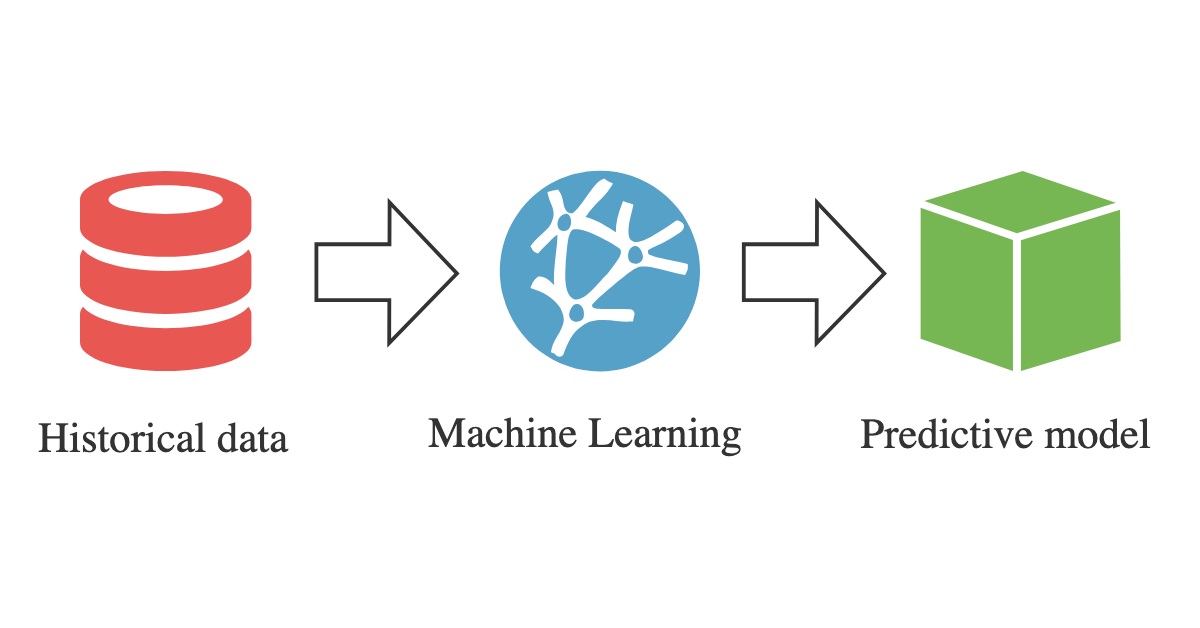
- Machine learning forecasts. These models combine order history with signals like site traffic, email engagement, and the marketing calendar. McKinsey reports that embedding AI in distribution operations can reduce inventory by 20 to 30 percent and logistics costs by 5 to 20 percent.
- Image source
- Search and social signals. Google Trends shows rising search interest in a product or category, which often comes before a rise in orders.
- A live dashboard. Track stock on hand, orders by SKU, the pick-and-pack backlog, and carrier capacity in one view, with alerts when any of them crosses a set threshold.
Tools to consider, depending on size:
|
Business size |
Options |
|
Small e-commerce brands |
Inventory Planner by Sage, which connects to Shopify and other platforms to manage reorder points and supplier orders |
|
Mid-size brands with a data team |
Custom models built on Amazon SageMaker or Google Cloud’s Vertex AI |
|
Large operations |
Planning suites such as Blue Yonder, SAP IBP, and o9 Solutions |
The software matters less than how it’s used. Feed models current data, check forecasts against what the sales and marketing teams know, and decide in advance what action each forecast level should trigger.
Scale Warehouse Operations Quickly
When orders surge, the warehouse needs capacity it can switch on in days. Most of it can be prepared in advance:
- Flexible staff. Cross-train associates across receiving, picking, and packing. Keep a list of trained on-call workers and a one-page start-up guide so new shifts are productive from the first hour.
- Smarter slotting and picking. Move the spiking products to the most accessible shelves, switch to batch or zone picking, and pre-assemble popular bundles.
- Quick-to-add equipment. Portable put-to-light carts, mobile label printers, and extra packing stations can go in over a weekend.
- Overflow capacity. A second warehouse or a fulfillment partner can take specific products, regions, or peak weeks off the main site.
- Faster receiving. Book dock appointments ahead, set up quick quality checks for known products, and print labels before the truck arrives, so new stock reaches the shelves the same day.
Andrew Bates, COO of Bates Electric, oversees operations at a St. Louis electrical contractor that has offered 24/7 emergency service since 1992.
He says, “Our busiest days are set by the weather. A major storm can multiply emergency calls overnight, and the crews, trucks, and parts have to be ready before it arrives. We keep extra stock of the parts that fail most often in storms and cross-train technicians so anyone on shift can take an urgent call. Retailers face the same problem with a different trigger. The capacity has to exist before the spike starts.”
A useful test is to ask whether the warehouse could handle double today’s order volume starting next Monday, then fix whatever the answer exposes before a spike forces the question.
Keep Teams and Customers Informed
During a spike, problems spread quickly between departments. A daily 15-minute huddle with sales, purchasing, warehouse, customer service, and marketing keeps everyone working from the same numbers. Cover yesterday’s orders and shipments, today’s constraints, and one decision that clears a blocker.
Write the priorities down: which products ship first, which orders get upgraded shipping, and which purchase orders need expediting. Decisions made verbally in a busy week tend to get remade differently by the next shift.
Talk to carriers early as well. Confirm capacity, ask about peak surcharges, and keep a backup carrier set up and ready.
For customers, honest information prevents most of the support backlog. Use waitlists, back-in-stock alerts, and realistic ship dates. A short email explaining a delay before anyone asks costs far less than answering hundreds of individual tickets afterward.
Watch the Risks That Follow the Rush
The end of a spike carries its own problems, mostly from decisions made at the peak.
- Overstock. A large order placed at the height of demand can arrive after sales have returned to normal. Split big orders into phases, negotiate cancellation windows, and keep production runs short.
- Lost customers. A best seller that stays out of stock for weeks sends repeat buyers to competitors. Preorders with realistic ship dates and suggested alternatives keep them engaged.
- Cash pressure. Extra inventory, overtime, and expedited freight all draw on cash at the same time. Forecast the cash needed for a spike and arrange financing before it’s urgent.
- The bullwhip effect. Small changes in customer demand grow into large swings by the time they reach suppliers. Share actual sell-through data with suppliers, alongside purchase orders, so they see real demand.
- Quality slipping. Rushed production is more likely to miss specs. Keep quality checks in place and approve a small first run before scaling up.
Plan for 2x, 3x, and 5x demand
Build a short playbook for each level before you need it:
|
Demand level |
Inventory |
Suppliers |
Warehouse and shipping |
|
2x |
Raise reorder points and safety stock |
Confirm the next order can be expedited |
Add overtime and move best sellers closer to packing |
|
3x |
Set purchase limits and pause discounts |
Activate the backup supplier |
Bring in on-call staff and lock in extra carrier capacity |
|
5x |
Open preorders with realistic ship dates |
Request reserved capacity or a rush production run |
Send selected products or regions to overflow fulfillment |
After every spike, hold a short review. Identify the first bottleneck that appeared and fix it while the details are fresh, so the next spike has to find a new weak point.
Building Spare Capacity Into Fulfillment
For many growing brands, the hardest part of a spike to prepare in-house is warehouse capacity.
Hiring, training, and adding space takes months, and a viral moment gives a few days notice. Working with a fulfillment partner moves that capacity off your own floor, so a sudden jump in orders lands on a team and system already built to absorb it.
eFulfillment Service stores, picks, packs, and ships orders for online sellers and provides inventory reporting, which helps brands see a spike building and respond before their best seller sells out.

About the Author
Brooke Webber is a passionate advocate for a people-first strategy in HR. Her major focus areas are workplace psychology and employee listening, where she has built strong experience as a writer and industry voice.



0 Comments