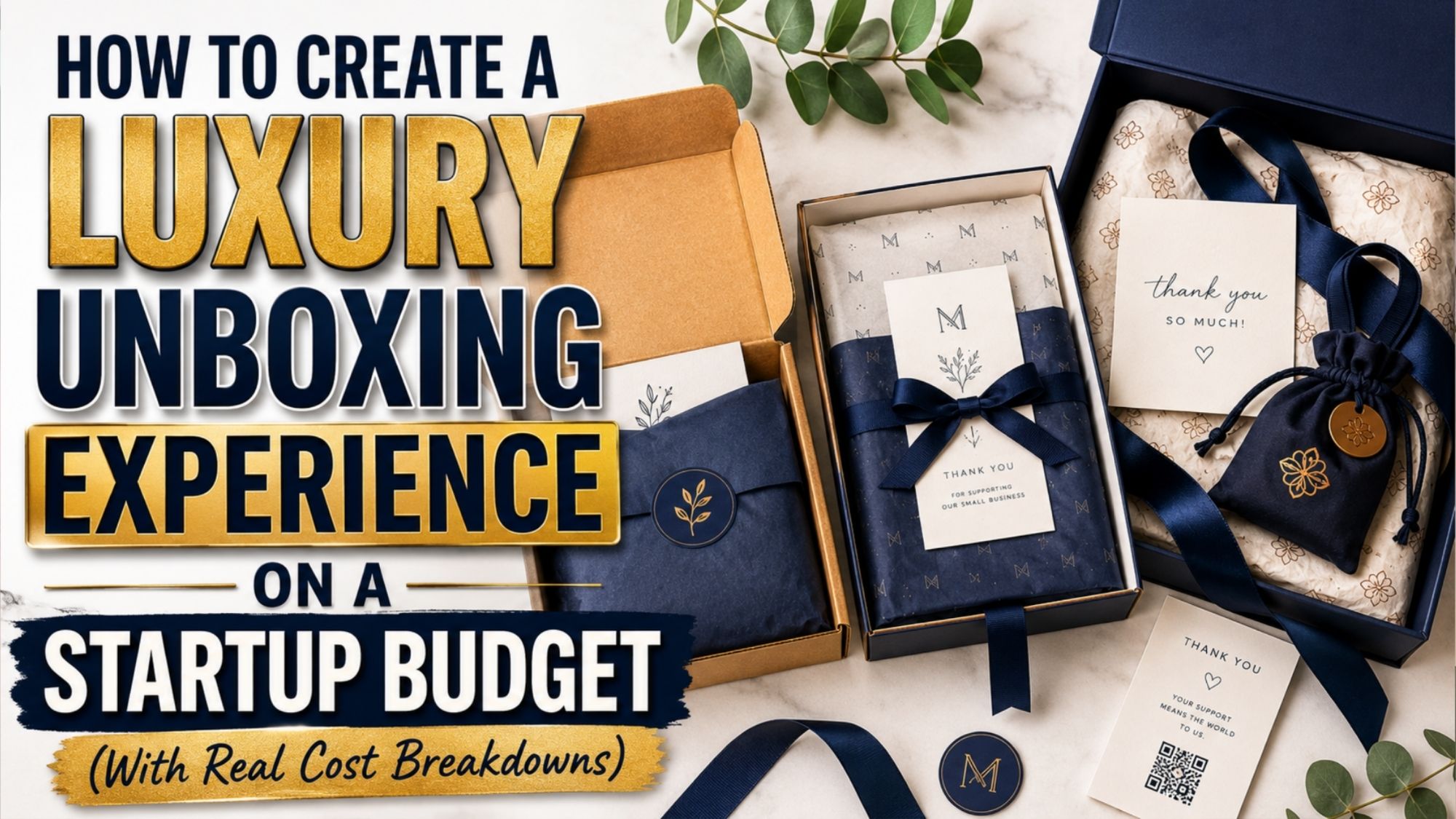
You’re packing your 50th box of the day from a table in the garage. Your back hurts. There’s tissue paper stuck to your arm. Somewhere around box 37, you noticed something: this is the only moment in your business where a customer is focused on your brand alone.
Every other channel you use runs through an algorithm or a scrolling feed. Your box arrives in their hands without competition.
Forty percent of shoppers share unboxing experiences on social media, and 52% are more likely to repurchase from a brand that delivers premium packaging (Source: Meteorspace, 2025). The right elements at the right price points make those numbers work for you.
This guide covers a tiered cost-per-order framework with real numbers, specific packaging elements ranked by return on spend, and how to document your unboxing process so a 3PL can execute it without variation.
How Much Does It Cost to Create a Luxury Unboxing Experience?
A luxury unboxing experience costs between $2 and $10+ per order depending on your product’s price point and the elements you choose. At $2–$5/unit, you create a strong brand impression with the right basics. At $5–$10/unit, you build a layered experience with room for personalization. At $10+/unit, you execute full luxury packaging suited to high-ticket or gifting products.
The framework is about knowing which elements deliver the most perceived value per dollar at each stage.
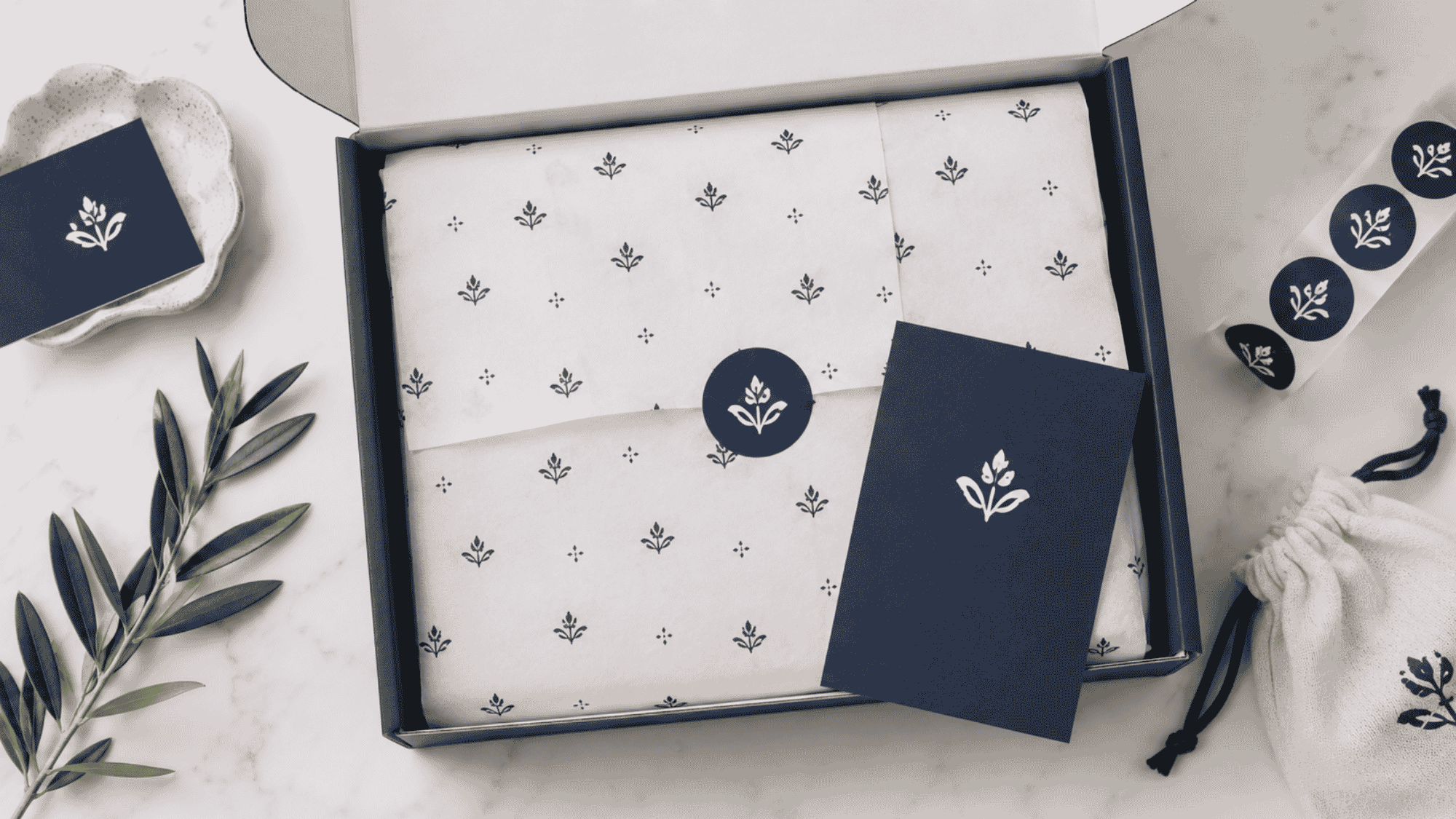
Tier 1 ($2–$5/unit): High-impact basics that punch above their cost
Best for: Average order value (AOV) of $30–$80. Brands shipping 100–500 orders/month who need a consistent brand impression without significant per-unit cost.
- Tissue paper (1–2 sheets, solid color):** $0.10–$0.25/sheet in bulk from a packaging wholesaler. Budget $0.20–$0.50 per order. Start here.
- Sticker seal (1 branded sticker to close the tissue fold): $0.05–$0.15/sticker at 500-unit quantities from Sticker Mule or StickerApp. Budget $0.10 per order.
- Simple insert card (thank-you message, printed one side):$0.08–$0.20/card at 500 units through a local printer or Moo. Budget $0.15–$0.20 per order.
- Standard mailer box or poly mailer: $0.40–$1.20 per unit depending on size and quantity.
Tier 1 total: $0.85–$2.05 in packaging materials. With 3PL labor included, expect around $2–$5 all-in per order.
Tissue paper with a sticker seal delivers the most at this tier, at under $0.65 per order. Together they tell the customer someone thought about this before shipping it.
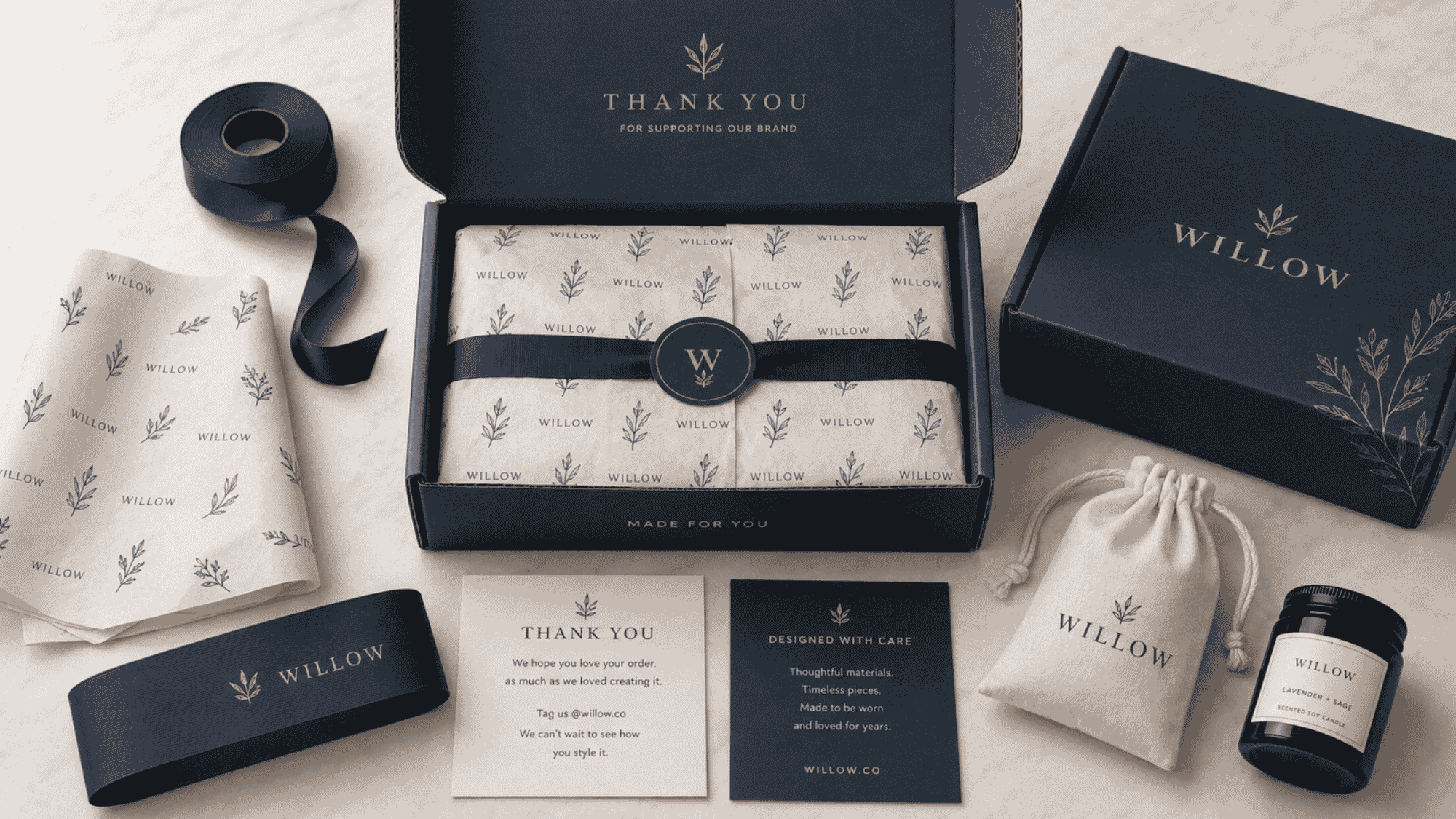
Tier 2 ($5–$10/unit): Layered brand experience with room to share
Best for: AOV of $75–$200. Brands ready to differentiate at the moment of opening and give customers something worth photographing.
Recommended elements (builds on Tier 1):
- Custom-printed tissue paper (branded pattern or logo): $0.35–$0.60/sheet at 500+ units from Noissue or EcoEnclose. Budget $0.50–$0.80 for 1–2 sheets per order.
- Printed insert card (double-sided, heavier stock): $0.25–$0.45/card at 500 units. Budget $0.35 per order.
- Ribbon pull or belly band: $0.15–$0.40 per unit. Adds a tactile layer that reads as expensive without costing much.
- Branded mailer box (custom-printed exterior): $1.50–$3.00/unit at 100-unit MOQs from PakFactory or The Custom Boxes. Drops to $0.80–$1.50 at 500+ units.
- Optional branded freebie or sample: $0.25–$1.00 depending on category.
Tier 2 total: $2.75–$5.25 in packaging materials. With a branded box and 3PL labor, expect $5–$10 all-in per order.
The branded outer box is the Tier 2 upgrade that compounds every other element. It creates a complete brand signal at two moments: when the customer sees the box and when they open it.
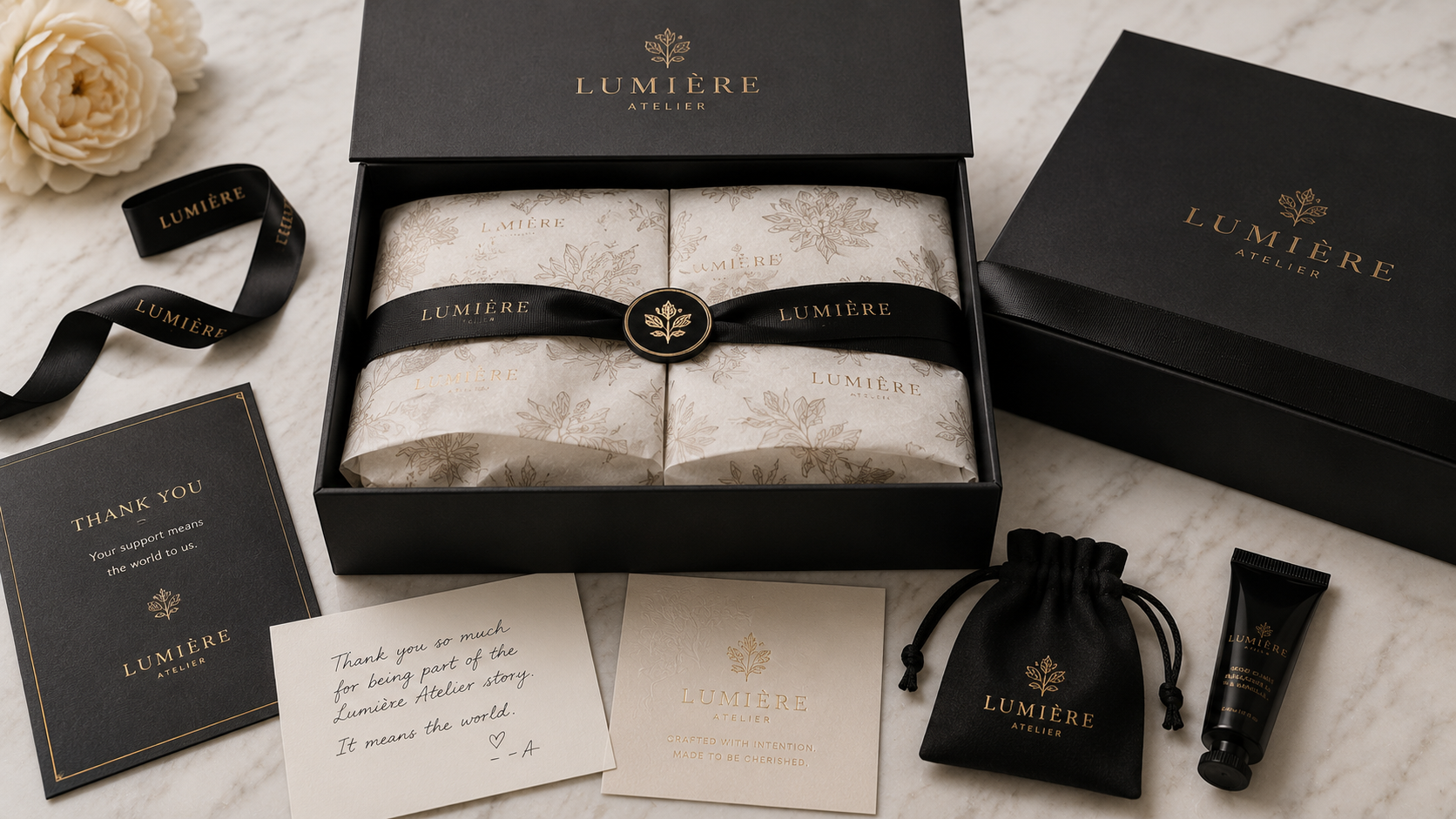
Tier 3 ($10+/unit): Full luxury execution for high-AOV products
Best for: AOV of $150+. Gifting brands, beauty, jewelry, premium apparel, or any brand where the unboxing is itself part of the product.
Recommended elements (builds on Tier 2):
- Rigid gift box (lid-and-base format): $3.00–$6.00/unit at 100-unit MOQs. Signals premium before the customer opens it.
- Full-color branded tissue (multi-layer wrapping): $0.50–$0.80/sheet; use 2–3 sheets per order.
- Premium insert card (thick card stock, embossed or foil-printed): $0.60–$1.50/card at 250 units.
- Ribbon pull (satin or grosgrain, branded): $0.40–$0.80/unit at 250+ unit custom orders.
- Handwritten or personalized note card: $0.50–$2.00 per note, or near zero if you write them yourself.
- Branded freebie or product sample: $0.50–$2.00.
Tier 3 total: $6.50–$13+ in packaging materials. With 3PL labor for a complex pack job, expect $10–$18+ all-in.
The rigid box carries this tier. Nothing else signals “this is worth what you paid” as fast as a well-constructed rigid box with a lid that lifts cleanly. Every other Tier 3 element amplifies that signal, but the box is the foundation.
The Packaging Elements Ranked by Return on Spend
Not all packaging components earn their cost equally. Sequence your investment in this order.
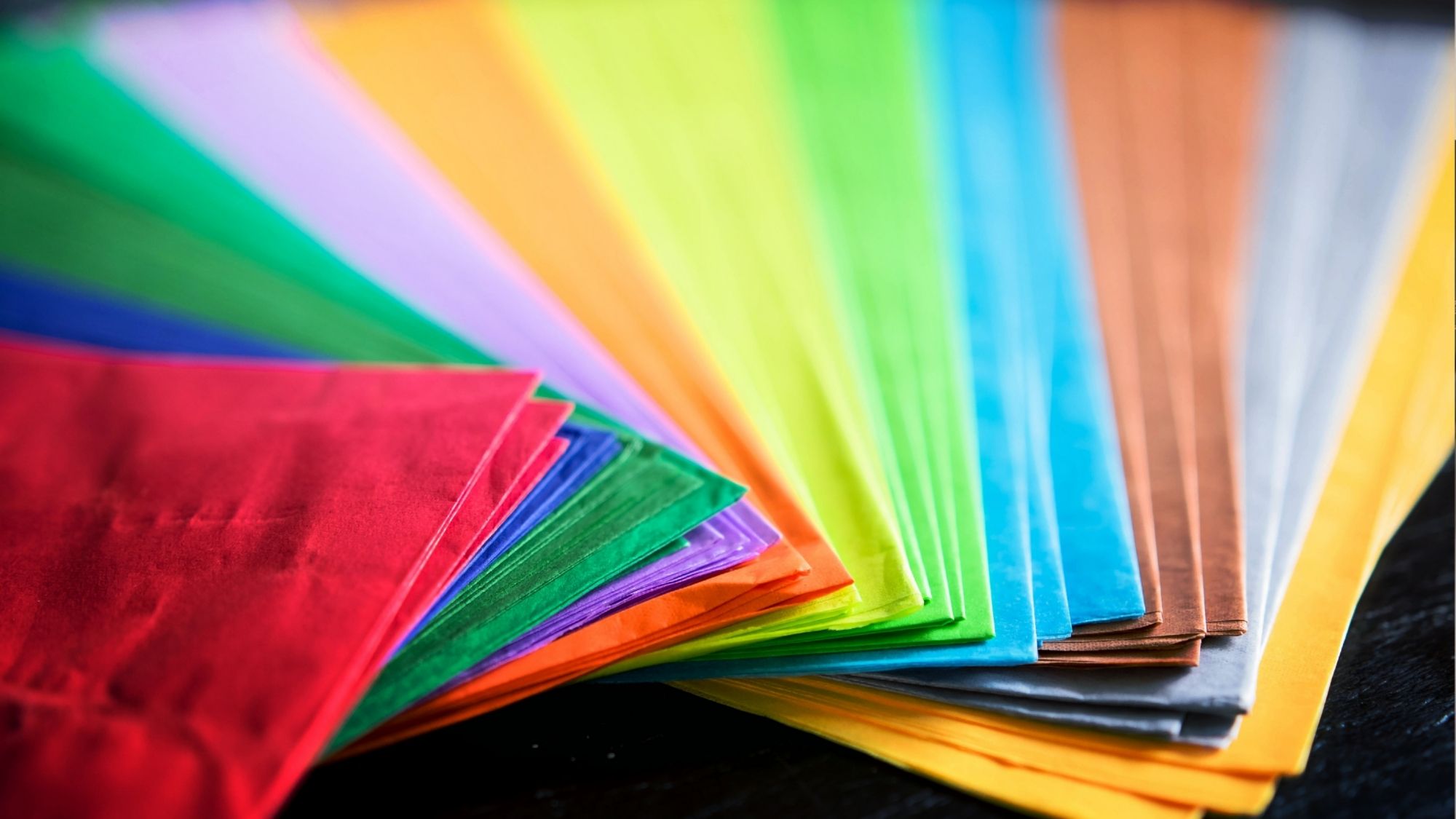
1. Tissue paper: buy this first
Research from EcoEnclose found that customers who received tissue paper estimated product value higher than those who didn’t, before seeing the product (Source: EcoEnclose). At $0.20–$0.50 per order, no other element creates the same lift.
Even solid-color tissue at $0.10–$0.15/sheet from a packaging wholesaler makes a difference over nothing. Custom-printed tissue is a Tier 2 upgrade. Solid-color tissue is a Tier 1 buy.
2. Sticker seal: $0.10 that reads as $3.00
A branded sticker sealing the tissue fold takes three seconds to apply. It communicates something that $3 of loose peanuts cannot: someone closed this on purpose. Under $0.15/unit from Sticker Mule at 500 units. Buy it.
3. Custom inserts: what works and the QR code mistake
A thank-you written for a specific type of customer, a care instruction that shows you understand how the product gets used, a reason to come back: these earn their cost. A generic insert barely does.
The most common insert mistake: printing a QR code with no clear destination. The customer opens the box, sees the code, has no idea whether it leads to a survey or a discount, and ignores it. If the QR code doesn’t tell them exactly what it is and why opening it benefits them (a 15% discount, a how-to video for the product in their hands), it’s dead space on a card you paid to print. Start with a simple one-sided card. Add QR only when you have a specific, high-value destination for it.
4. Ribbon pulls: a Tier 2 addition worth the cost
Ribbon pulls create a moment of anticipation when opening a box. At $0.15–$0.40/unit, they read as more expensive than they cost. They work best on outer boxes that can support them, so they’re a Tier 2 addition.
5. Handwritten notes: when they work and when they don’t
At 50 orders/month, a genuine handwritten note is worth writing. At 300 orders/month, writing them yourself becomes impossible and rushed notes defeat the purpose.
The practical alternative: a warm, specific printed note on heavy card stock, written for the type of customer who buys what you sell. Services like Handwrytten can automate actual handwritten notes if that’s central to how you position the brand.
6. Outer box format: match it to your price point
A poly mailer reads as efficient. A rigid box signals luxury before the customer opens it. Corrugated sits between them. Ship a $120 product in an unmarked poly mailer and the tissue paper and insert start in a hole.
Under $60 AOV, a branded poly mailer or plain corrugated box with custom tissue is the right call. Above $80, invest in a printed corrugated box. Above $150, a rigid box pays for itself in perception.
Fulfillment with a Personal Touch.
See How Using a 3PL like eFulfillment Service sellers saves time. Get a Free Quote from eFulfillment Service Today!
Building Your Unboxing SOP: How to Document It So Anyone Can Execute It
At some point you hand off packing to a warehouse employee, a 3PL, or an operations hire. Most founders assume that’s when their unboxing experience ends.
3PLs care. The problem is that packing instructions founders provide are almost always incomplete. “Put the tissue in the box and add the card” gives twelve people twelve different interpretations.
Document your process with enough specificity that someone who has never met you executes it correctly on their first try.
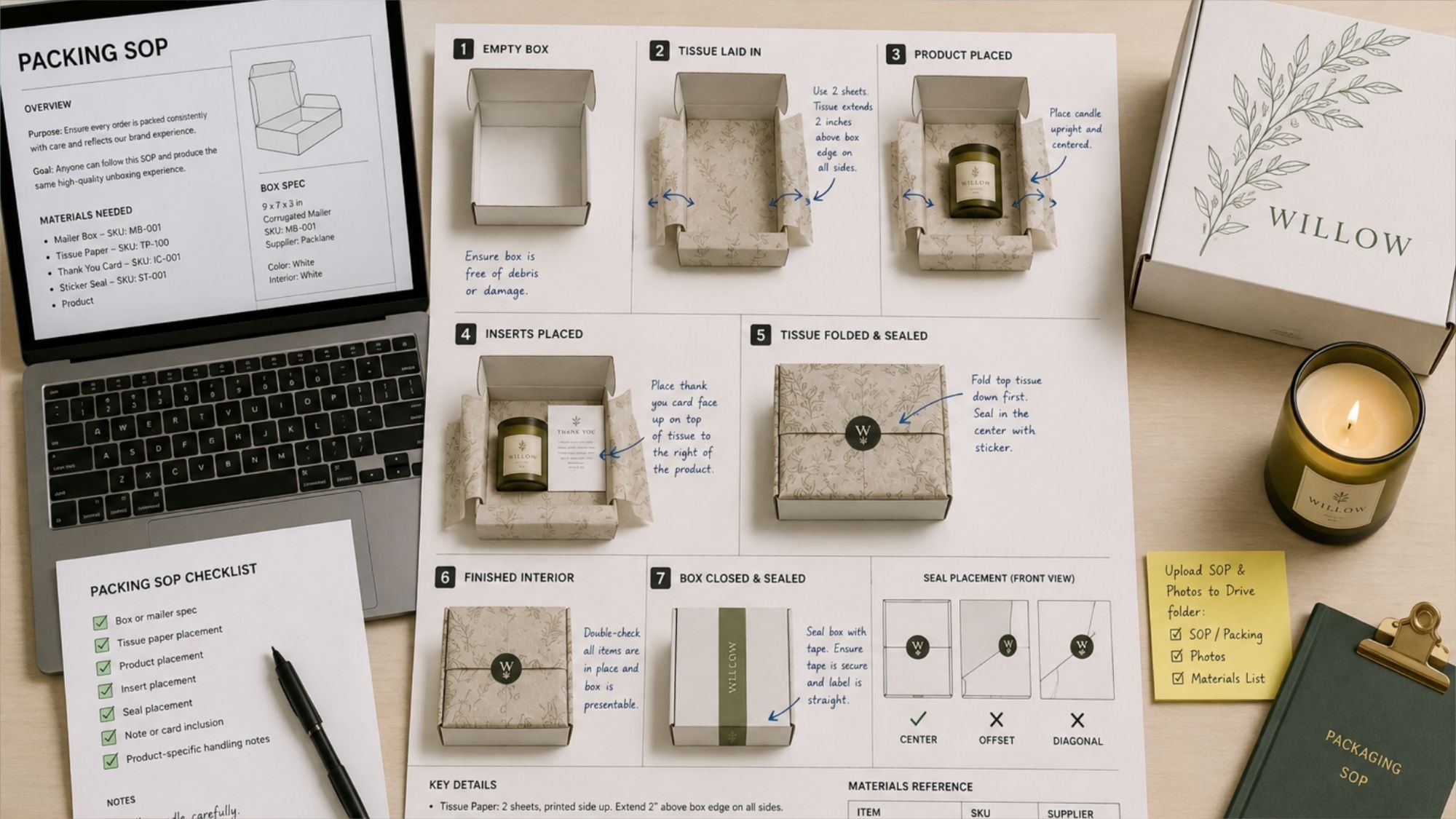
What a real packing SOP includes
A complete packing SOP covers:
- Box or mailer spec: Exact dimensions, material, supplier name, SKU or item code.
- Tissue paper placement: Number of sheets, color or print, which direction they’re laid in the box, how far they extend above the edge, and the folding method.
- Product placement: Which item goes in first, which orientation, whether it’s centered or to one side, any wrapping requirements.
- Insert placement: Which inserts are included, in what order, which way they face, and where relative to the product.
- Seal placement: Sticker size, supplier, exact position on the tissue fold: center, offset, or diagonal.
- Note or card inclusion: When a note is included (all orders, first orders, orders over $X), what it says, where it’s placed.
- Product-specific handling notes: Fragile items, items that scratch, products with a preferred orientation.
Most founders document the first three and forget the rest. The sticker placement note alone prevents most of the variation that happens when a new person packs their first batch.
Photograph every stage
Written instructions aren’t usually enough. You should be taking photos at every stage:
(1) empty box before you place anything
(2) tissue laid in before the product
(3) product placed before the inserts
(4) inserts placed before you fold the tissue over
(5) tissue folded and sticker applied
(6) finished interior before you close the box
(7) sealed exterior.
Annotate each photo with numbered steps, arrows pointing to specific placement details, and measurements where relevant: “tissue extends 2 inches above the box edge on each side.”
The goal: someone holding your photo instructions and an empty box produces a finished pack that matches yours without asking a question.
Upload the photos and written SOP to a shared folder (Google Drive, Notion, wherever) and send the link at onboarding and again any time your packaging changes.
Test your own SOP before you hand it to anyone
Follow your SOP yourself as if you’ve never packed your product before. Set your existing knowledge aside and execute only what the document says. Every time you catch yourself doing something the SOP doesn’t specify, you’ve found a gap: a tissue folding instinct, a habit of placing the insert at a particular angle. Write each one down.
If you follow your own SOP and the box looks wrong, the SOP is incomplete. Fix the documentation before the first 3PL shipment goes out, not after customer complaints come in.
Your pre-3PL handoff checklist
Before handing off to any fulfillment partner:
- Write a complete packing SOP covering box spec, tissue placement, product placement, insert order, seal placement, and handling notes.
- Take step-by-step photos of your pack job from empty box to sealed exterior.
- Annotate photos with numbered steps, arrows, and measurements.
- Upload SOP and photos to a shared folder with a clear file structure.
- Confirm all packaging materials are inventoried at the 3PL as separate SKUs.
- Confirm inserts are inventoried separately from products with a reorder flag.
- Walk your 3PL account manager through the SOP on a live call before the first shipment.
- Ship a 20–30 order test batch and request pack photos before they go out.
- Review the test batch against your SOP. Correct any deviations before full rollout.
- Set a reminder to audit pack quality at 30 and 90 days post-handoff.
Handing Off to a 3PL Without Losing the Experience You Built
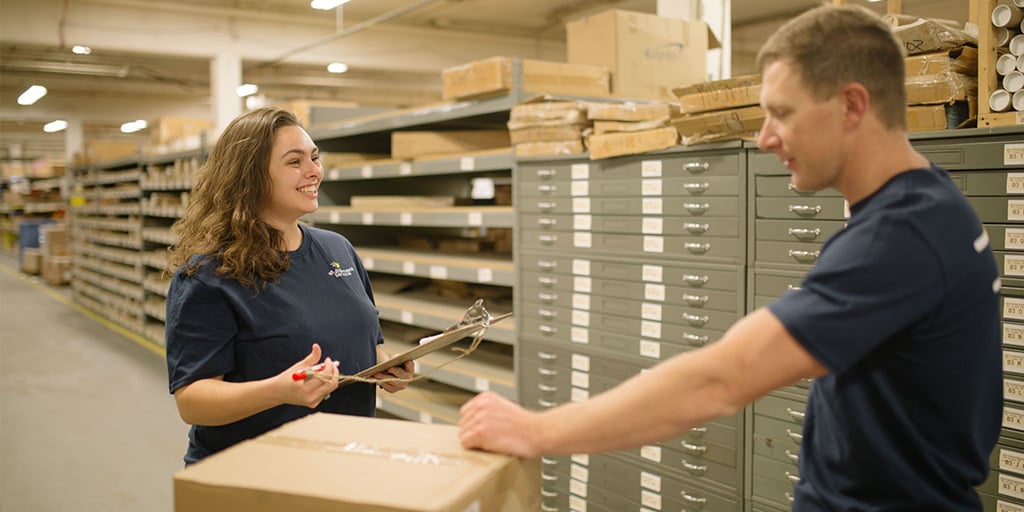
Not all 3PLs handle custom packaging the same way. If you’ve tried one that didn’t, you already know the signs: the SOP got filed away after onboarding, packs came out inconsistent, and there was nobody to call.
These questions help you tell the difference before you hand anything over:
- Do you have a photo QC step for custom pack jobs?
- Can I send a packing SOP with annotated photos, and will your team use them?
- How do you handle insert inventory separately from product inventory?
- What happens if an insert runs out mid-shipment? Is someone flagging that before boxes go out wrong?
- Do I have a dedicated account contact who knows my packaging spec?
- Who do I call if a batch goes out incorrectly?
- Have you executed custom tissue placement and sticker seals before?
These questions tell you whether the 3PL has systems for custom pack jobs or whether your SOP becomes a PDF attachment nobody opens after week one.
Most 3PLs are built for volume. Their systems optimize for throughput. Custom pack jobs are the exception.
eFulfillment Service runs differently: no order minimums so you can start handing off without committing to scale you don’t have yet, transparent per-order pricing so you know exactly what the custom pack job costs, and a dedicated account manager who knows your SOP and is accountable for it. You get your time back. Your customers get the same experience, box after box.
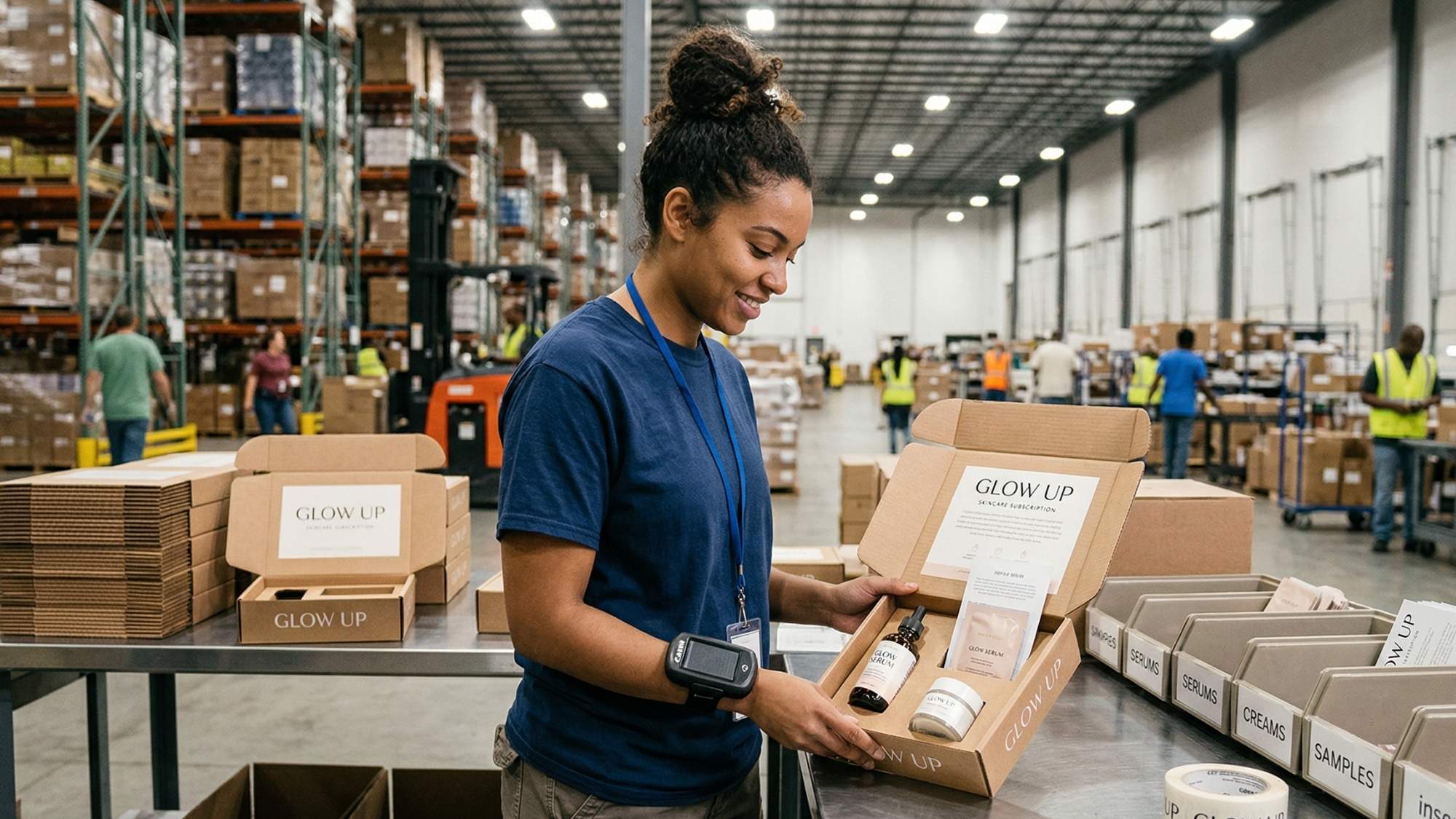
The difference between a 3PL that tolerates custom packaging and one that executes it
A 3PL that tolerates custom packaging follows your instructions when convenient and defaults to standard process when it isn’t. You’ll see variation across batches: tissue folded differently, inserts missing, stickers placed wherever.
A 3PL that executes custom packaging has a QC photo step, tracks insert inventory as a separate SKU, flags deviations before orders ship, and has a named person accountable for your spec.
You’ll see it in the first 50 orders after handoff.
How to send your SOP to a 3PL and set them up to succeed
Start the SOP conversation during onboarding, not the week before your first shipment.
Walk your account manager through the SOP on a call to see whether they understand it. If they ask clarifying questions, that’s a good sign. If they say “looks great” after 90 seconds, ask the QC questions again.
Ship a small test batch (20–30 orders) before transitioning full volume. Ask for photos of packed orders before they go out. Review them against your SOP. At 20 units, you can still fix it.
Fulfillment with a Personal Touch.
See How Using a 3PL like eFulfillment Service sellers saves time. Get a Free Quote from eFulfillment Service Today!
Sourcing Custom Packaging at Small-Batch Scale
Most founders overestimate how restrictive MOQ requirements are.
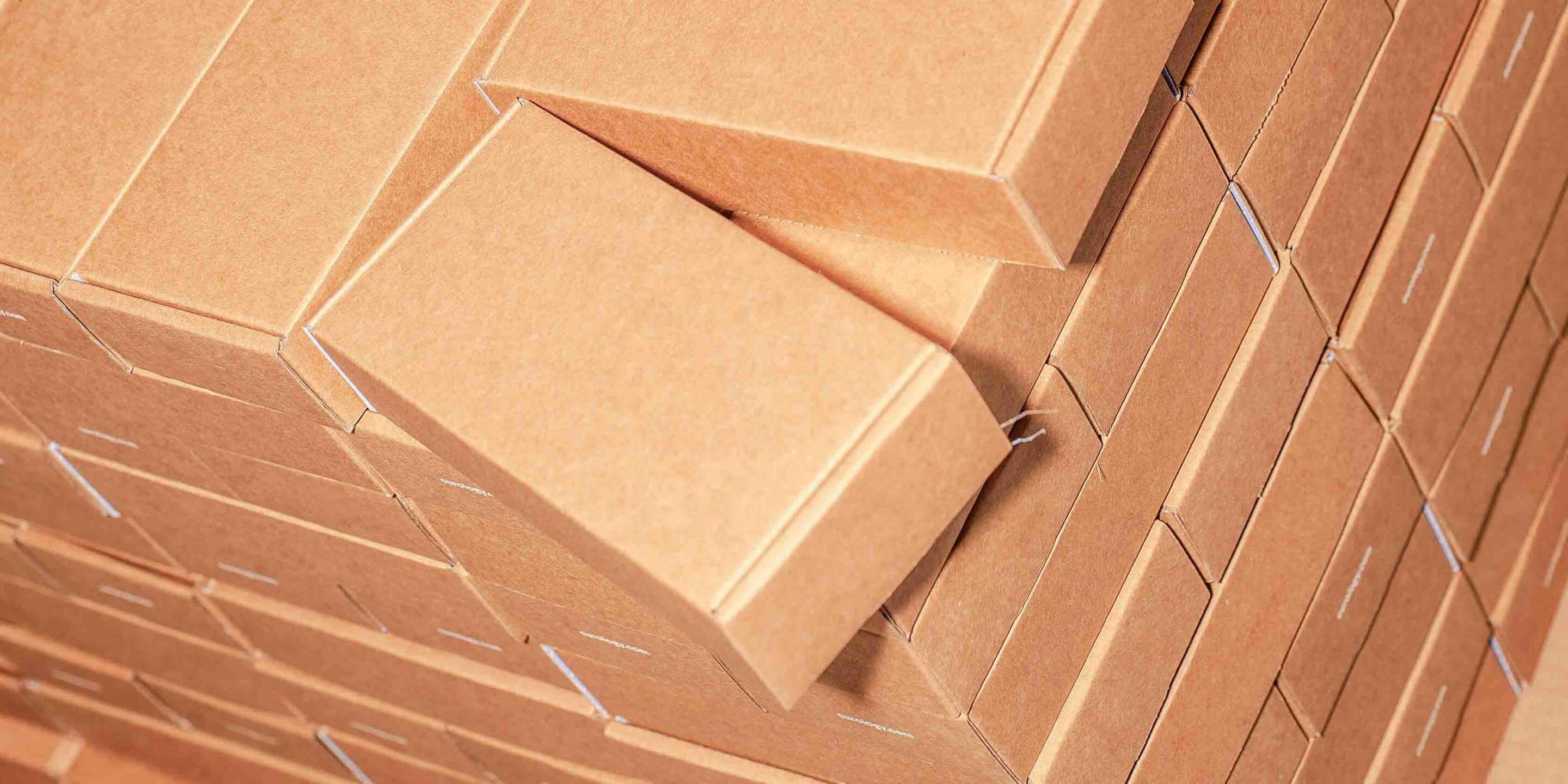
Custom tissue paper: Noissue starts at 25 sheets (expensive per unit, but accessible for testing). EcoEnclose starts at 100 sheets. At 500 sheets, custom-printed tissue runs $0.25–$0.45/sheet. Solid-color tissue from Nashville Wraps has no meaningful minimum. Order 50–100 sheets without a custom print requirement.
Custom-printed boxes: Most packaging printers require 50–100 units minimum for corrugated boxes. Arka, PakFactory, and The Custom Boxes all work with small batches. Expect $2.50–$4.00/box below 100 units, dropping to $1.20–$2.00/box at 250+. For rigid boxes, Fantastapack and Refine Packaging both work at 50-unit MOQs.
Inserts and cards: 250–500 units is a realistic entry point through Moo or a local printer. At 250 cards, a double-sided insert on thick stock runs $0.25–$0.45/card. Below 250 units, Canva-designed inserts printed locally can come in under $0.30/card. Some 3PLs, like eFulfillment Service, are even starting to offer their own in-house custom insert options.
Phase your packaging upgrades as volume grows
At 100 orders/month: Solid-color tissue in bulk and branded sticker seals. Print 250 insert cards. Use your existing plain or lightly branded outer box. Total added cost: $0.35–$0.65/order.
At 300 orders/month: Upgrade to custom-printed tissue at a 500-sheet MOQ. At this volume, the per-sheet cost justifies the custom print. Add a ribbon pull or belly band.
At 500+ orders/month: Move to a custom-printed outer box. At 500+ units, per-box costs drop enough to make custom print cost-justified. High-AOV SKUs become candidates for rigid boxes at this volume.
Fulfillment with a Personal Touch.
See How Using a 3PL like eFulfillment Service sellers saves time. Get a Free Quote from eFulfillment Service Today!
Frequently Asked Questions
How much does it cost to create a luxury unboxing experience?
A luxury unboxing experience costs between $2 and $10+ per order. At $2–$5/unit, tissue paper, a sticker seal, and a basic insert create a strong brand impression. At $5–$10/unit, a branded outer box and custom-printed tissue build a layered experience. At $10+/unit, a rigid box, premium tissue, and personalized notes suit high-AOV or gifting products
What's the most cost-effective packaging upgrade on a tight budget?
Tissue paper with a branded sticker seal. Combined cost under $0.65/order at small-batch quantities. Customers estimate product value higher when tissue paper is present, before they've seen the product . Buy this before anything else.
Can a 3PL follow custom packaging and unboxing instructions?
Yes, if you provide a complete packing SOP with annotated photos and the 3PL has systems for custom pack jobs. Execution quality depends on documentation quality. A written SOP without photos produces inconsistent results. Use the pre-3PL checklist in this article before your first handoff.
How do I build a branded unboxing experience without high minimum order quantities?
Start with elements that have flexible or no minimums. Solid-color tissue from Nashville Wraps has no meaningful MOQ. Sticker seals from Sticker Mule start at 10 units. Insert cards through Moo start at 50. Custom-printed tissue from Noissue starts at 25 sheets. You can build a complete Tier 1 unboxing experience with no component requiring more than 250 units.
What should a custom packing SOP include?
Box or mailer spec, tissue placement instructions (number of sheets, direction, fold method), product placement, insert order and positioning, sticker seal placement, note or card inclusion criteria, and product-specific handling notes. Include annotated step-by-step photos. The most commonly missed element: sticker seal placement, whether center, offset, or diagonal on the tissue fold.
Does premium packaging increase repeat purchases?
52% of online shoppers are more likely to repurchase from a brand that delivers premium packaging. The unboxing experience shapes how a customer values what they bought. A product that arrives with care gets recommended. Packaging is part of the product experience.
What Happens When You Get This Right
The 50th box you’re packing today is worth building a system around. It’s the moment a customer decides whether they’ll buy from you again.
Build the experience, document it, hand it off to a partner who executes it consistently. You get the hours back to work on the business instead of in it. Your customers get a more consistent experience than when you were packing yourself. A written SOP, followed the same way every time, is more reliable than the best week you ever had at the table.
Whether you’re handing off for the first time or moving from a 3PL that treated your SOP as a suggestion, eFulfillment Service runs differently: no order minimums, no surprise fees, and a dedicated account manager accountable for your pack spec.
Note: Regulatory requirements under MoCRA continue to evolve. Consult with a qualified regulatory affairs professional for advice specific to your product line and business structure.



0 Comments