

The useful thing to understand is that the environmental problem and the margin problem are largely the same problem.
Packaging and transport account for a meaningful share of ecommerce emissions, and the last mile alone is responsible for roughly 53% of total shipping costs.
This article covers the decisions that actually move both numbers: right-sizing your boxes and why it outperforms every material switch available to you, which packaging materials hold up under scrutiny and which are marketing, and how to talk about it without triggering a greenwashing problem.
What follows assumes you’re small. Under 2,000 orders a month, no dedicated ops hire, a 3PL relationship or a spare room, and a real constraint on how much you can pay to feel good about your choices.
Right-Sizing Beats Material Switching
If you do one thing, do this one.
A 30% reduction in box volume moves more carbon than switching from virgin cardboard to recycled cardboard, and unlike the material switch, it saves you money instead of costing you.
Dimensional weight pricing means carriers already charge you for air. You’re paying for the void fill, paying for the shipping, and paying for the customer’s mild irritation at opening a shoebox to find a lip balm.

Small operations ship in too few box sizes because managing more SKUs of packaging feels like overhead. It is overhead. It’s also the highest-ROI overhead available to you.
Three to five sizes covering 85% of orders is the realistic target.
Get there by pulling ninety days of order data, finding your most common product combinations, and specifying boxes around the top eight combinations rather than around your catalogue.
Mailers instead of boxes wherever the product tolerates it. Soft goods, flat goods, anything non-fragile. The volume difference is enormous and most brands over-box out of caution that the damage data doesn’t support.
Fulfillment with a Personal Touch.
See How Using a 3PL like eFulfillment Service sellers saves time. Get a Free Quote from eFulfillment Service Today!
What Materials You Should Pick
There is more nonsense written about packaging materials than about almost any other part of ecommerce, so here is the version that survives contact with a real supply chain.
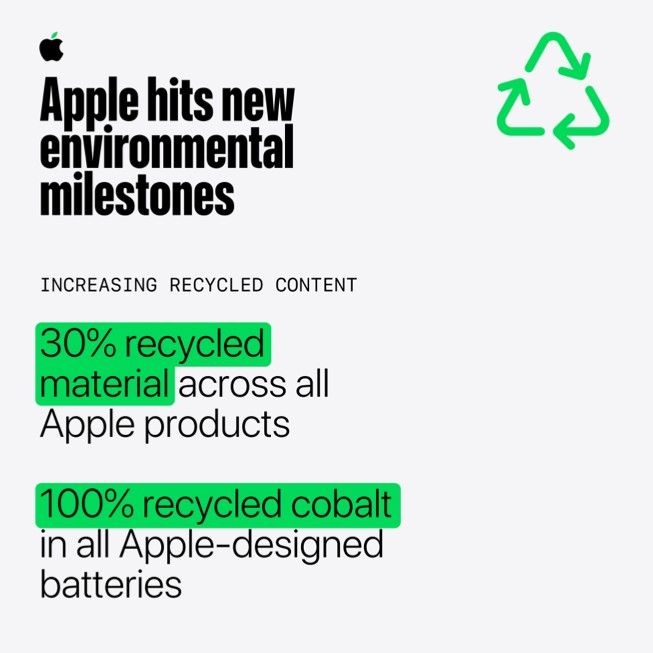
Compostable is often worse than recyclable. The compostable mailer that ends up in landfill, which is where the vast majority end up because industrial composting access is limited, breaks down anaerobically and produces methane. A recycled poly mailer in the same bin is inert.
What actually holds up
- Recycled content beats novel materials. Post-consumer recycled cardboard and PCR poly are boring, cheap, widely accepted in existing waste streams, and available at small-order quantities.
- Paper tape over plastic tape — kraft paper tape lets the whole box go in one bin without the customer separating anything. Small change, disproportionate effect on actual recycling rates.
- Skip the printed insert. The thank-you card that gets thrown away is the virgin paper you paid for. If you want the brand moment, print on the inside of the box.
- Void fill: paper over anything else. Air pillows are lighter but functionally unrecyclable at household level.
The certifications worth checking
Most aren’t. The ones that mean something are FSC for paper and cardboard, and GRS for recycled content claims.
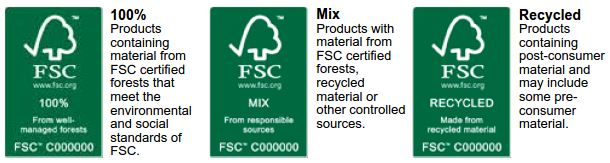
Everything else is largely supplier marketing, and a supplier who leads with a certification you’ve never heard of is usually compensating for the absence of one you have.
Ask for the certificate number. Look it up. It takes four minutes, and it catches a surprising amount.
Carrier Choice Is a Bigger Lever Than It Looks
Your carrier’s fleet, network density, and consolidation practices do more for your per-parcel footprint than anything in your packaging cupboard, and you have less visibility into it than into anything else.
Consolidated delivery, where your parcel travels with a hundred others to the same postcode, is dramatically more efficient than expedited single-parcel routing.
Which means the sustainability decision and the speed decision are in direct conflict, and every startup that offers free next-day shipping to compete has already made that decision without framing it as one.
Offer a slower option and label it honestly. A meaningful share of customers take it when it’s presented as the low-impact choice rather than the cheap choice. Not most. But enough to change your blended footprint, and the ones who take it are disproportionately the ones who’ll stay.
Regional carriers are worth quoting alongside the majors. Denser local networks, often cheaper, frequently better on-time performance in their home territory.
Where the Hidden Costs Live
Two categories of cost don’t show up in a packaging quote, and both are larger than the line item you’re optimising.
The first is damage.
Under-packaging to reduce material is a false economy at the point where damage rates rise, a replacement shipment doubles every environmental cost of the original and adds a return leg.
Track damage by SKU and by box spec, and treat any spec above about 1.5% damage as a failed spec regardless of how good the material story is.
The second is labour.
Complicated packaging is slow packaging. A protocol requiring paper wrap, tissue, sticker, insert, and hand-folded box takes three times as long per order as a mailer, and at 400 orders a week that difference is a part-time salary.
It also puts real physical strain on whoever is doing it. Repetitive packing work at volume produces the kind of injuries that lead to personal injury claims when a founder has been treating their warehouse as a spare room and their packing station as a folding table.
Bench height. Anti-fatigue mat. Boxes stored between knee and shoulder height. This costs about £200, and it’s the single most neglected part of any small fulfillment setup.
Regulated Products Change the Calculation
Some categories can’t optimize their packaging freely, and if you’re in one of them, most sustainable-shipping advice simply doesn’t apply to you.
Anything ingestible, temperature-sensitive, or subject to tamper-evidence requirements carries a packaging floor set by regulation rather than preference.
Sealing, labelling, and distribution requirements rule out the minimalist mailer approach entirely, and no amount of design thinking gets around them.
Ryan Beattie, Director of Business Development at UK SARMs, works with compliance-bound packaging across a research compound catalogue where sealing and labelling standards are non-negotiable.
He says, “The mistake we see constantly is people treating the compliance packaging as the thing to shrink. It isn’t. Your tamper seal and your labelling are fixed, so the only place you have any room to move is the shipping layer wrapped around them, and most sellers have never once looked at that layer because they assume the whole thing is locked down.”
If that’s you, the available moves are different:
- Optimise the outer, not the inner. The regulated primary packaging stays; the shipping layer around it doesn’t have to be excessive
- Consolidate multi-item orders aggressively, since your per-item packaging floor is high
- Look at refill or subscription formats, which shift the compliance burden to a single container reused across shipments
- Don’t make environmental claims about packaging you’re legally required to use. It reads badly, and it invites scrutiny
Measuring Any of This Without a Consultant
You need three numbers, tracked monthly, in a spreadsheet:
- Total packaging weight shipped
- Average parcel volume
- Damage-and-replacement rate
Those three move in the right direction or they don’t, and they’ll tell you within two quarters whether your changes are real.
Everything more sophisticated than this is something to buy later, when you have someone whose job it is to read it.
One under-used signal: your inbound support volume.
The discipline gets easier to sustain when the tracking is boring.
Bryan Henry, President of PeterMD, oversees shipping operations for a telehealth service where temperature-sensitive products move under strict handling requirements.
He says, “We tried a fairly elaborate reporting setup early on, and nobody maintained it past the second month. What actually stuck was three columns in a shared sheet that one person updates on a Friday.
If your measurement system requires someone to care about it, it will fail. If it takes four minutes, it survives, and four minutes of real data beats a dashboard nobody has opened since March.”
Track it for two quarters before you change anything else. Most packaging decisions look sensible in isolation and only reveal themselves against a damage rate.
Telling Customers Without Being Insufferable
Understate it.
The brands that get punished for greenwashing are seldom the ones doing the least. They’re the ones claiming the most relative to what they’re doing.
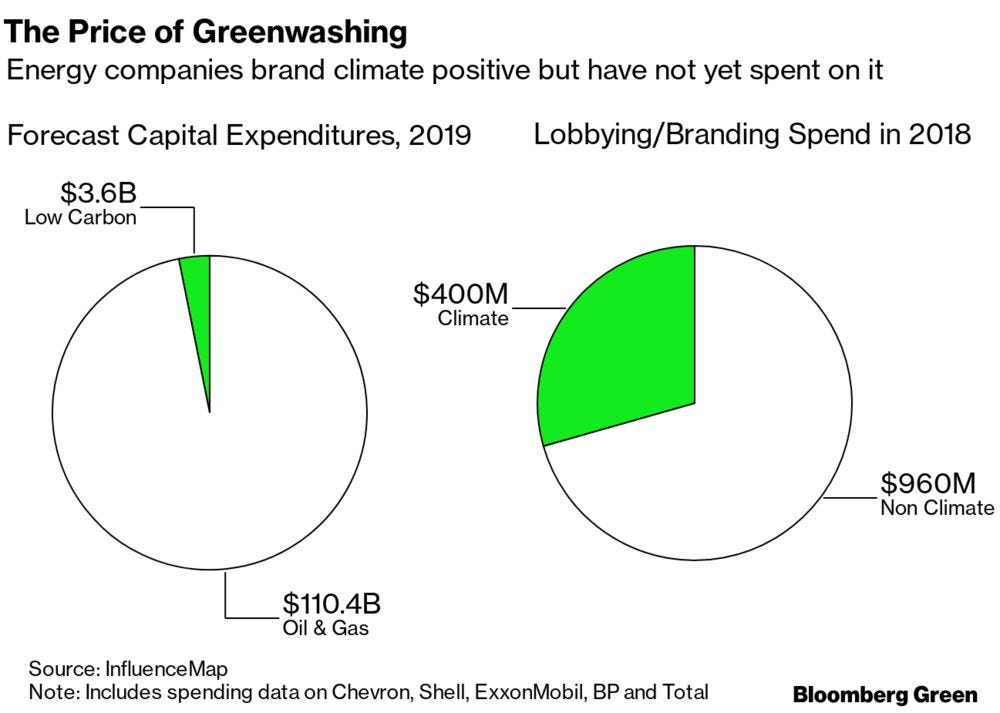
A small honest claim on the inside of a box outperforms a homepage sustainability page nobody reads, and a journalist might eventually check.
Specific and verifiable, or nothing:
- “This box is 90% post-consumer recycled content”, fine
- “Carbon neutral shipping”, needs an offset provider named and a methodology you can defend
- “Eco-friendly packaging”, meaningless, and increasingly a regulatory risk in the UK and EU
Where to Start
Pull ninety days of orders. Find your five most common basket configurations. Order boxes that fit those five and nothing else.
Do that before you research a single material. The box that fits is the whole game, and everything in this article is downstream of it.
If you’ve reached the point where your packing bench is the bottleneck, eFulfillment Service works with small and growing ecommerce brands on exactly this kind of setup, with no minimums and no long-term contracts.

About the Author
Jesse Galanis is a professional writer whose aim is to make complex concepts easy to understand. He strives to provide quality content that assists people in everyday life.



0 Comments