
You’re three rows into the return log, sorting by reason code. A pattern keeps showing up: “product separated,” “texture off,” “arrived melted,” “smell changed.” Six returns this month. All different products. All from the same warehouse zone.
Your first instinct is to pull the batch records and call your chemist. Before you do, check one more thing first: what has the temperature and humidity been like in that storage zone? For a lot of beauty brands, that’s the call you should make first.
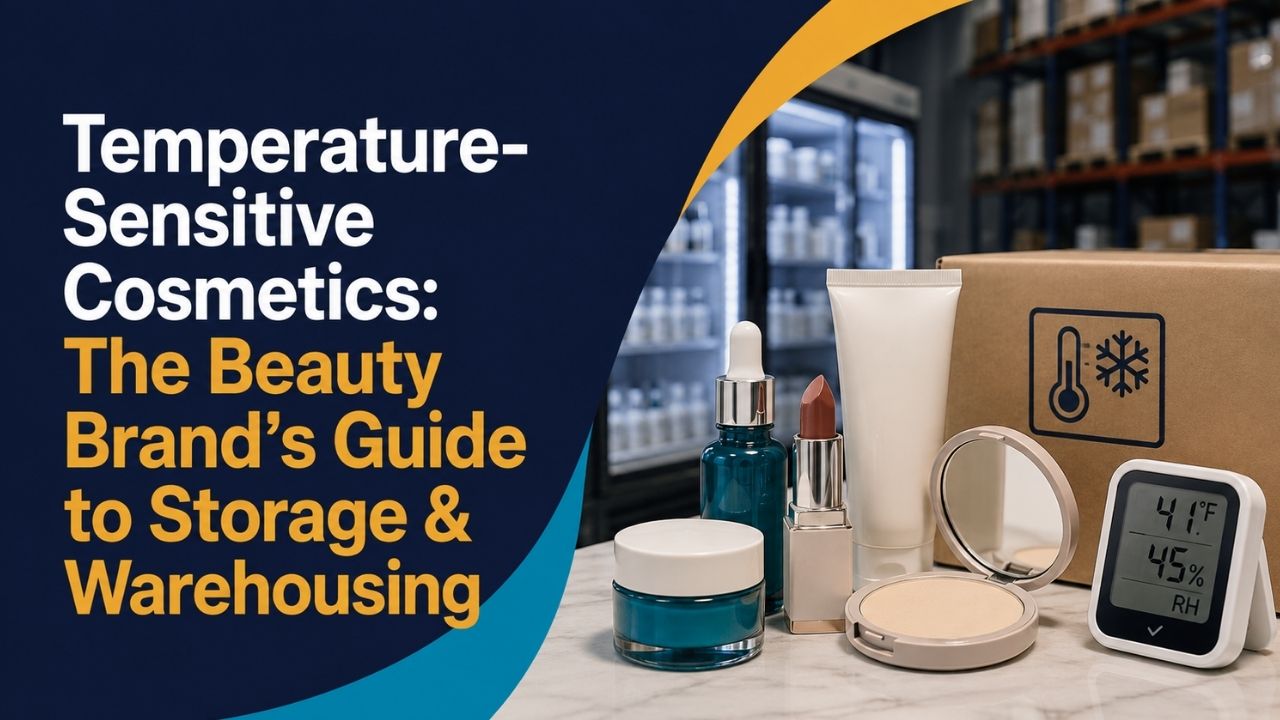
Cosmetic formulas stay stable within a set range. If you push that range too far, the product changes. Leave a serum above 46°F for a few days, or park a lipstick bin near a loading dock in July, and the product that reaches your customer is not the one you shipped from the lab. We wrote this guide because warehouse temperature rarely comes up until a batch has already gone out wrong. It covers the storage limits that matter for each product type, why lot tracking works differently for beauty, and what to check before you trust a warehouse with stock you can’t afford to lose.
Why Founders Blame the Formula When the Warehouse Is the Problem

When complaints spike, the first move is usually to change the formula. Reviews mention separation, a different scent, a texture that “feels off.” The formula gets blamed because it’s the thing the founder controls directly.
But cosmetic chemistry doesn’t break down on its own schedule. It breaks down on the storage room’s schedule. A serum sitting in a warehouse at 75°F for six weeks isn’t the same product it was on day one, even though nothing in the formula changed. The active ingredients broke down. The emulsion started to separate.
Changing a stable formula to fix a storage problem wastes months of work, and it doesn’t fix anything. The real problem is still there. The next batch breaks down the exact same way, in the exact same warehouse, for the exact same reason.
Before you change a formula that has shipped fine for a year, check the simpler explanation first. Ask your beauty and cosmetics fulfillment partner what temperature and humidity that product sat at, and for how long.
The Storage Thresholds That Actually Matter
Beauty products don’t all need the same storage. A cream blush and a vitamin C serum have almost nothing in common. A warehouse that treats them the same way will eventually fail one of them.

Skincare and Serums
Active ingredients are the most sensitive part of a beauty catalog. Retinol, vitamin C, and hyaluronic acid products are usually most stable between 35°F and 46°F. Above that range, they break down faster. Vitamin C usually goes first. It can lose its strength within days of steady heat, even while it still pours, smells, and looks the same as day one.
The customer only finds out when it stops working, but by then, the review is already written.
Color Cosmetics
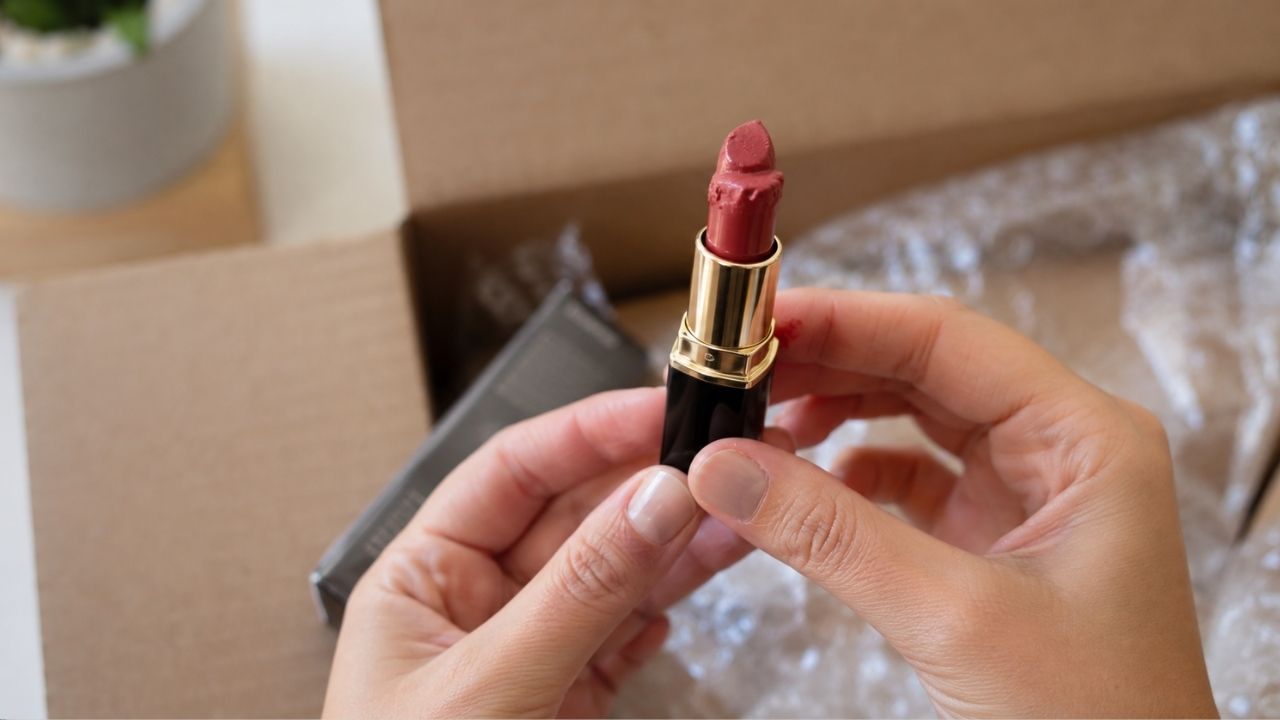
Lipstick, lip gloss, and cream color products fail in a more physical way. Most lipstick starts to soften and lose its shape above 90°F. A warehouse without climate control, a delivery truck, or a loading dock can hit that on an ordinary summer day.
Once a lipstick bullet melts and hardens again, it looks different. The surface goes dull. The shape shifts. Sometimes oil separates out. No new formula fixes a warehouse that got too hot.
Pressed Powders and Palettes
For powders, humidity does more damage than heat. Pressed powders, eyeshadow palettes, and compacts start soaking up moisture from the air above about 60% relative humidity. That causes caking, cracking, and color shift. Those symptoms look like a formula problem. They rarely look like a storage failure.
Fragrance and Aerosols
Fragrances and aerosols have one more layer on top of temperature and humidity: hazmat rules. Fragrances are usually classed as Class 3 flammable liquids. Aerosols are usually Class 2.1. Both need special storage that most general 3PLs aren’t licensed to provide. Brands often don’t find this out until after they’ve already signed a contract. It’s the same basic rule that limits how much hairspray you can bring on a plane.
|
Category |
Primary risk |
Storage requirement |
|---|---|---|
|
Serums, actives (retinol, vitamin C, HA) |
Heat → oxidation, potency loss |
35–46°F |
|
Lipstick, cream color |
Heat → melting, texture shift |
Below ~90°F |
|
Pressed powders, palettes |
Humidity → caking, cracking |
Below ~60% RH |
|
Fragrance |
Flammability (Class 3) |
Climate control + hazmat storage |
|
Aerosols, spray products |
Pressure/flammability (Class 2.1) |
Climate control + hazmat storage |
No single number covers a whole beauty catalog. A brand selling both a vitamin C serum and a pressed powder palette needs a warehouse that can run two different climate zones under one roof. One setting for everything won’t work. To be fair, climate-controlled space costs more than plain storage. For a shelf-stable product, like a bar soap or a sealed alcohol toner, that extra cost may not be worth it.
Fulfillment with a Personal Touch.
See How Using a 3PL like eFulfillment Service sellers saves time. Get a Free Quote from eFulfillment Service Today!
What Product Degradation Actually Looks Like to a Customer
A degraded product rarely arrives with a warning label. It shows up looking almost right, which is what makes it dangerous to a brand’s reputation.
Customers don’t file a support ticket that says “this was stored at the wrong temperature.” They describe symptoms instead:
- A serum that “doesn’t feel the same as last time”
- A lipstick with a dull surface or a slightly different shape
- A palette that arrived cracked, even though the box wasn’t damaged
- A scent that’s “off” or weaker than expected
Every one of those complaints reads like a formula problem to a founder scanning reviews.
Lot Tracking and FEFO: Why First-In-First-Out Doesn’t Work for Beauty
Most general fulfillment runs on FIFO: first in, first out. The oldest stock ships first, in the order it arrived. For a lot of products, that’s fine.

For beauty, it’s the wrong model. FEFO (first-expired, first-out) has to be the standard instead. Two batches of the same product, received on different dates, can expire at different times. That depends on the chemistry of each batch. It has nothing to do with when the batch arrived.
Here’s the main difference between the two:
- FIFO ships whatever arrived at the warehouse first, no matter the expiration date
- FEFO ships whatever expires soonest, no matter when it arrived
A warehouse running FIFO on an active-ingredient serum can ship a customer the product closer to its expiration date, even though a fresher batch sits right behind it on the shelf. It ships first only because it arrived first. That’s a slightly degraded product going out the door, and nothing in the system flags it as a mistake.
The Compliance Angle
FEFO also carries more legal weight than a normal inventory rule. Lot-level tracking is tied directly to a beauty brand’s duties under MoCRA (more on that below). MoCRA requires you to trace a single unit back to its production batch if someone reports a serious problem.
A warehouse that can’t tell you which batch shipped to which customer can’t help you respond to that report. It also can’t tell you which remaining stock needs to be pulled.
Listen for these words when you ask a 3PL about this: “lot tracking,” “expiration date management,” and “FEFO rotation.”
The Compliance Layer: MoCRA, FDA, and GMP in the Warehouse
The Modernization of Cosmetics Regulation Act (MoCRA) added a set of FDA rules. Most indie beauty founders learn about them only after they’re already in effect. A few of these rules reach past the formula and into the warehouse.
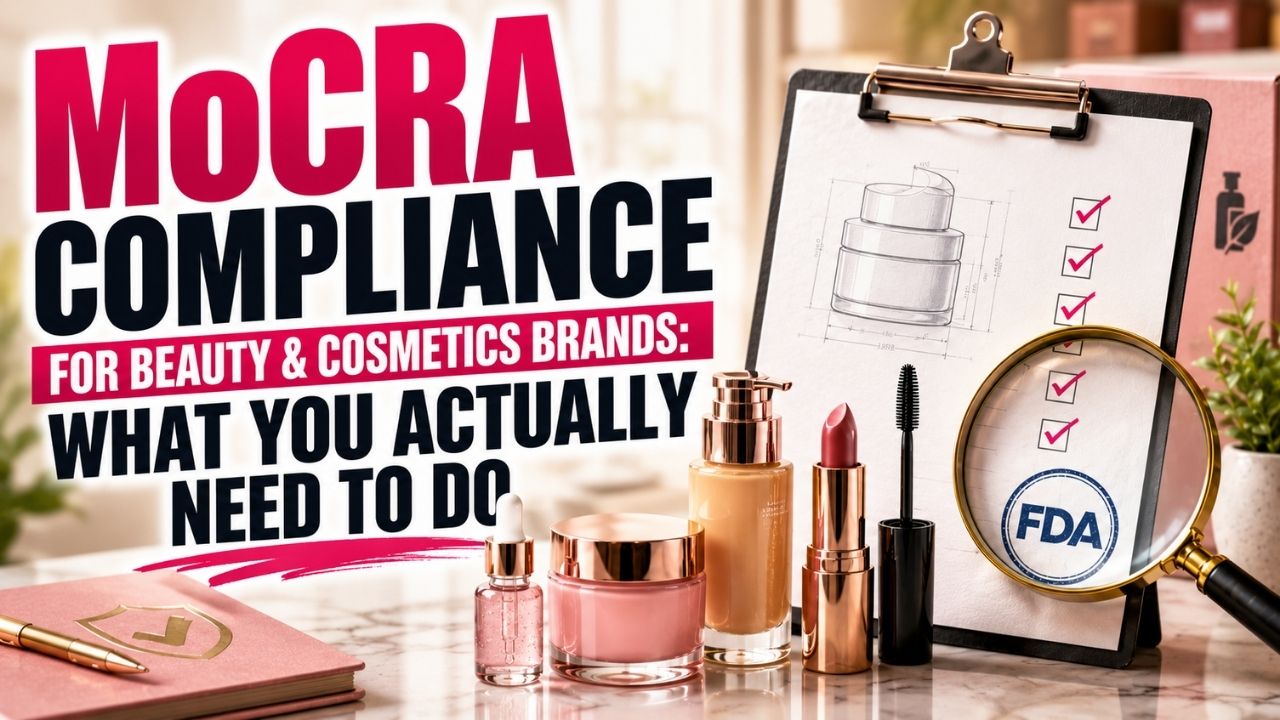
What MoCRA requires. Facility registration and safety proof sit mostly with the manufacturer. Product listing and adverse event reporting reach straight into the warehouse:
- Facility registration: factories that make or process cosmetics need FDA registration and an FEI number
- Product listing: every product needs to be listed with the FDA
- Adverse event reporting: you must report serious bad reactions to the FDA within 15 business days. You can only do that if you have batch-level records to trace the product
- Safety proof: brands need paperwork that backs up the safety of each formula
Good Manufacturing Practice (GMP) standards now reach further into the warehouse than they used to. They cover storage now, in addition to production. Exactly how far isn’t clear yet, since the rules keep changing. Brands should check current FDA guidance rather than lean on a fixed list. This is one area where “check the current rule” beats memorizing an old one.
In practice, that means FDA registration and GMP-matching storage aren’t a bonus feature when you’re picking a 3PL. For a beauty brand, they’re closer to a license requirement. Confirm them before you even look at unboxing extras or pricing.
Fulfillment with a Personal Touch.
See How Using a 3PL like eFulfillment Service sellers saves time. Get a Free Quote from eFulfillment Service Today!
Evaluating a 3PL for Temperature-Sensitive Beauty Storage
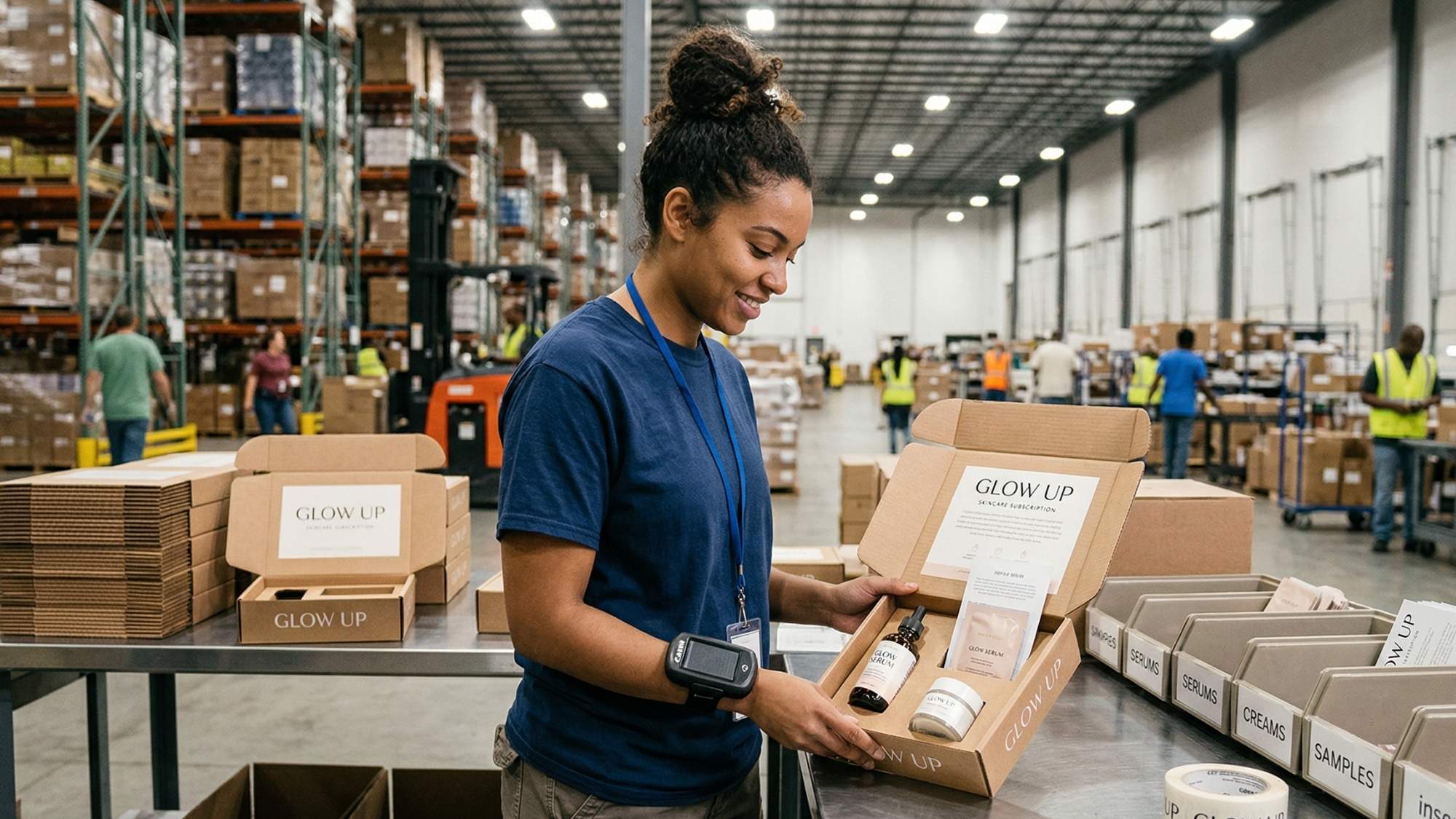
Once compliance checks out, the next layer is operational. Here’s a reasonable order to work through it in:
- FDA registration and GMP-matching practices are non-negotiable. Confirm this before anything else.
- Lot/batch tracking with FEFO enforcement. Ask them to show you the workflow instead of just describing it.
- Climate-controlled storage, by zone. Confirm they can run different temperature and humidity settings for different products, all under one roof. One setting for the whole warehouse won’t cut it.
- Hazmat capability. If any product is a fragrance or aerosol, confirm they clearly handle Class 3 and Class 2.1 storage. Plenty of 3PLs quietly leave these products out.
- Real-time inventory visibility. You should be able to see what you have, by lot, without emailing someone.
- Shade and product accuracy at scale. A 40-shade foundation line needs a warehouse that treats each shade as its own distinct, trackable product. A “close enough” swap isn’t good enough.
Ask this directly: what happens to a bin of serum if the warehouse’s cooling system fails for six hours on a Saturday? A 3PL that’s actually built for beauty has an answer ready.
Fulfillment with a Personal Touch.
See How Using a 3PL like eFulfillment Service sellers saves time. Get a Free Quote from eFulfillment Service Today!
Frequently Asked Questions
What temperature should cosmetics be stored at?
It depends on the product type. There's no single number that covers a whole beauty catalog. Active-ingredient serums usually stay most stable between 35°F and 46°F. Color cosmetics like lipstick usually need to stay below about 90°F so they don't melt. A warehouse that handles many product types needs separate climate zones. One setting for everything won't work.
What happens if skincare products get too warm during storage or shipping?
Heat speeds up how fast active ingredients like vitamin C and retinol break down. That cuts their strength, even while the product still looks and smells normal. Emulsions can also start to separate. This kind of damage is often invisible until a customer notices the product doesn't work like it used to.
Why does FEFO matter more than FIFO for beauty brands?
Because expiration dates depend on the batch. They have nothing to do with when it arrived. A warehouse running FIFO can leave an older, closer-to-expiring batch sitting behind a newer one that just happened to arrive first. That sends the customer a more worn-out product than they need to get. FEFO ships by expiration date instead, which closes that gap.
Does MoCRA require 3PLs to have specific storage certifications?
MoCRA's facility registration and safety-proof rules mostly apply to manufacturers. But the adverse event reporting rule, a 15-business-day window, depends on lot tracking that has to exist at the warehouse too. A fulfillment partner without lot tracking makes that reporting deadline much harder to meet.
How do I know if my current 3PL is properly storing temperature-sensitive products?
Ask them directly what temperature and humidity range each of your product types is stored at, and ask to see the monitoring logs. If they can't give you specific numbers by product type, only one number for the whole warehouse, that's a sign storage isn't being managed the way beauty products need.
Are fragrances and aerosols harder to store than other cosmetics?
Yes. Beyond temperature and humidity, they carry hazmat classes (fragrances as Class 3 flammable liquids, aerosols as Class 2.1) that need licensed storage most general 3PLs don't have. Confirm this clearly. Don't assume a 3PL that handles your skincare line can also handle a fragrance product.
Key Takeaways
- Storage failure looks like a formula problem. Separation, texture change, and scent shifts from heat or humidity look exactly like a bad batch to a founder scanning reviews. Check warehouse conditions before you change the formula.
- Beauty products don’t share one storage spec. Serums need 35°F to 46°F. Lipstick melts above about 90°F. Pressed powders soak up moisture above about 60% RH. No single warehouse setting can protect all three.
- FEFO has to replace FIFO for anything with an expiration date. Shipping by expiration date is the only way to avoid sending a customer the more worn-out batch when two batches of the same product are in stock. Arrival order doesn’t matter here.
- MoCRA’s 15-business-day reporting window depends on lot tracking. Without it, tracing a bad product back to its batch, and knowing what else to pull, isn’t really possible.
- When comparing 3PLs, weigh compliance and lot tracking first, climate control second. All three still have to be present.
- Fragrance (Class 3) and aerosol (Class 2.1) products need licensed hazmat storage on top of everything else. Plenty of 3PLs that handle the rest of a beauty catalog just fine still don’t carry it.
Note: Regulatory requirements under MoCRA continue to evolve. Consult with a qualified regulatory affairs professional for advice specific to your product line and business structure.





0 Comments