You’re reading a one-star review. “The serum leaked and arrived three days late. I’ve been a subscriber for eight months but I’m canceling.”
Your first instinct is to call your formulator. Before you do, read the review again. Leaked. Late. Neither of those is a formula problem. The fulfillment failed, and a subscriber who stuck with you for eight months left because of it.
Founders who’ve built a real subscription box, a loyal community, a product that works, tend to respond to churn by changing the curation. Before you reformulate or swap a hero product, check what’s happening with the delivery.
Over 75% of customers won’t return after a poor delivery experience in a subscription model, and consistency matters more than speed. Your subscribers aren’t buying product. They’re buying the ritual of receiving it on time, intact, and right.
This guide covers the complexity specific to beauty subscriptions, the most common operational traps, and how to build a system that grows without consuming every hour you have.
Why Subscription Box Fulfillment Is Different From Regular DTC
Most DTC fulfillment is rolling. An order comes in Tuesday morning, you pick it, pack it, ship it by end of day. You’re responding to demand as it arrives.
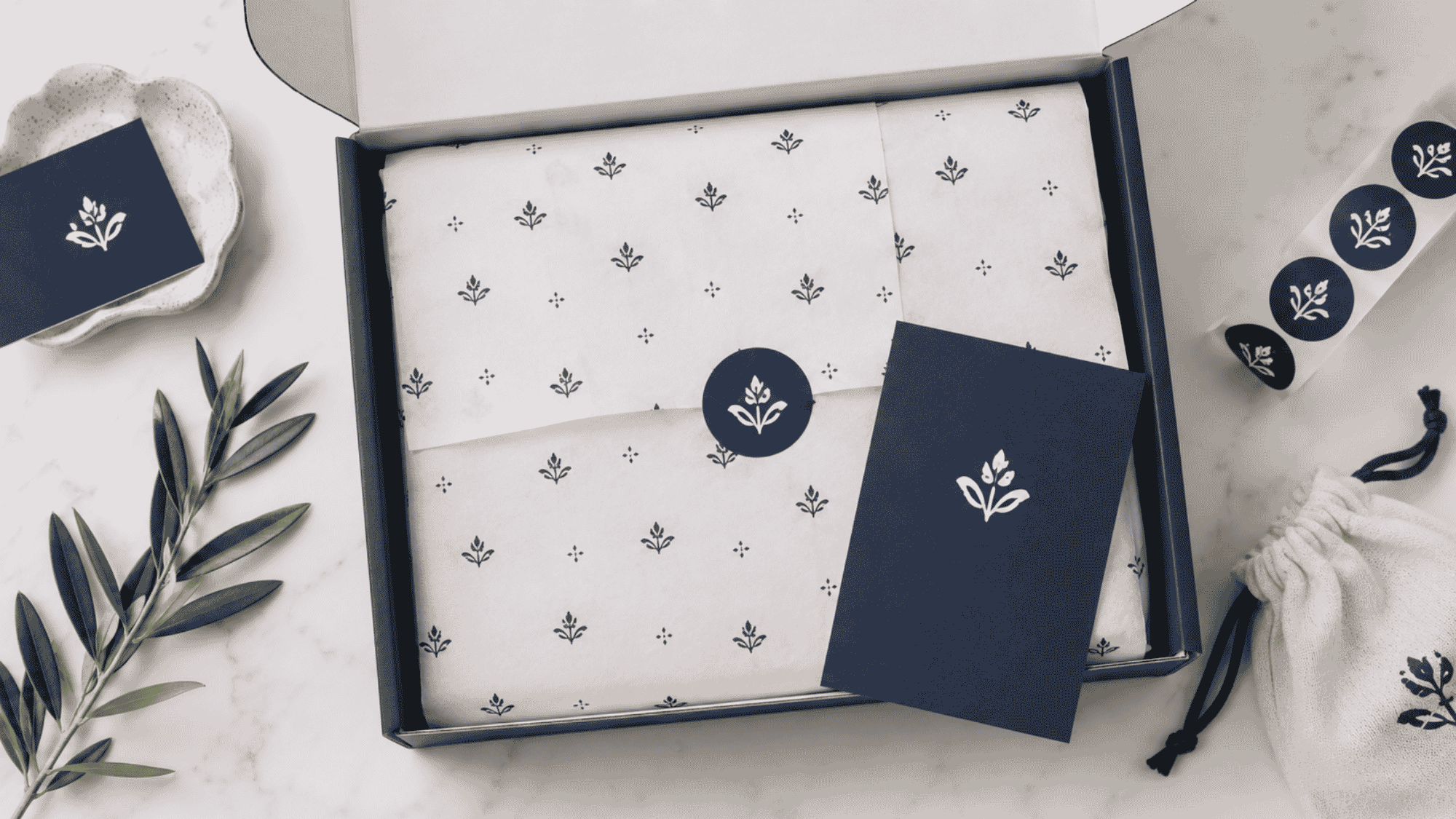
Subscription box fulfillment services don’t work that way. They’re batch operations. Every box for the month ships in a compressed window, usually five to ten business days, sometimes less.
That changes how you plan for everything.
One stockout hits every subscriber at once. In regular DTC, if you run out of a bestselling serum on a Tuesday, you might miss five orders before you restock. In a subscription batch, that same stockout means 600 subscribers don’t get their box this month. Or they get a substitution you scrambled to source. Neither outcome keeps subscribers.
The margin for error is close to zero. In rolling DTC, a wrong shade shipped to one customer is one customer service ticket. In a subscription batch, a picking error in the kitting process can move across hundreds of boxes before anyone catches it. By the time you find a skipped QC step, 400 boxes are in transit.
Your timeline is compressed. You don’t drip product out the door over three weeks. You need all inventory received, kitted, quality-checked, and ready before the batch window opens. If a supplier ships late or short, you don’t have a week to recover. You have hours.
Subscriber expectations differ from one-time buyers. Someone who orders from your website once has a transactional relationship with your brand. A subscriber has an emotional one. They reorganized their bathroom shelf for your monthly drop. When a box arrives crushed, late, or with the wrong shade, it feels like a broken promise.
That’s the operating environment for subscription box fulfillment services. It demands a different level of precision than standard DTC.
Beauty Subscription Box Fulfillment Has Extra Complexity You Can’t Ignore
Generic subscription box fulfillment guides cover pick rates and shipping zones. Beauty has variables those guides skip entirely.
Expiration dates and FEFO rotation
Beauty is not FIFO, and this is a product safety requirement, not a logistics preference. Instead, beauty products typically follow what’s called FEFO Inventory Rotation.
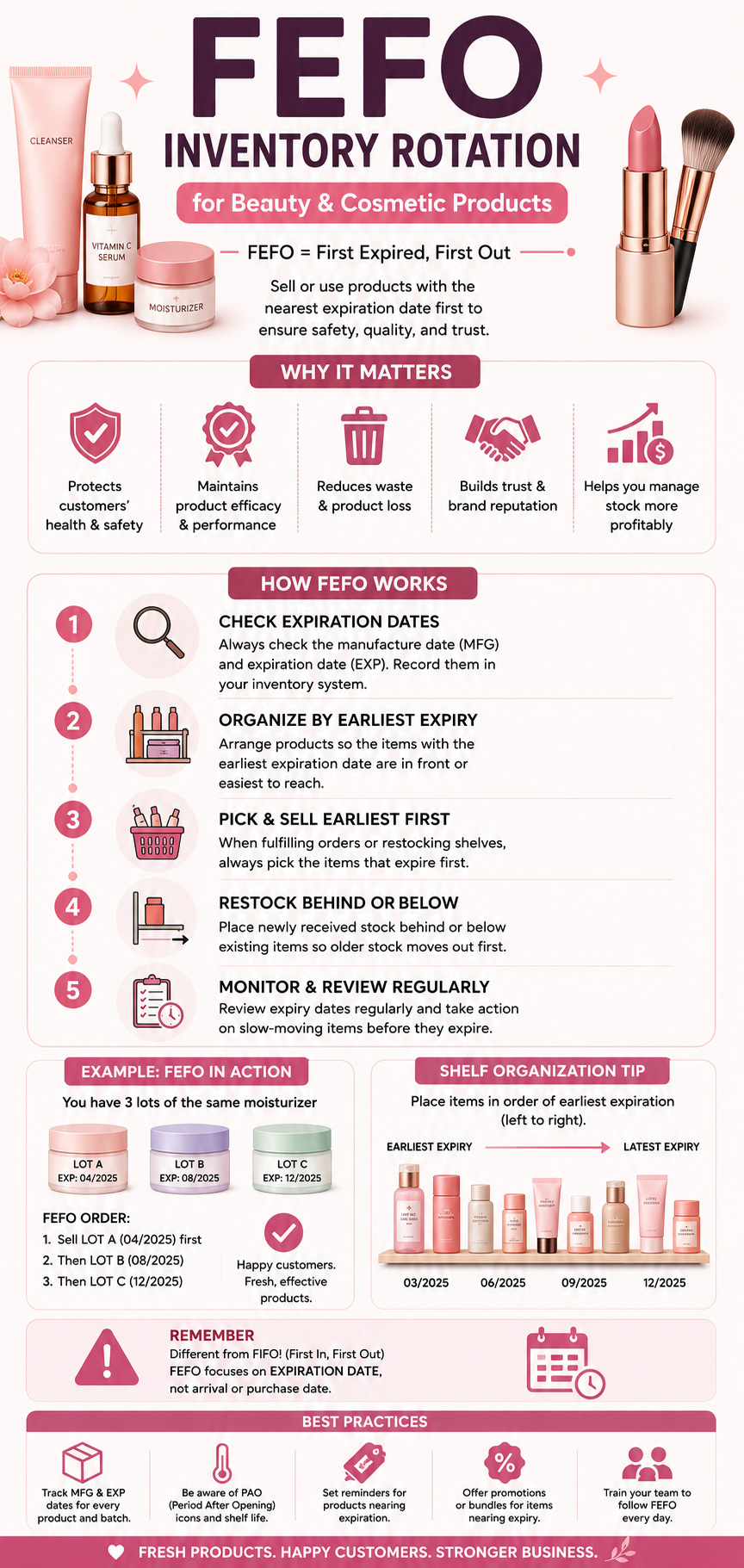
FIFO means “first in, first out”: you ship the oldest inventory first. In most categories, that works fine. In beauty, what matters is expiration date. A new lot of vitamin C serum might arrive with a shorter shelf life than the lot already sitting in your warehouse if the earlier lot was manufactured with more lead time. FEFO (first expired, first out) ensures the product closest to its expiration date ships first, regardless of when it arrived.
In a subscription model, this compounds. You’re committing inventory to potentially thousands of subscribers in a single batch. If one lot is compromised or expired, you have a brand crisis rather than a return: products going out degraded, complaints landing on social, and potentially an FDA traceability audit under MoCRA.

Lot tracking and MoCRA compliance
The Modernization of Cosmetics Regulation Act (MoCRA) requires brands to maintain records linking specific product lots to specific distribution channels. In a subscription model, that means knowing exactly which lot went into which month’s box. If a contamination issue surfaces six months from now, you need to tell regulators precisely which subscribers received which lot. Without lot tracking, you’re guessing.
Shade and variant accuracy
Shipping the wrong shade isn’t just a return. It gets posted about. A screenshot of the wrong shade, especially when a deep skin tone subscriber receives a color clearly not meant for them, is a public brand problem that lives on social media. Shade accuracy requires a kitting system that physically separates variants and has QC checkpoints built into the assembly sequence, not wishful thinking at end-of-line.
Temperature sensitivity
Actives degrade in heat. Vitamin C oxidizes. Certain peptide formulations break down above 77°F. If your 3PL runs without climate-controlled storage and your summer shipment sits in an un-air-conditioned warehouse for three days before shipping, your subscribers notice and blame the product. You’ll spend time and money investigating a formulation problem that lives in the warehouse.
Kitting complexity
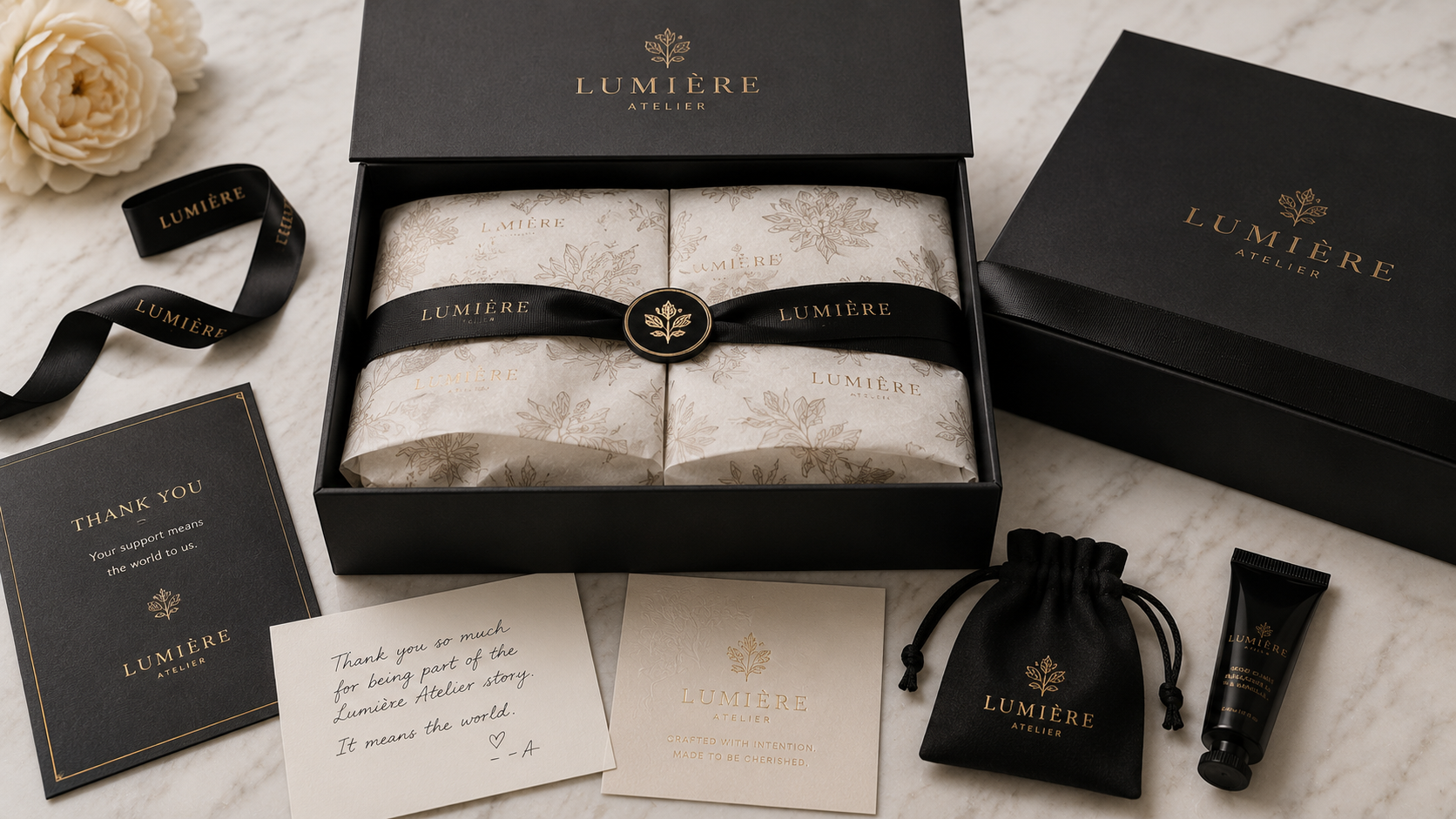
A single month’s beauty box might include six to eight SKUs across multiple shade options, personalized product selections, a seasonal insert, a brand note, tissue paper in a specific fold, and a QR code card. That’s an assembly line. It needs to be designed like one.
Fulfillment with a Personal Touch.
See How Using a 3PL like eFulfillment Service sellers saves time. Get a Free Quote from eFulfillment Service Today!
How to Build a Kitting Operation That Protects Your Brand
If you’re doing this in-house, a few structural decisions protect you from the most common kitting and assembly failures.
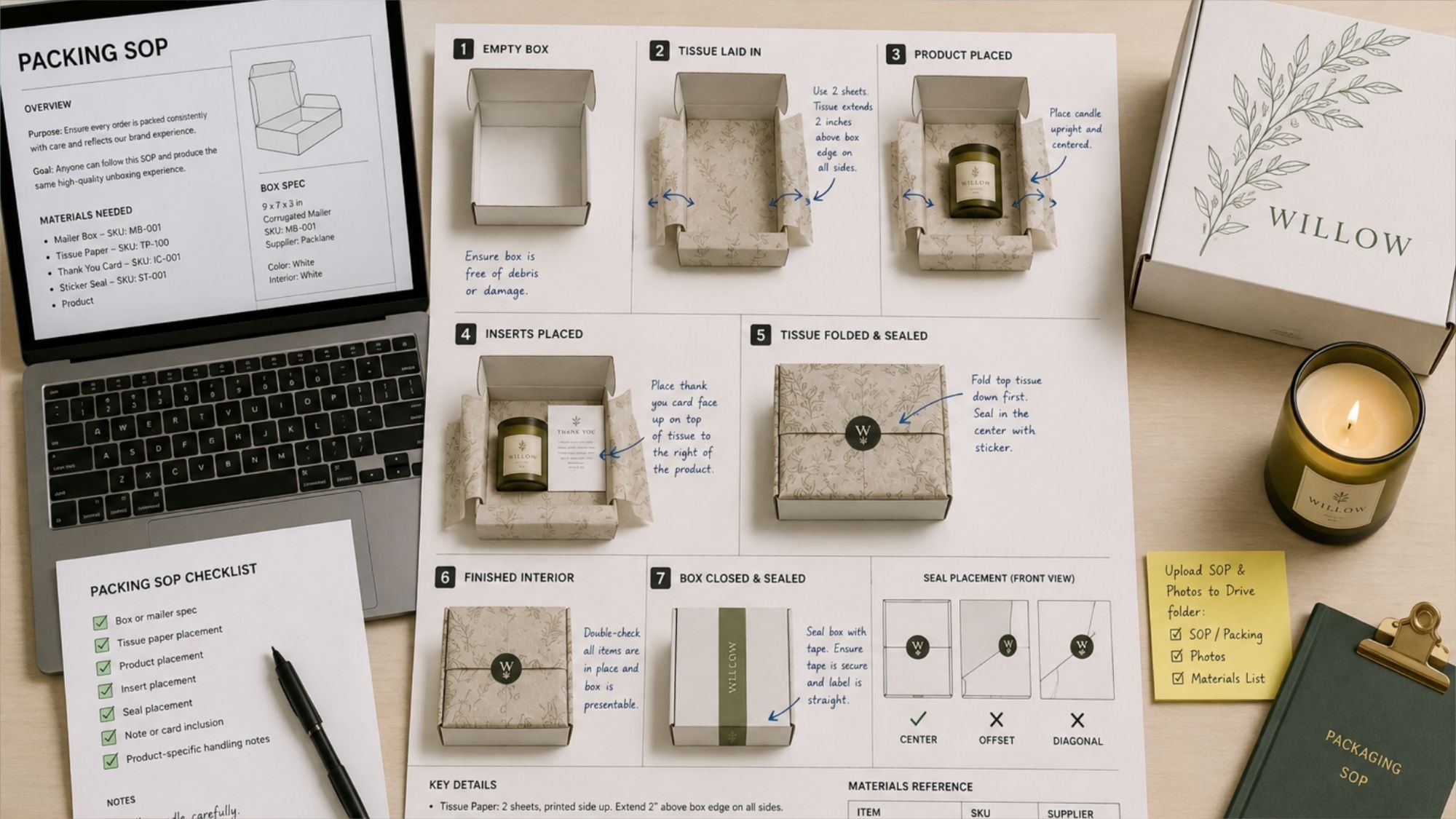
Design the assembly sequence before you touch a single box.
Map every item from bottom to top in the exact order it gets placed. Every person on your assembly line places items in the same sequence, every time. Auditing a completed box means checking the sequence. Deviation is a flag.
Stage variants separately.
Shade variants, size variants, formula variants: each gets its own clearly labeled staging area. If you’re kitting 500 boxes and 200 need Shade 03 while 300 get Shade 07, those products go in physically separate stations. Mixed staging is where wrong shades enter the line.
Build QC checkpoints into the line, not at the end.
End-of-line QC catches errors after the box is packed. You’ve spent the materials and the labor. Build checkpoints mid-sequence: after the first layer is placed, after the variant item is selected, before the box is sealed. Each checkpoint takes ten seconds and heads off a customer service disaster before it ships.
Use a kitting manifest, not memory.
Every box that goes out should have a corresponding kitting manifest: a documented record of what should be in it based on that subscriber’s profile. Shade preference, size selection, any personalization. The person sealing the box checks the manifest as the last step before it closes.
Designate a QA lead for every kitting session.
When you’re pushing to get 600 boxes out the door, fatigue sets in fast. One person whose job is auditing completed boxes throughout the session, not packing, not labeling, only auditing: one audit per ten to fifteen completed boxes is a reasonable starting point.
Track what goes wrong after every run.
Wrong shades caught at QC, boxes with missing items, boxes sealed before the QC check: document all of it. Reviewing that data after every kitting run tells you where the process fails before your subscribers do.
Forecasting Inventory for a Beauty Subscription Box
To forecast inventory for a beauty subscription box, start with your confirmed subscriber count, add a 5 to 10% buffer for mid-cycle sign-ups and fulfillment errors, then work backward 6 to 8 weeks from your ship date for every component in the box.
In practice, a few variables matter more than the math.
Start with your subscriber base, then add buffer.
If you have 500 confirmed subscribers at order time, order for 525 to 550. Mid-cycle sign-ups happen. Damaged-in-transit replacements happen. Kitting errors that require a replacement unit happen. Build the buffer before you place the order.
Work backward from ship date.
Your ship window is 45 days out. Your primary supplier needs 30 days lead time. You need to place your order today, before you’ve finalized the curation, before subscriber counts are locked for the month, before variant ratios are confirmed. Beauty subscription forecasting means ordering on imperfect information every cycle.
Map your shade mix ratios.
If you’re including a shade-variant item, your component order needs to reflect subscriber preference data, not just total units. If 40% of your subscribers fall in one shade family and 60% split across three others, order to that ratio.
Account for seasonal demand bumps.
Q4 is a gifting season. Subscriber spikes hit in January and around major beauty moments. If you’re not building seasonal adjustments into your forecasting model, you’ll be short on inventory when you have the most new subscribers paying attention.
Build a contingency for upstream failures.
Your supplier will ship late or short at some point, and when that happens, no buffer remains in the calendar to recover. Build a contingency protocol before you need it: a secondary supplier for your highest-risk components, and a decision tree for what you do if a key item arrives ten days late.
In-House vs. 3PL Fulfillment: When to Make the Switch
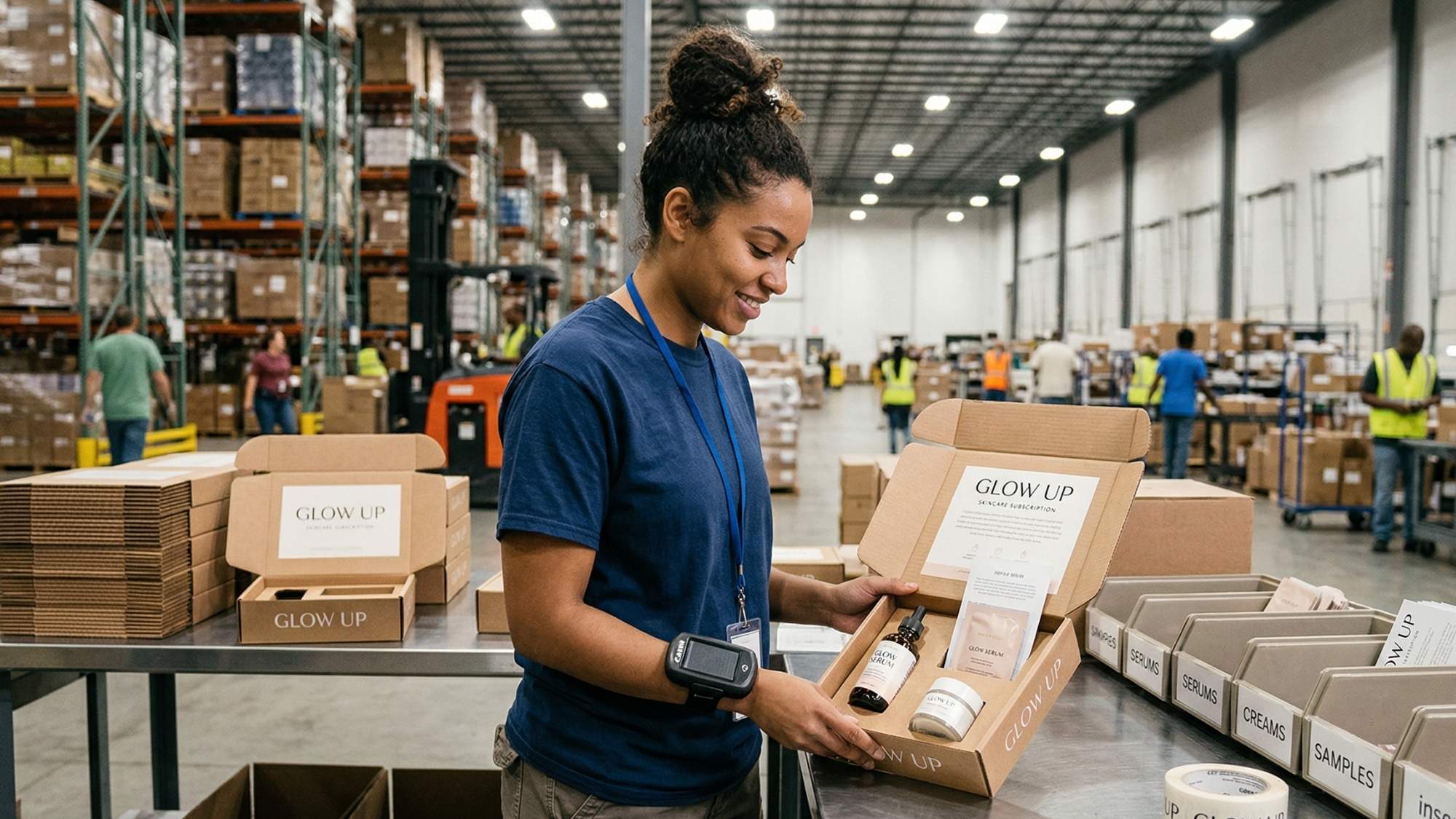
Most beauty subscription boxes start with the founder hand-packing in her living room, tissue paper everywhere, writing notes to every subscriber. That’s a real origin story. At 500 subscribers a month, it stops being a viable operating model.
The honest cost comparison
Founders doing in-house fulfillment calculate cost as materials plus shipping. That calculation leaves out founder time. If you spend 40 hours a month on kitting and shipping, which is conservative at 500 orders, and your time is worth $50 an hour, you’re absorbing $2,000 a month in labor before paying a single employee.
Signs you’ve hit the ceiling
- Two or more nights a week on packing during ship week
- Error rates climbing: wrong shades, missing items, late shipments
- No climate-controlled storage for temperature-sensitive inventory
- No lot tracking system; expiration dates live on a spreadsheet somewhere
- Brand opportunities you’re turning down because operations have you pinned
What to look for in a subscription box 3PL
Most 3PLs are built for rolling DTC. You need a partner with experience in batch kitting, FEFO and lot tracking capabilities, shade variant separation in the pick process, and climate-controlled storage. The other requirement is having an actual person to call when something goes wrong. Most founders who’ve had a 3PL nightmare describe the same thing: “no one to call.”
eFulfillment Service handles subscription box kitting for beauty brands with no order minimums. You’re not locked into a contract built around volume you haven’t hit yet. Transparent, itemized pricing means you know your per-box cost before you commit. A dedicated account manager who learns your SKU structure, your shade variants, and your insert schedule is the difference between a 3PL that gets beauty and one that doesn’t.
Fulfillment with a Personal Touch.
See How Using a 3PL like eFulfillment Service sellers saves time. Get a Free Quote from eFulfillment Service Today!
How Subscription Box Fulfillment Affects Churn
Most founders who see churn climb assume it’s a product problem. They change the curation, reformulate, bring in a guest brand, spend months and real money on something that isn’t the issue.

Often, boxes are arriving late, damaged, or with the wrong shade.
For subscription customers, receiving the box is a ritual. It has a cadence. They’ve been anticipating it. A box that arrives crushed, missing an item, or a week late with no communication breaks that cadence, and subscribers cancel without contacting support first. Over 75% won’t return after a poor delivery experience in a subscription model. The unboxing experience is the moment your brand promise lands or doesn’t, and a crushed box or a wrong shade tells your subscriber everything they need to know about whether to stay.
Personalization pushes retention further.
Brands that personalize subscriptions at the individual level see higher retention than those shipping the same box to every subscriber (Source: Productiv, 2025). Shade preferences on file. Skin type customizations. Fragrance preferences. Each one adds “this box was made for me” that a generic box can’t match. Personalization only works if your fulfillment operation executes it correctly. A subscription that ships the wrong shade despite having the subscriber’s preference on file is worse than a generic box: you’ve confirmed you had the information and sent the wrong thing anyway.
Get fulfillment solid. Then add personalization on top.
Fulfillment with a Personal Touch.
See How Using a 3PL like eFulfillment Service sellers saves time. Get a Free Quote from eFulfillment Service Today!
Frequently Asked Questions
How do I forecast inventory for a beauty subscription box?
Start with your confirmed subscriber count, then add a 5 to 10% buffer to cover mid-cycle sign-ups, fulfillment errors, and replacements. Work backward 6 to 8 weeks from your ship date to determine when each component needs to be ordered. Map shade or variant ratios based on subscriber preference data on file. Build in seasonal demand adjustments for high-growth months like January and Q4. Create a contingency protocol for upstream supplier delays, one of the most common causes of subscription inventory failures.
What is kitting in subscription box fulfillment?
Kitting is the process of assembling multiple individual SKUs into a single finished package. For a beauty subscription box with six to eight components, shade variants, seasonal inserts, and personalized elements, kitting is an assembly-line operation that requires a documented sequence, QC checkpoints at multiple stages, physically separated variant staging, and a dedicated QA role during every session.
How does subscription box fulfillment affect churn?
Poor fulfillment is one of the leading causes of subscription churn, and founders consistently misdiagnose it as a product or curation problem. When boxes arrive late, damaged, or with the wrong shade, subscribers cancel without contacting support.. Fixing delivery consistency, accuracy, and packaging integrity often reduces churn faster than changing what's in the box.
What should I look for in a beauty subscription box 3PL?
FEFO inventory rotation and expiration date tracking; lot tracking for MoCRA compliance; experience with multi-SKU kitting and shade variant separation; climate-controlled storage for temperature-sensitive formulas; no order minimums if you're still scaling; transparent per-box pricing; and a dedicated point of contact who understands your SKU structure. Avoid 3PLs that treat beauty like any other consumer product.
Can a 3PL handle lot tracking and expiration dates for beauty subscriptions?
Some can, and you need to confirm it before signing anything. Ask directly: "Can you provide a lot trace report by outbound batch?" They should have explicit FEFO rotation protocols, not just FIFO, and the ability to link specific inventory lots to specific outbound shipments. For a subscription model, that means knowing which lot went into each month's batch: essential for MoCRA compliance and for managing any quality issue that surfaces after delivery.
Conclusion
A simple rule of thumb: under 200 subscribers a month, in-house fulfillment is manageable. Hard, but manageable. The operational cost is real but not yet existential.
Cross 300 subscribers, especially with shade variants and temperature-sensitive product, and the cost of doing it yourself starts showing up in your error rate, your churn numbers, and the hours you’re not spending on the brand. You didn’t build this because you love packing boxes.
If you’re ready to take subscription box fulfillment off your plate, explore what eFulfillment Service offers for beauty brands: no order minimums, transparent pricing, and a team that will learn your SKUs.
Note: Regulatory requirements under MoCRA continue to evolve. Consult with a qualified regulatory affairs professional for advice specific to your product line and business structure.




0 Comments