
If you sell books directly to readers, through your own Shopify store, a WooCommerce site, a Kickstarter campaign, or a monthly subscription box, fulfillment is the last thing that happens before a reader decides whether they’ll buy from you again.
Books are harder to fulfill than almost any other physical product, and most fulfillment infrastructure wasn’t built for them. If you don’t choose the right 3PL, they might ship your hardcovers in poly mailers, miss your street date, and route every domestic order at Priority Mail rates. USPS will open a Media Mail package and bill the recipient postage-due because you included a bookmark with a discount code. A warehouse with no ISBN-level tracking will commingle your signed edition with standard stock and you’ll find out when readers start asking why their “signed copy” isn’t signed.
The operational requirements that separate book fulfillment from everything else: ISBN-level inventory control, USPS Media Mail routing, street-date embargoes that live in the WMS, damage prevention specific to paper goods, and a trade distribution ecosystem built on 20-40% retailer return rates.
Already know you need a book-specialist 3PL?
eFulfillment Service has shipped millions of books for indie authors, small presses, and subscription boxes with ISBN-level inventory tracking, Media Mail routing, and street date enforcement built in.
What is book fulfillment?

Book fulfillment is the complete operational chain between “a reader places an order” and “a book is in their hands.”
The steps for fulfilling books are pretty straightforward:
- Receive and store inventory
- Pick the correct book
- Pack it safely
- Generate a label
- Hand it to a carrier
- Handle returns
The complexity is typically in the details specific to books that other product categories don’t share.
ISBNs create edition-level accountability. Every distinct version of a book, hardcover, trade paperback, mass market paperback, signed edition, international edition, first printing versus revised edition, carries a unique 13-digit ISBN. Fulfillment operations must track inventory at the ISBN level, not just the title level. Shipping the wrong edition isn’t a minor substitution. It’s a product the reader didn’t order, and in some cases a rights violation.
Paper is fragile in ways most products aren’t. Books get corner-crushed on automated postal sorters, spines crack when books shift inside an oversized box, pages cockle when exposed to moisture, and glossy covers abrade against poly mailers. A book that leaves your warehouse in pristine condition can arrive damaged if the packaging is wrong.
Street dates are contractual. When you set a preorder with an official on-sale date, copies that ship early, even by hours, can breach your distribution agreements and trigger charge-backs from retail partners. The fulfillment operation must enforce this embargo at the system level, not with a sticky note on a pallet.
Media Mail is a legally defined USPS service category with specific eligibility rules. It applies only to qualifying printed media with no promotional content. Using it incorrectly, or with the wrong inserts inside the package, can result in packages being opened, re-rated, and returned to recipients with postage-due notices.
The fully returnable trade model is unique to books. Bookstores and wholesalers can return unsold copies for full credit. That’s a standard practice with return rates of 20-40% across the trade. No other consumer goods category works this way, and it creates specific operational requirements for any publisher selling through retail channels.
Book fulfillment vs. book distribution: what’s the difference?

Distribution is the wholesale trade channel: getting your books to retailers and wholesalers who then sell them to readers. Distribution companies like Ingram Content Group and Baker and Taylor warehouse your books, sell them to bookstores and libraries at wholesale, and handle the accounts receivable and returns processing for the retail trade. If your book is available at Barnes and Noble, it got there through a distribution relationship. Distribution is the B2B supply chain.
Fulfillment is the direct-to-consumer (DTC) channel: getting your books directly to readers who have ordered from you. Your Shopify store, your Kickstarter campaign, your subscription box, your personal website. Fulfillment is the B2C supply chain.
You can’t use your distributor’s warehouse for DTC fulfillment unless they offer a specific DTC fulfillment arm. Some do, at a premium.
Save Time and Let us Handle Your Book Fulfillment!
See How Using a 3PL for saves Amazon sellers time. Get a Free Quote from eFulfillment Service Today!
Self-fulfillment: when DIY shipping makes sense
Self-fulfillment, packing and shipping books yourself from home, a studio, or a small office, is how almost every indie publisher starts. It works well within specific volume limits, and it stays viable longer than most people expect if you have the right tools and workflow.

The Case for DIY
For brands shipping fewer than 50-100 orders per month, handling fulfillment in-house can be a cost-effective option, especially if you already have the time and space to manage packing and shipping yourself. Many early-stage sellers use this phase to better understand their customers, packaging requirements, and operational workflows.
Packing orders yourself also provides direct insight into product presentation, shipping damage rates, and customer feedback. Those early lessons can help refine your fulfillment process as your business grows.
For highly personalized products, such as handwritten notes, custom inscriptions, gift messages, branded inserts, or specialty packaging, it’s important to evaluate whether a potential fulfillment partner can support those requirements. While some 3PLs focus primarily on standardized fulfillment, others can accommodate a wide range of customization and personalization services.
Similarly, short-term projects such as crowdfunding campaigns or limited product launches may be fulfilled internally if you have the resources available. However, many fulfillment providers like eFulfillment Service can also support one-time projects and seasonal spikes without requiring long-term commitments.
Ultimately, the right choice depends on your order volume, available time, operational complexity, customization needs, and growth plans. As order volume increases, many sellers find that outsourcing fulfillment allows them to focus more on marketing, product development, and customer acquisition.

What you need to DIY efficiently
A thermal label printer pays for itself fast. A direct thermal printer like the Rollo X1038 ($150-190) or a Zebra GK420d eliminates ink costs and produces labels that don’t smear in transit. Printing on inkjet paper and taping labels works at very low volume; above 20 orders/week, it becomes a genuine time drain.
Pirate Ship or EasyPost for discounted postage. Pirate Ship gives you commercial USPS rates, the same discounts available to large-volume shippers, at no monthly fee. For a 1 lb book, the difference between retail USPS and Pirate Ship commercial rates can be $1.50-$2.50 per package.
You need the right packaging materials. More detail in the packaging section, but for self-fulfillment the short version is: corrugated mailers for hardcovers, padded mailers or corrugated wraps for trade paperbacks, 2-mil polybags for moisture protection inside the outer packaging.
A reliable workspace with dedicated storage matters more than most people plan for. Books need to be stored flat (face-up, not stacked sideways), away from moisture, somewhere you can find specific titles without hunting. A 50-book inventory in a spare closet is manageable. Five hundred books across 30 titles in that same closet is not.
2026 USPS Media Mail rates for self-fulfillment
For qualifying book shipments (full eligibility rules are in the Media Mail section):
| Weight | Media Mail rate |
|---|---|
| 1 lb | $4.13 |
| 2 lb | $4.86 |
| 3 lb | $5.59 |
| 4 lb | $6.32 |
| 5 lb | $7.05 |
Media Mail is non-zone-based, meaning it costs the same whether the book travels 50 miles or 3,000. For single-book orders to US domestic addresses, it’s typically your cheapest option by $2-4 per order versus USPS Ground Advantage.
The true cost of self-fulfillment
Here’s a calculation that surprises most authors who do it honestly:
If you’re spending 10 minutes per order, printing the label, retrieving the book, packaging it, applying the label, and getting it to the post office or scheduling pickup, and you value your time at $25/hour, that’s $4.17 per order in labor. Add $4.50 in postage (Media Mail) and $1.00 in packaging materials and you’re at $9.67/order all-in.
A book-focused 3PL at 100-200 orders/month typically runs $8-13/order all-in including postage. The economics aren’t as favorable for DIY at modest volume as they appear when you’re only counting the stamp.
The real DIY ceiling is time, not money. When fulfillment consumes 8+ hours of your week, time you could spend writing, marketing, or running your business, that’s the signal it’s time to outsource.
When to stop DIY
Volume thresholds:
- 50-100 orders/month: start evaluating 3PL options, compare landed costs
- 100-200 orders/month: strong economic case for 3PL in most scenarios
- 200+ orders/month: operational necessity unless fulfillment is central to your brand
Event thresholds (independent of volume):
- Any launch with 300+ orders expected in the first 60-90 days
- Any Kickstarter with 500+ backers
- Any bundle or signed copy program with ongoing personalization
- Any subscription box above 100 subscribers
Shipping more than 50 orders a month from your garage?
That’s the point where most publishers find a 3PL pays for itself. eFulfillment Service offers simple, transparent per-order pricing with no long-term contracts, so you can make the switch without the risk.
Print-on-demand (POD) fulfillment
Print-on-demand is a model where each copy is printed after an order is received, so there’s no inventory. When a customer orders your book, a POD provider prints it and ships it directly to them. No boxes of books in your garage. No upfront print costs. No risk of unsold inventory.

The main POD providers
- IngramSpark is the most distribution-connected POD option for indie authors and small presses. It feeds directly into the Ingram wholesale catalog, so retailers and libraries can order your book automatically. POD printing through IngramSpark and DTC sales through your website can run at the same time. Quality is solid for standard trade paperbacks and hardcovers. Setup fees apply per title and file type ($25-$49 per ISBN as of recent pricing; verify current rates before budgeting).
- KDP Print is Amazon’s POD arm. Expanded Distribution through KDP can feed non-Amazon retail channels, but IngramSpark’s distribution network is broader. KDP Print is effectively required for any author selling on Amazon since it’s the mechanism for Amazon-stocked print-on-demand. The limitation: books printed exclusively through KDP Print are locked into Amazon’s distribution terms.
- BookVault is a UK-based POD provider with a well-regarded Shopify integration. It’s the preferred choice for UK and European markets, and for US authors who want a Shopify-native POD workflow that doesn’t route through Amazon.
- Lulu Direct is Lulu’s B2C POD arm, with direct integrations for Shopify and WooCommerce. Orders placed on your store automatically route to Lulu for print-and-ship. A good fit for authors who want zero inventory risk and can live with 3-7 day production times on each order.
POD economics: when it makes sense
POD unit costs run 2-3x higher than offset printing at moderate run sizes (500-5,000 copies). A 280-page trade paperback that costs $2.10/copy at 2,000 offset-printed copies might cost $4.80-$6.20/copy via POD.

POD is the right choice when:
- You’re testing demand before committing to an offset print run
- You have backlist titles that sell 1-10 copies per month (paying $0.50-$1.50/month to store inventory that barely moves is worse economics than POD)
- You’re shipping internationally and a POD provider with European printing capacity can ship locally for much less than $22-$35 from a US warehouse
- You want zero inventory risk and the higher unit cost fits within your retail price margin
POD is the wrong choice for:
- Signed copy programs (you need physical inventory to sign)
- Premium or collectible editions (POD quality isn’t there for specialty bindings, foil covers, or sewn-signature hardcovers)
- Kickstarter rewards where backers are paying for something specific and premium
- High-volume launches where 500+ orders per month make offset printing significantly cheaper
Run the break-even numbers before committing to a print run.
Efficiency Tip: Partnering with an 3PL can free up your time to focus on what you do best, sell great products!
Get a Free Quote from eFulfillment Service and see how we can simplify your selling!
Offset printing and break-even analysis
Offset printing produces books in bulk, typically 500 to 5,000+ copies at a time, at a cost structure that drops significantly with volume. The break-even math determines when it’s worth shifting from POD to offset.

Typical offset cost structure
A 280-page trade paperback with a 4-color cover, printed domestically:
|
Print run |
Approx. unit cost |
|---|---|
|
250 |
$4.50-$6.00 |
|
500 |
$3.00-$4.00 |
|
1,000 |
$2.00-$2.75 |
|
2,000 |
$1.50-$2.00 |
|
5,000 |
$1.00-$1.50 |
Overseas offset printing (China, Eastern Europe) can be 30-50% cheaper but adds 10-16 weeks of lead time and requires navigating import logistics. For most indie authors and small presses, domestic printing at 500-2,000 copies is the practical range.
The break-even calculation
Break-even point = (total offset investment) ÷ (POD per-unit cost minus offset per-unit cost)
Example:
- POD unit cost: $5.50
- Offset unit cost at 1,000 copies: $2.25
- Total offset investment: $2,250
Break-even: $2,250 ÷ ($5.50 – $2.25) = 692 copies
If you’re confident you’ll sell 700+ copies of this title, a 1,000-copy offset run is better economics than POD. If you’re not sure you’ll sell 300, POD protects you from the downside.
The carrying cost factor
Offset printing means carrying inventory costs: the capital tied up in unsold books, plus storage (either physical space at home or 3PL storage fees of $0.46-$0.70/cubic foot/month). A 1,000-book offset run where 600 copies sell and 400 sit in storage for two years is a worse investment than the per-unit math suggests.
Before committing to an offset run: how much per month will unsold copies cost to store? Can you absorb the upfront print investment before those books are sold? If the title undersells, what are your exit options? (DTC flash sale, remainder dealers, donation)
The offset vs. POD decision is ultimately a forecast confidence question: how sure are you of your sales volume, and can you absorb the downside?
3PL fulfillment for books
A third-party logistics provider (3PL) warehouses your inventory and handles pick, pack, and ship on your behalf. When a reader orders from your store, the order routes to the 3PL’s warehouse management system (WMS), a warehouse worker picks your book, packs it per your specifications, applies a shipping label, and hands it to a carrier. You don’t touch it.
For authors and publishers past the self-fulfillment threshold, a 3PL is the operational infrastructure that makes growth possible.

What a book 3PL does end-to-end
- Receiving (inbound): your print run ships to the 3PL warehouse. They receive the pallets or cartons, count each unit, log them against your inventory in the WMS, and generate a reconciliation against your Advance Shipment Notice (ASN). Standard inbound receiving time at a well-run facility is 2-3 business days from carrier delivery to inventory available to pick.
- Storage: your books are stored in numbered bin locations tied to specific ISBNs. A good WMS knows where every copy of every edition is on every shelf.
- Order routing: when an order comes in through your Shopify store, WooCommerce site, BackerKit, or other platform, the integration automatically routes it to the 3PL’s WMS as a fulfillment instruction, no manual intervention needed.
- Pick and pack: a warehouse worker retrieves the correct book from its bin, packages it per your specifications, includes any inserts or kitting components, and seals the package.
- Ship: the carrier label is generated and the package is tendered to USPS, UPS, FedEx, or a regional carrier. Better 3PLs rate-shop across carriers automatically to find the lowest qualifying rate.
- Returns: returned books are received, inspected and graded (resellable vs. damaged), restocked or quarantined, and reported back to you.
- Reporting: real-time inventory dashboards show current stock levels, orders in queue, orders shipped, and return status.
Why generic 3PLs fail for books
The most common and expensive mistake book sellers make is choosing a general ecommerce 3PL without verifying whether it has book-specific book fulfillment capabilities.
The worst failure is ISBN-level blindness, and it’s also the hardest to catch. A general 3PL tracks inventory by SKU. A signed edition and a standard edition of the same title look identical by cover art and spine text; they differ only by ISBN. A WMS that doesn’t natively ingest ISBNs will commingle them. You won’t discover the mispicks until reader complaints arrive, sometimes weeks after the mispicks started. By then hundreds of readers have received the wrong product.
The other failures are more visible, which at least means they surface faster.
No street-date hold functionality. Embargo on a preorder is a WMS feature, not a note on a packing slip. General 3PLs have no concept of it. Your preorder inventory will ship the day it arrives.
Poly mailer defaults. Standard ecommerce packaging at most general 3PLs is a poly mailer, the same flexible sleeve used for t-shirts. A hardcover in a poly mailer has zero corner protection. Expect 3-10% damage rates.
No Media Mail routing. A 3PL that doesn’t know about Media Mail routes every domestic book order at USPS Ground Advantage or UPS Ground rates, costing you $2-4 per order more than necessary, silently, on every single qualifying order.
No surge capacity. A 3PL sized for steady-state ecommerce volume can’t absorb a 2,000-order Kickstarter batch or a 10x preorder spike without falling behind.
Choosing the Right 3PL for Book Fulfillment
When evaluating 3PLs for your publishing business, you need a partner that understands the nuances of book shipping—like Media Mail routing, spine protection, and handling heavy, flat pallets.
While some providers strictly serve massive publishing houses, others offer the exact blend of flexibility and reliability that indie authors and growing presses need.

eFulfillment Service (EFS)
For most authors and independent publishers, eFulfillment Service (EFS) strikes the perfect balance. Unlike rigid legacy distributors, EFS is highly adaptive and uniquely suited for book fulfillment.
-
No Order Minimums: A massive win for self-published authors and small presses who don’t want to be penalized for slow months.
-
Media Mail Experts: They seamlessly integrate USPS Media Mail to keep your domestic shipping costs incredibly low.
-
Straightforward Setup: Known for transparent pricing with no hidden fees and easy integration with major e-commerce platforms (Shopify, WooCommerce, etc.).
-
Reliable Storage: Books are heavy and prone to damage; EFS offers clean, secure, and climate-controlled inventory management to keep your covers pristine.
General 3PLs with Book Fulfillment Offerings
If you are looking for massive scale and native Shopify integrations, these larger fulfillment networks have processed book orders at volume:
-
ShipBob and Whiplash: All three have robust, tech-first platforms and widespread warehouse networks. However, because they are generalists, they require the publisher to be much more prescriptive regarding specific packaging rules, edge protection, and custom workflow configurations.
eFulfillment Service is built specifically for books.
We handle ISBN-level pick accuracy, USPS Media Mail optimization, damage-protective packaging, and street date embargoes all from one warehouse. Trusted by independent publishers and authors nationwide.
When to switch from self-fulfillment to a 3PL
The switch decision has two components: the ongoing volume question and the trigger-event question. Either can independently justify the move.

Volume-based thresholds
Tier 1: 50-100 orders/month. The economics of self-fulfillment and 3PL are roughly equivalent at this level, but your time cost is real. Self-fulfillment at 75 orders/month consumes 12-18 hours per month (at 10-15 minutes per order). That’s time not spent writing, marketing, or growing the business. Start evaluating 3PLs now, not during your next launch.
Tier 2: 100-500 orders/month. The math favors 3PL. At 200 orders/month, you’re spending 33+ hours per month on fulfillment. A 3PL all-in cost of $8-13/order is within range of your true self-fulfillment cost once time is valued honestly. More importantly, your growth is capped by your own throughput capacity. You cannot run a book launch, manage marketing, write your next book, and personally pack 200+ orders per month.
Tier 3: 500-1,500+ orders/month. Self-fulfillment is simply not viable for a solo operator or small team. A 3PL isn’t a convenience at this point; it’s the infrastructure that makes the business function.
Trigger events (independent of volume)
Even if your steady-state volume is below the ROI threshold, these events justify getting a 3PL:
- A Kickstarter or crowdfunding campaign closing with 500+ backers
- A preorder campaign with 300+ orders expected in 60-90 days
- Launch of a bundle, box set, or signed copy program
- A media mention, award, or viral moment that could spike volume unpredictably
- Expansion to international shipping
- Any time you’ve declined a marketing opportunity because fulfillment capacity was the bottleneck
Go / wait checklist
Go signals:
- Spending more than 8 hours/week on fulfillment (packing + post office trips + dealing with shipping issues)
- Two consecutive months above 100 orders
- An upcoming event with 300+ expected orders in a 60-day window
- You’ve launched bundles or signed copies and the logistics are eating your creative time
- You’ve said “I would have promoted this, but I couldn’t have handled the orders”
Wait signals:
- Under 50 orders/month with no campaign or launch near the horizon
- The minimum monthly billing at available 3PLs exceeds your expected fulfillment charges
The onboarding timeline
3PL onboarding takes 4-8 weeks from first contact to live orders. That covers contract negotiation, technology integration setup and testing, SKU/ISBN mapping, sending your first inventory shipment, verifying receipt accuracy, and running test orders end-to-end.
Start the 3PL evaluation process 8-12 weeks before you need it. Not when the Kickstarter closes. Not when the launch is two weeks away. Before.
DTC strategy and platform selection
Selling directly to readers is the most financially efficient model for indie authors and small publishers. A $25 book sold through Amazon generates roughly $3.50-$7 to the author after royalties and fees. The same book sold through your own DTC store, after payment processing and fulfillment, generates $12-18.
Beyond economics, DTC gives you something Amazon can’t: the customer relationship. You own the email address. You know what they ordered. You can follow up with relevant offers, build a community, and create repeat buyers. On Amazon, your customers are Amazon’s customers.

Platform comparison
Shopify ($29-$299+/month) is the strongest choice for authors serious about DTC at any meaningful volume. The fulfillment integration ecosystem is unmatched; virtually every major 3PL, POD provider, and fulfillment middleware has a native Shopify app. Inventory sync, tracking pushback, preorder management, and bundle apps are all mature. Shopify Payments eliminates transaction fees. The downside: monthly platform costs that require volume to justify, plus additional transaction fees if you use a third-party payment processor.
Payhip (free tier with 5% transaction fee; paid plans with reduced fees) works well for digital-first authors selling ebooks or courses with occasional physical orders. Its standout feature is built-in VAT handling in 190+ countries; it acts as merchant of record for EU and UK digital VAT, eliminating the VAT complexity that stops many authors from selling internationally. For physical order volumes above 50/month, Payhip’s limited 3PL integration becomes a real constraint.
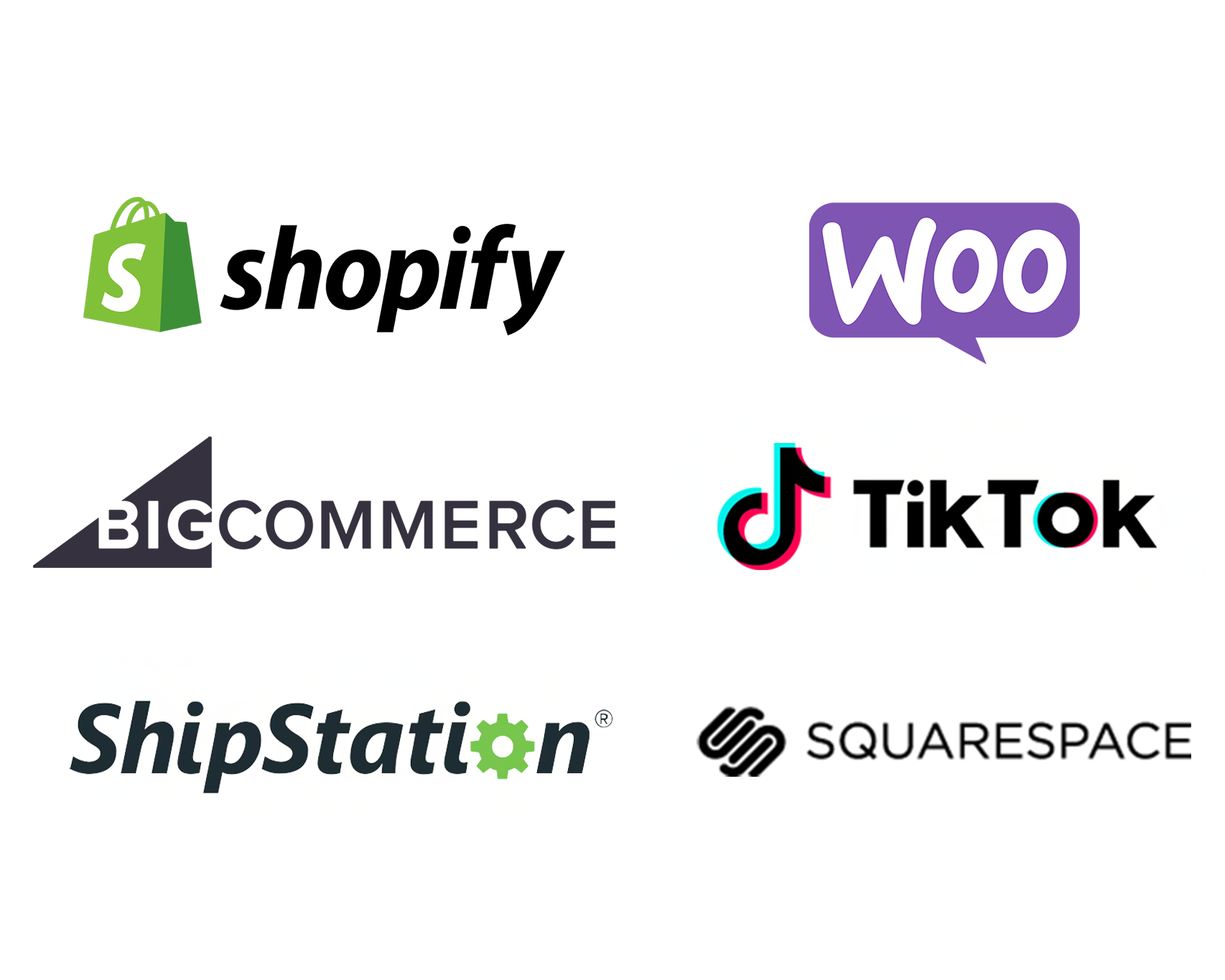
WooCommerce (free plugin, WordPress hosting $5-$30/month) offers full data ownership, no transaction fees beyond your payment processor, and unlimited customization. The technical overhead is real: plugin maintenance, update management, and less reliable inventory sync than Shopify require either developer support or genuine technical comfort. Use ShipStation as middleware between WooCommerce and your 3PL.
Ko-fi (free, 0% commission) works for authors with a deeply engaged fanbase willing to support their work directly, where the shop feature is secondary. Not suitable for complex fulfillment operations.
Gumroad (10% flat fee) makes sense for digital products or very low-volume physical sales. The fee structure gets painful at meaningful volume.
The Amazon question
Most indie authors sell on Amazon because Amazon is where most book buyers start. Building DTC doesn’t mean abandoning Amazon immediately; it means reducing dependence on Amazon over time and building a customer relationship Amazon can’t own.
The practical path: start selling direct on your own site, build an email list of DTC buyers, and over time shift launches toward direct-first (preorder on your site, Amazon later). That concentrates the relationship-building and the higher margin in your own channel.
Platform advice by seller type
You’re an indie author just starting DTC: Start with Shopify Basic ($29/month) and set up Pirate Ship for shipping. The ecosystem support and fulfillment integration will matter more than the monthly fee within your first year.
You’re selling digital and physical bundles internationally: Payhip for the VAT handling on digital; add physical product with Printful or Lulu Direct for POD fulfillment.
You’re running a book subscription box: Cratejoy for marketplace discovery, or ReCharge/Subbly if you want more control via your own Shopify storefront. Plan for ShipStation as the middleware layer to your 3PL.
You’re a small press with a catalog of 10+ titles: Shopify with a book-focused 3PL integration. The investment in platform and 3PL setup pays off quickly with catalog depth.
ISBN and edition control
ISBN (International Standard Book Number) is the 13-digit identifier that uniquely identifies every distinct product form of every book. Barcodes on covers, retailer order systems, distributor catalogs, WMS bin assignments, and royalty reporting all flow through the ISBN. It’s the operational backbone of the entire book supply chain.

What gets its own ISBN
Every distinct product form requires a unique ISBN:
- Hardcover edition
- Trade paperback edition
- Mass market paperback edition
- Signed or limited edition (even of the same format)
- Revised edition or new edition
- International edition (different territory)
- Bundle of multiple books (separate from individual components)
- Ebook (different from the print ISBN)
The most common error: treating the signed edition as the same SKU as the unsigned edition because they look identical. A signed edition that ships to a non-signed buyer is a disappointed reader. A standard copy that ships to a signed-edition buyer is a broken promise that costs you $5-15 in perceived value difference, plus the customer service burden.
Why scan-based picking matters
The human eye cannot reliably distinguish first-edition hardcovers from second-edition hardcovers when they share a cover design. Under time pressure, like launch day or wave fulfillment, visual picking has a 2-5% error rate for multi-edition catalogs.
Better fulfillment operations use scan verification: the WMS specifies the exact ISBN to pick, the warehouse worker scans the barcode on the book before placing it in the package, and the WMS rejects the scan if the ISBN doesn’t match. This cuts mispick rates to under 0.1%.
The cost of a mispick: $15-35 per incident in direct costs (customer service, return shipping, replacement shipping, packing materials), plus review impact. For a 500-copy launch with a 2% visual-pick error rate, that’s 10 mispicks at $25 each, so $250 in direct costs, plus whatever those bad reviews cost you downstream.
ISBN sourcing
In the US, ISBNs are purchased through Bowker (myidentifiers.com):
- Single ISBN: $125
- Block of 10: $295
- Block of 100: $575
Outside the US, verify your national ISBN agency; costs and structures vary by country.
Don’t use the free KDP ISBN if you plan to sell the book outside Amazon’s channels. A KDP-assigned ISBN identifies Amazon as the publisher of record and is incompatible with IngramSpark distribution and most 3PL ISBN-tracking setups.
Edition transition management
When you move from one edition to another, a revised edition, a second printing with corrections, a new cover, the transition is an operational event that needs explicit management:
- Create a new ISBN for the new edition
- Set up a new SKU in your storefront and at the 3PL
- Keep old and new edition inventory in physically separate bins
- Put a WMS hold on the old edition once the new edition arrives
- Provide written instructions to the 3PL for handling any remaining old-edition inventory
- Verify via test order that new-edition orders route to the new bin
The most expensive failure mode: new-edition inventory arrives at the 3PL, gets stored near the old edition, warehouse staff commingle them because “they look the same,” and for weeks your store ships a mix of old and new editions to customers who ordered the updated version.
Book damage prevention and packaging

Book damage in transit is the most visible fulfillment failure. Every damaged book generates a reader complaint, a replacement cost, and frequently a negative review. Industry data puts general package damage rates at 3-4% across all product types; for books specifically, poorly packaged hardcovers in poly mailers experience 3-10% damage rates. With proper corrugated packaging and tight void fill, you can get below 1%.
The packaging upgrade that takes you from 5% damage to 0.5% damage typically costs $0.50-$1.50 more per order. A single replacement shipment costs $12-45. The math favors better packaging every time.
How books fail in transit
Corner crush is responsible for most book damage complaints. Book corners are thin and structurally unsupported. Automated postal sorters apply point loads of 30-80 lbs, and corners are the first contact point in a drop impact. A poly mailer provides zero corner protection. Get this one right (corrugated packaging that fits the book) and you’ve eliminated the majority of your damage claims.
The other failure modes are real but less frequent. Spine damage happens when books shift inside an oversized box and impact the wall repeatedly; the fix is right-sizing, not more void fill. Moisture warps pages and cockles covers when a package encounters a wet loading dock or leaking truck, which a 2-mil inner polybag prevents for $0.12. Glossy covers and foil elements scratch inside poly mailers, but if you’re using corrugated, that’s no longer your problem.
Packaging options by format
For trade paperbacks (single copy):
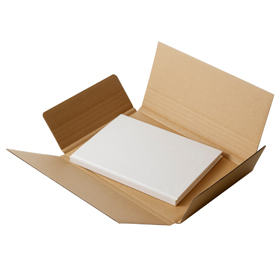
- Corrugated book wrap ($0.45-$1.20): the right-sized corrugated sleeve is the best all-around choice for single paperbacks. Corner protection, self-sealing, sized to fit snugly.
- Padded bubble mailer with inner poly sleeve: acceptable for paperbacks under 6 lbs, but provides less corner protection than corrugated. Include a 2-mil polybag inner wrap for moisture.
For hardcovers (single copy):
- Corrugated mailer box ($0.60-$2.50): required for hardcovers. A rigid corrugated box sized within 0.5-1 inch of the book’s dimensions prevents the corner crush that destroys dust jackets. Include an inner poly sleeve.
- Poly mailers: never for hardcovers. A padded poly mailer for a hardcover isn’t a budget alternative; it’s a damage guarantee.
For multi-book orders and box sets:
- Double-wall corrugated box with kraft crumple paper void fill. The extra corrugated layer provides meaningful protection for heavier packages. Kraft crumple paper (not loose packing peanuts, which migrate and compress) fills void space firmly.
For premium and collectible editions:
- Custom-fit corrugated box with foam corner inserts
- Clear poly sleeve over the book before boxing
- Inner tissue wrap for dust jacket protection
Right-sizing
The most common packaging error is using a box that’s too large. A book in a box with 3 inches of clearance on each side will travel across the interior during transit, impacting the walls repeatedly. Right-sizing means within 0.5-1 inch of the book’s dimensions in each direction. When void fill is necessary, use kraft crumple paper packed firmly, not loose fill that compresses and migrates.
Moisture protection
For any book with a retail price above $20, include a 2-mil polybag inner wrap before placing in the outer packaging. Cost: $0.08-$0.20 per order. What it prevents: a catastrophic $20-$80 book loss from a wet loading dock encounter.
Packaging SOP for your 3PL
If you’re using a 3PL, your packaging specification must be in writing before a single order ships. The SOP needs to specify:
- Packaging type by format (corrugated mailer for hardcovers; no plain poly mailers for any format)
- Right-size bracket (book dimensions mapped to box size)
- Inner poly sleeve requirement (yes or no by format)
- Void fill method
- QC step before sealing
A verbal instruction at onboarding won’t survive three months of staff turnover. The SOP lives in the 3PL’s WMS as a standard operating procedure, not on a whiteboard.
Media Mail and carrier rate strategy
Carrier strategy is one of the highest-leverage, least-discussed cost levers in book fulfillment. Choosing the wrong service level for a domestic book order can cost $2-6 more per package than necessary. At 500 orders/month, that’s $1,000-$3,000/month in preventable postage cost.

USPS Media Mail: the rules
Media Mail is a USPS service specifically for printed and recorded media. For qualifying shipments, it’s typically the cheapest domestic option by a significant margin.
What qualifies:
- Printed books (no advertising beyond incidental content)
- Printed music (sheet music, hymnals)
- Recorded educational media (educational CDs, DVDs sold with a qualifying book)
- 16mm or narrower film projector film
- Printed test materials
What disqualifies a package:
- Any advertising materials (discount codes, promotional postcards, store flyers)
- Merchandise of any kind (enamel pins, candles, tea bags, bookmarks with promo codes)
- Personal notes or correspondence
- Video games
- Computer-readable software
The practical implication for inserts: a bookmark with just the book’s title and the author’s name is probably incidental. A bookmark with a discount code (“15% off your next order”) is promotional content and may disqualify the package. When in doubt, use First Class or Ground Advantage for that order rather than risk re-rating.
When not to use Media Mail
Media Mail’s official delivery window is 2-8 business days, but real-world performance is 5-14 days, with holiday periods stretching to 3+ weeks.
Don’t use Media Mail for:
- Launch week, where track-and-trace and delivery timing matter
- Holiday shipping after approximately November 15
- Any order containing non-qualifying inserts or merchandise
- International orders (Media Mail is domestic US only)
- Premium signed or limited editions where delivery timeline is part of the experience
Getting commercial USPS rates
Retail USPS rates at the post office counter are meaningfully higher than commercial rates. To access commercial rates:
- Pirate Ship (free): web-based platform giving access to USPS commercial rates at no monthly fee. Best for self-fulfillment authors.
- Stamps.com / Endicia (subscription): more features, monthly fee, still commercial rates.
- Through your 3PL: any volume 3PL has negotiated carrier contracts that typically beat commercial rates by an additional 20-40%.
Carrier rate shopping
For orders that don’t qualify for Media Mail (subscription boxes, orders with merch, international), rate shopping compares cost across USPS Ground Advantage, UPS Ground, FedEx Ground, and regional carriers (OnTrac in the West, LaserShip in the East) for each specific weight, dimensions, and destination zone. The savings from rate shopping vary by package and zone but can be $0.50-$3.00 per order at comparable speed.
Dimensional weight pricing
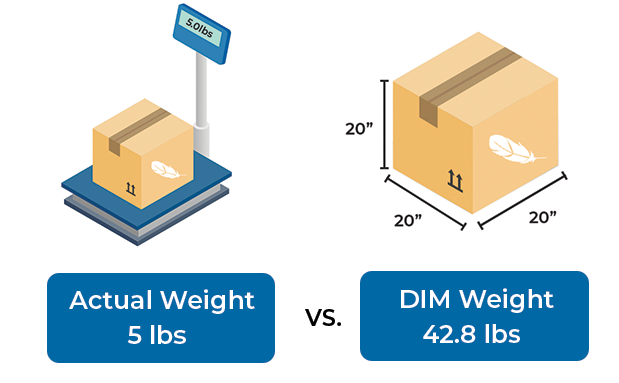
For most parcel carriers, the billed weight is the greater of actual weight and dimensional weight. The formula:
DIM weight = (Length x Width x Height) / 139 (standard domestic divisor)
For books, actual weight almost always exceeds DIM weight since books are dense. But for box sets, lightly-packed subscription boxes, or any package where air exceeds paper, check your DIM weight before assuming actual weight is the billing basis.
International carrier strategy
Retail parcel rates to the EU or UK run $28-$40 for a standard paperback. Options that reduce this:
- International consolidators (Easyship, Passport, Pirate Ship international): aggregate volume for lower rates, typically $12-$22 to the EU for a 1 lb book
- Local POD partners: BookVault (UK) for UK/EU orders; use POD for international to avoid the shipping cost entirely
- Flat international shipping fees: offer a fixed rate that recovers actual cost on average without per-order calculation
Street dates, preorders, and launch day fulfillment

Launch day is the highest-stakes operational event in a book’s commercial life. Bestseller list eligibility, earned media momentum, and reader relationship formation all concentrate in the first 7-14 days of a book’s release. Fulfillment failures during this window disappoint customers and damage the commercial outcome of the entire launch.
What a street date is and why it matters
A street date is the official on-sale date: the date before which no copies may be sold, shipped, or delivered to consumers. Street dates exist for a few reasons.
Bestseller list counting starts on the official on-sale date. Preorder sales on Amazon and some other platforms count toward launch-week numbers when the order ships. Early DTC shipments that arrive before launch week may not count in the same tracking window.
Retailer relationships depend on the street date being honored. If DTC customers receive a book before bookstore copies arrive on shelves, retail partners notice and may pull back.
Distribution agreements often explicitly require street date compliance.
WMS embargo hold: get it in writing and test it
A street-date hold must be enforced at the WMS level. Not via a note on a pallet, not via a verbal instruction to the warehouse manager, not via a manual review step. Only a WMS-level embargo is reliable under surge conditions.
The time zone gotcha: many WMS platforms use UTC as their internal timestamp. Midnight UTC on the street date is 7-8 PM Eastern the prior day in US time. A WMS configured to “release at 00:00 on [street date]” using UTC will ship orders on the evening before your official launch. This is one of the most common and operationally invisible launch-day failures. Always confirm the release timestamp and time zone in writing with your 3PL, and test it with a dummy embargo two weeks before launch.
Preorder operations
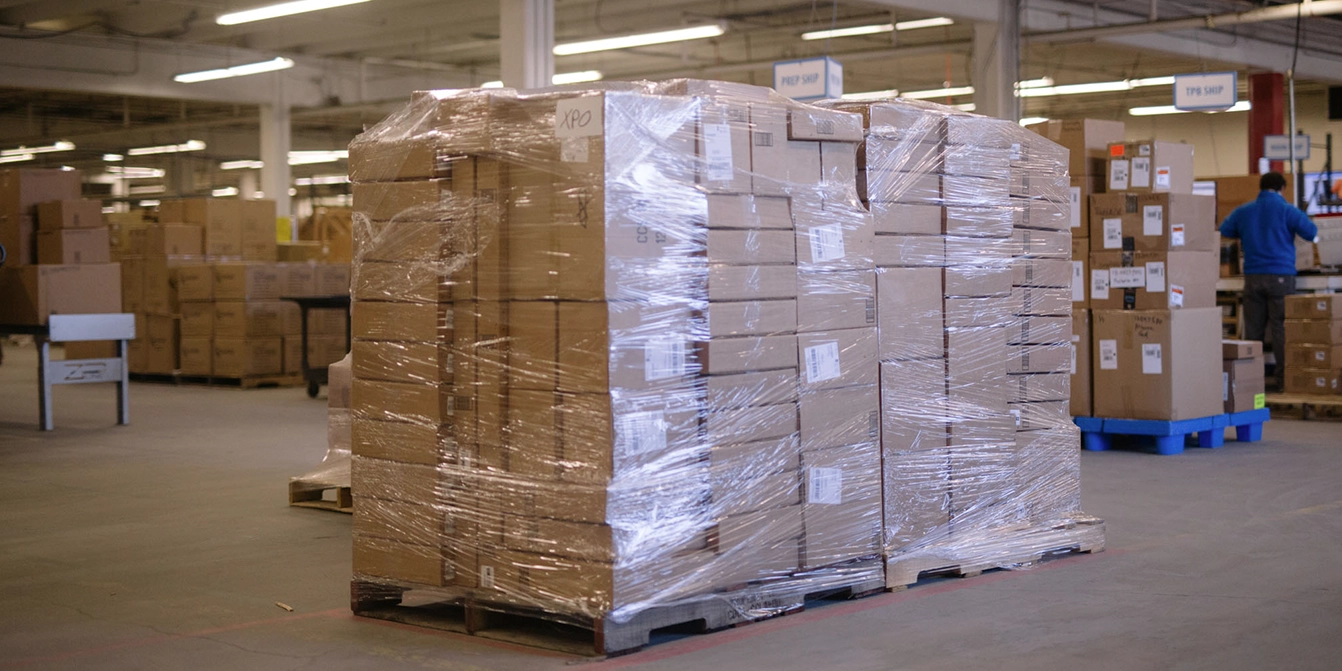
Inventory should arrive at the 3PL 14-21 days before the street date for launches under 500 units, and 21-28 days for larger launches. This buffer covers inbound receiving delays, inventory count verification, and correction of any discrepancies.
Card authorization expiry: when collecting payment at time of preorder, card authorizations expire, typically 7 days for Visa and Mastercard. For a long preorder window, charging at order placement is cleaner financially but carries a higher cancellation risk. Charging at shipment avoids this but requires re-authorization that may fail for changed cards. Decide which risk you’re more comfortable with before launch, not during it.
ARC and media copies: Advance Reader Copies for reviewers and media must ship before the street date. Your WMS must support an order-level “embargo exempt” tag that allows these orders to bypass the hold without exposing all preorders to the same bypass. Don’t try to manage this with a verbal exception.
Launch day order spikes
Plan for these volume ratios when sizing your 3PL’s launch-day capacity:
- Small indie author with modest preorder list: 10-30x normal daily volume
- Mid-size author with active preorder campaign: 50-100x normal
- Established author or major campaign: 100-200x normal
A 3PL that processes 50 orders on a typical day can’t absorb 2,000 orders on launch day without pre-arranged surge staffing. Notify your 3PL in writing of expected launch-day volume at least 14 business days before the street date, and get written confirmation of their surge plan.
Launch day checklist
T-minus 21 days:
- Confirm 3PL has received and counted all preorder inventory by ISBN
- Verify street-date embargo is configured in WMS with correct release timestamp and time zone
- Run a test order; confirm it shows “held” status in the WMS
T-minus 14 days:
- Provide 3PL with written expected volume (orders per day for Days 1-5 after release)
- Confirm surge staffing is scheduled
- Confirm packaging material inventory covers full expected volume plus 20% buffer
T-minus 7 days:
- Verify all SKUs at expected quantities in the WMS
- Confirm carrier pickup windows are pre-arranged for surge volume
T-minus 2 days:
- Verify embargo release timestamp and time zone in writing
- Confirm ARC/media order type is configured as embargo-exempt
- Send preorder confirmation email to customers with expected ship date
Launch day:
- Monitor WMS dashboard in real time for the first 4 hours
- Watch orders transition from “held” to “picked” to “shipped”
- Have your 3PL account manager’s direct phone number ready, not a ticket queue
Day 3 post-launch:
- Pull a shipment report and confirm all Day 1 preorders have tracking numbers
- Resolve exceptions (address failures, out-of-stock edge cases) immediately
Book bundles and kitting
A bundle is any outbound order containing more than one distinct item assembled into a single shipment: book plus signed print, series box set, book plus ebook code, book subscription box. Kitting is the operational term for assembling multi-component orders.

Bundles are one of the highest-leverage DTC revenue strategies. Average order value jumps immediately, and the perceived value of the bundle to the customer often exceeds the sum of the parts. A $24 book plus a $6 exclusive print sold as a $35 bundle is a better deal in the customer’s mind than two separate purchases at $24 and $6.
However, bundles do increase fulfillment complexity and cost. Every component is a separate pick. Assembly is a separate labor step. Weight and dimensional sizing change. And if any component is out of stock, the bundle can’t ship.
Two kitting models
Pre-kitting: you (or the 3PL) assembles complete bundle units in advance, stores the finished bundle as a distinct SKU, and ships it as a single-pick item. Best for bundles with stable contents and predictable demand where the assembly cost of a dedicated run is less than per-order assembly at scale.
Assemble-to-order: when a bundle order comes in, the 3PL picks each component separately and assembles the bundle at the pack station. Best for higher-variety bundles, signed copies where each unit is unique, or lower-volume programs where pre-kitting a batch would leave unsold assembled units.
SKU architecture for bundles
A bundle needs its own SKU in your storefront, separate from the component SKUs. The bundle SKU triggers inventory decrements on each component when an order ships. In Shopify, bundle apps (Bundles.app, Fast Bundle) manage this automatically; when a bundle order is placed, the app decrements component inventory and routes the correct pick instruction to your 3PL.
At the 3PL’s WMS, the bundle SKU must be mapped to either a pre-kitted finished bundle bin (pre-kitting model) or a multi-line pick instruction for each component (assemble-to-order model).
QC for kitted orders
Weight verification is the most reliable QC checkpoint for bundled orders. Each correctly assembled bundle has a predictable total weight (within plus or minus 10-20 grams). A bundle that’s too light is missing a component; one that’s too heavy has an extra. Configure the pack station scale to flag anomalies before the package seals.
Additional practices that help: a pilot run of 10-20 units before the full wave, a printed QC checklist laminated at the assembly table, and photo documentation of the correctly assembled bundle for reference.

Signed copies as a kitting component
Signed copies introduce a distinct inventory challenge. The signed version of a book is physically distinct from the unsigned version and must be stored in a completely separate bin. The WMS must route signed-edition orders to the signed bin, not the standard bin.
This sounds obvious, but it’s one of the most common and damaging fulfillment errors in indie publishing.
- Signed copies commingled with unsigned stock (readers who paid for signed receive unsigned)
- Unsigned copies routed to signed orders by error (same result)
- Signed inventory depleted faster than expected because the bin routing was never verified
So the common fix is to assign separate ISBNs and SKUs for signed and unsigned editions, use separate physical bin locations clearly labeled at the 3PL, and use scan-verification picking that rejects wrong-edition scans.
Signed copies and personalization
Signed copies are one of the most powerful tools in the DTC author’s toolkit. They command a $5-15 premium over standard editions, they’re impossible to replicate on Amazon, and they create a direct connection between author and reader that drives loyalty and word-of-mouth.
They also introduce operational complexity that catches many authors off guard.

The four signing models
1. Ship to author, then back to 3PL (round-trip signing)
The 3PL ships unsigned copies to the author’s address. The author signs them. The author ships them back to the 3PL as the distinct signed SKU.
- Cost: $50-$250 in shipping for 50-500 books (round trip)
- Timeline: 10-14 days round trip
- Works for: small batches, pre-launch signed editions
- Doesn’t support: personalized inscriptions without a complex per-book instruction system
2. Author visits warehouse
The author travels to the 3PL facility and signs books in-house. No transit cost or risk. Signed copies go directly into the signed inventory bin.
- Best for: large signing batches (500+ copies) where round-trip shipping cost and damage risk are meaningful
- Throughput: 200-400 books per hour (fatigue-dependent for handwritten signatures)
- Requires: scheduling coordination with the 3PL
3. Pre-signed inventory
The author signs a large batch upfront and ships pre-signed copies to the 3PL as the signed edition SKU. Scalable for steady ongoing programs.
- Cannot support name personalization (all copies are signed identically)
4. Signed bookplates
The author signs adhesive bookplates, small stickers or cards, which the 3PL includes as an insert in each signed copy order. The reader adheres the bookplate to the book’s title page.
- Throughput: 500-800 bookplates per hour (faster than signing books because there’s no positioning/holding)
- Cost: $0.05-$0.25 per bookplate production cost
- 3PL insert handling: $0.15-$0.50 per order
- Works with name personalization if the author signs with the reader’s name and the 3PL includes per-order instruction slips
- Limitation: bookplates are not technically “signed copies.” This must be clearly communicated in product listings to avoid reader disappointment.
Personalized inscriptions at scale
For “personalized to [name]” signed copies:
- Capture the inscription name at order time (Shopify line-item property)
- Export names to a spreadsheet, sorted by order ID
- Prepare instruction slips with each order ID and the corresponding inscription
- Author signs with instruction slip in each book
- 3PL maintains per-book order tracking through the signing workflow
- QC: verify inscription name against order before the book goes into the outbound bin
Error rate without QC: 1-5% for batches over 100 books. With documented QC: under 0.5%.
Kickstarter signed tier economics
When offering a signed tier on Kickstarter, typical adoption rates are 30-60% of backers when priced $5-15 above the standard tier. On a 1,000-backer campaign with 40% adoption, that’s 400 signed copies, a meaningful signing and logistical commitment that needs planning, not improvising.
Plan signing session time: 400 books at 300 books/hour is 1.3 hours. At 200 books/hour (accounting for fatigue and inscription variation) it’s 2 hours. Buffer 3-4 hours for a 400-book signing session.
Book subscription box fulfillment
Book subscription boxes, curated monthly or quarterly shipments containing books plus bookish accessories, have operational requirements that standard DTC book fulfillment doesn’t cover. Subscribers are paying for a curated experience; the box, the assembly, the presentation are part of what they ordered.

The subscription box fulfillment lifecycle
Procurement and inbound: every item in the box, the book (typically sourced from the publisher or distributor), exclusive merch, branded accessories, must arrive at the warehouse before the wave ships. Coordinating inbound from 5-10 vendors on a compressed monthly timeline is the hardest operational challenge in subscription box fulfillment.
Receiving and QC: each SKU is received separately, counted, and inspected. A shortage of any single item holds the entire wave. Require your 3PL to send an inbound receipt confirmation with quantity and condition within 24 hours of each vendor delivery. That’s your early warning system.
Kitting and assembly: all items for each subscription tier are assembled into the branded box per a detailed kit card. A kit card specifies the item list by SKU, a placement diagram, wrapping instructions, insert placement, and a photograph of the correctly assembled box. Without a photographic reference, assembly quality degrades after the first few hundred boxes as staff interpret the placement differently.
Wave shipping: unlike standard DTC (where orders trickle in daily), subscription boxes ship in a 3-7 day wave window at the start of the billing cycle. For 1,000 subscribers, that means 1,000 boxes must ship within a few days. This requires explicit staffing planning at your 3PL. Get written confirmation of their wave capacity before the first ship cycle.
Platform integration: the subscriber list with addresses, tier selections, and current billing status must flow from your subscription platform (Cratejoy, ReCharge, Subbly) into the 3PL’s WMS. This is the highest failure-risk integration in subscription box operations; billing failures, last-minute cancellations, and address changes must be finalized before labels generate.
Expert Note: Media Mail cannot be used for subscription boxes that contain non-book items. Even a single bookmark with a promo code, a tea bag, or an enamel pin disqualifies the entire package. At $8-$14 postage for a subscription box versus $4-$7 for a book-only order, this difference is real and built into the economics of the subscription box model.

Managing churn through fulfillment quality
Subscription box industry average monthly churn is 5-10%, and fulfillment problems contribute an estimated 20-35% of cancellations. A single bad box experience, wrong items, damaged book, sloppy assembly, is more likely to trigger cancellation than one month of uninspiring contents, because it signals operational unreliability.
How the fulfillment-churn connection works:
- Late shipments (5+ days past expected): measurable churn increase in the following billing period
- Kitting errors (wrong item, missing insert): immediate cancellation and potential public social media complaint
- Damaged books: highest emotional impact, especially for signed or collectible editions
Track fulfillment-related customer service tickets as a separate category. If fulfillment complaints exceed 10% of monthly CS contacts, something in the operational chain needs fixing.
Key KPIs for subscription box operations
- Kitting accuracy: 99.5%+ (fewer than 5 errors per 1,000 boxes)
- Wave on-time ship rate: all boxes shipped within the committed window (negotiated SLA)
- Inbound on-time rate: percentage of vendor shipments arriving before the wave start date
- Damage rate: under 1% with proper corrugated packaging
- Fulfillment-related CS ticket rate: tracked separately from content and curation complaints
The unboxing experience and post-purchase inserts
When a reader orders from Amazon, the book arrives in an anonymous brown box. No brand interaction. No customer relationship. No loyalty signal.

DTC fulfillment inverts this entirely. You control every element of the physical experience from the moment the package lands on a reader’s doorstep. A book shipped in a plain poly mailer is functionally equivalent to Amazon. A book shipped in a custom-printed mailer with a tissue-wrapped interior, a signed author note, and a QR code leading to exclusive bonus content is a product that competes on experience, not price.
Why the unboxing moment is marketing
Readers, especially on BookTok, Bookstagram, and book-specific communities, photograph and film unboxing moments. A visually striking package with thoughtful inserts gives readers something worth sharing. Each organic post is a word-of-mouth acquisition event. This is the primary marketing channel for major subscription boxes like OwlCrate and FairyLoot, which have thousands of unpaid creators posting unboxing content regularly. For indie authors, a single reader unboxing video that goes modestly viral can outperform months of paid advertising.

Insert types and their functions
Bookmarks are the highest-ROI insert for DTC book orders. They’re inexpensive ($0.05-$0.20 each at standard quantities), functionally useful, and serve as an ongoing brand reminder. A bookmark with a QR code linking to your newsletter sign-up page can generate $0.50-$2.00 in subscriber acquisition value per bookmark, depending on your email list’s revenue per subscriber.
What makes a bookmark worth keeping series art with reading order listed (drives discovery of adjacent titles), a single QR code leading to one primary action (newsletter sign-up with a bonus, exclusive bonus chapter), and your name and one social handle, not five different platforms.
Author notes are the most emotionally powerful insert in the DTC toolkit. Even when printed at scale, a warm and specific author note written in a personal voice is consistently cited by DTC book buyers as one of the most valued elements of a direct purchase. A printed author note costs $0.10-$0.30 per unit on half-sheet card stock and creates the sense of connection that mass retail can’t offer.
Write it like you actually wrote it to this reader, not like a press release. “I wrote this chapter during the worst week of my life” lands differently than “Thank you for supporting independent publishing.” Tell readers explicitly that buying direct makes a meaningful difference to your ability to keep writing. Readers who understand the economics are more likely to buy direct again.
QR code inserts bridge the physical book purchase to your digital ecosystem. A QR code on a bookmark or author note can link to a newsletter sign-up page gated behind a free bonus (deleted scene, exclusive short story), a reading playlist that’s highly shareable, an exclusive bonus chapter only accessible to DTC buyers, or a review request linking directly to a Goodreads or Amazon review form.
Use a redirectable URL shortener (Bitly, Pretty Links) behind every QR code; never print a hardcoded URL. If your website URL ever changes, you can update the redirect without reprinting 1,000 bookmarks. Test on both iOS and Android before sending to print. Minimum size: 1 inch by 1 inch, high-contrast printing.
Discount codes are among the highest direct-ROI inserts because the cost (the discount) is only incurred when the code is redeemed. A “15% off your next book” code included with every first order has zero cost for unredeemed codes and a measurable repeat-purchase conversion for redeemed ones.
Use batch-unique codes (generate 500-2,000 individual single-use codes via Shopify or Klaviyo) rather than a single shared code printed at scale. A shared code printed on 800 thank-you cards will be photographed, posted on a book deal group, and redeemed thousands of times by people who never bought your book. The fix takes ten minutes and it matters.
Art prints and illustrated cards (4×6 to 5×7) are high-perceived-value inserts common in Kickstarter campaigns and premium subscription boxes. Package them flat with a cardboard backer inside the outer packaging to prevent corner damage. A $0.15 art print in a $0.05 poly sleeve adds $0.20 per order plus 3PL handling, a worthwhile investment for any campaign where “special edition” is part of the value proposition.

Working with 3PLs on inserts
The most common failure: inserts run out mid-fulfillment and the 3PL doesn’t notify you. An author supplies 500 bookmarks. The 3PL runs out at order 312 and continues fulfilling without inserts because there was no low-stock alert, no one flagged the shortage, and the packers just skipped the step. The author finds out three weeks later when a reader mentions the missing bookmark. 188 newsletter conversion opportunities, gone.
To fix this, set a low-stock threshold for every insert SKU at the 3PL. When stock falls to 15% of monthly expected volume, the system alerts you to reorder. For a 300-orders/month program with one bookmark insert, the alert triggers at 45 units.
Other things that need to be true for inserts to work reliably:
Store inserts as distinct inventory SKUs, not loose items in a box labeled “misc.” Provide a clear written SOP: insert name, SKU code, which orders it applies to, how many per order, and where it should be placed in the package (on top, tucked inside, etc.).
Configure conditional insert logic in the WMS, not on a piece of paper at the packing station. If the 3PL says “we’ll write it on the packing slip,” push back. Paper instructions degrade within weeks as staff changes and routines drift. Conditional logic must live in the WMS to be reliable at scale.
For subscription box operators, include insert assembly in the detailed kit card. Specify insert name, placement position, orientation, and whether it should be handled before or after the book is placed. Photograph the correctly assembled box and include the photo in the kit card.
Audit insert inclusion by spot-checking outbound packages. For a run of 500+ orders, ask the 3PL to photograph 10-20 randomly selected packages before sealing, showing the contents laid out. This catches insertion errors early and signals to the 3PL that compliance is being monitored.
Media Mail compliance warning
Discount codes and promotional content on inserts may disqualify a package from Media Mail. If shipping book-only orders via Media Mail, review every insert: a bookmark without pricing or promotional copy is probably incidental; a bookmark with a discount code or a URL pointing to a product page is potentially promotional. When in doubt, use First Class or Ground Advantage for that order.
Demand forecasting and inventory planning
Running out of stock during a launch peak or a media mention is the most expensive invisible cost in the business. You don’t see the lost sales; you just see a flat period where demand existed but inventory didn’t.
Book demand volatility
Book demand is more volatile than most product categories because it’s event-driven:
- Launch spike: 3-10x steady state for 2-4 weeks post-publication
- Media mention or award: unpredictable, unplannable
- Bestseller list placement: can spike demand 5-20x for weeks
- Seasonal peaks: Q4 (October-December) runs 3-5x average; Mother’s/Father’s Day 1.5-2x; back-to-school (July-September) 1.5-3x for educational and YA
Seasonal buffer planning
For Q4: increase safety stock 50-75% above your standard buffer, positioned by October 1. You can’t restock in time if you run out in November.
For back-to-school: increase by 30-50% above standard buffer, positioned by July 15 for educational and YA titles.
For launch week: plan for 2-4 weeks of expected post-launch demand at the 3PL before the street date. The combination of preorder release, launch-day orders, and the first week of organic demand can exhaust stock that seemed adequate in prelaunch planning.
The reorder point formula
Reorder Point = (Average Daily Sales x Lead Time in Days) + Safety Stock
Safety Stock = (Maximum Daily Sales minus Average Daily Sales) x Lead Time
Example:
- Average daily sales: 8 units
- Maximum daily sales (launch week): 40 units
- Lead time (domestic offset printer to 3PL): 21 days
Safety stock = (40 – 8) x 21 = 672 units Reorder point = (8 x 21) + 672 = 840 units
When your WMS shows fewer than 840 units on hand, initiate a new print run.
A simple rule of thumb would be, if you don’t want to run the formula: reorder when you have 2 months of average sales remaining (3 months in Q4). It’s not as precise, but it prevents stockouts without requiring daily spreadsheet work.
Lead times by print channel
|
Print source |
Lead time |
|---|---|
|
POD (IngramSpark, Lulu, KDP) |
3-7 days from order |
|
Domestic offset printer |
3-6 weeks from order to delivery |
|
Overseas offset printer |
10-16 weeks (including shipping) |
|
3PL inbound (receiving to available) |
1-2 weeks after carrier delivery |
International print runs require 16-20 weeks of planning lead time. Plan for overseas runs with a reorder point that triggers 4-5 months before you’d be out of stock.
Kickstarter and crowdfunding surplus
Order 15-25% above your backer count for any Kickstarter campaign. Print run minimums may force it anyway. The surplus is the inventory that fulfills post-campaign DTC demand from people who missed the campaign. It also covers attrition from uncollectable backer payments (typically 3-7% of pledges fail collection), author copies, review copies, and convention stock.
Managing overstock
When you’ve accumulated more inventory than demand justifies, options ranked by financial return:
- DTC flash sale (40-60% off): highest margin recovery; you capture retail minus discount. Good for email lists. A 48-hour window creates urgency.
- Remainder dealers (AbeBooks wholesale, discount book buyers): 10-30% of retail. Turns old inventory into cash. Works for quantities of 50+ per title.
- Library donations: tax-deductible donation at fair market value. Useful for titles with educational relevance.
- Conference giveaways: budget copies at events, a marketing cost not a loss.
- Pulping: standard industry practice for discontinued titles with no remaining demand.
Write-off threshold: titles with no sales in 12-18 months and no upcoming promotion are candidates for disposal. The carrying cost of storing unsellable books ($0.46-$0.70/cu ft/month) accumulates into real dollars over time.
How to choose a book fulfillment partner
Choosing a book 3PL is one of the highest-leverage decisions you’ll make as a publisher. The wrong partner means damaged books, late shipments, edition mispicks, launch day failures, and hidden fees that make the relationship economically unsustainable. The right one is invisible; it just works.
The RFP process
Send a written Request for Proposal to 3-6 candidates. An RFP forces apples-to-apples comparison and demonstrates you’re a buyer who will hold them accountable. Include:
- Your current and projected monthly order volume
- Your order profile: average items per order, weight, domestic vs. international mix
- Your SKU count and format mix (hardcovers, paperbacks, signed editions, bundles)
- Your specific requirements: Media Mail routing, street-date holds, signed copy handling, kitting
- Your storefront platform (Shopify, WooCommerce, Cratejoy, BackerKit)
Essential RFP questions
Operational capabilities:
- “What is your documented order accuracy rate for the last 12 months? Can you provide reports?”
- “What is your on-time ship rate for your standard SLA?”
- “What is your inbound receiving time from carrier delivery to available-to-pick inventory?”
- “Do you have experience with Media Mail routing? Is it a default option or something we need to request?”
- “Can you demonstrate your street-date hold functionality in your WMS? We want a live demo, not a description.”
- “What packaging do you use for a single hardcover? A single trade paperback? A 3-book box set?”
- “What is your documented damage rate on book shipments specifically?”
- “Can you handle author-signed editions with separate bin locations and scan-verified picking?”
Pricing transparency:
- “Please provide your complete rate card including: receiving (per pallet and per carton), storage billing basis (cubic foot/pallet/bin), pick fee, pack fee, per-additional-item fee, kitting fee, insert inclusion fee, packaging materials cost, postage passthrough policy and any markup, monthly minimum, setup fee, peak season surcharges, long-term storage threshold and rate, carrier address correction passthrough policy, and account closure/inventory retrieval fees.”
- “What charges might appear on my invoice that are not listed on this rate card?”
Technology:
- “What WMS do you use, and what is your integration mechanism with [your storefront]?”
- “Do you push tracking numbers back to our storefront automatically? What is the typical lag?”
- “Does your system sync available inventory back to our storefront in real time?”
- “Do you have a real-time inventory dashboard we can access at any time?”
References:
- “Can you provide three references from current clients with similar order volume and product type (books)?”
- “Can you also provide one reference from a client who left your service?”
SLA benchmarks to demand
|
KPI |
Minimum |
Best available |
|---|---|---|
|
Order accuracy |
99.0% |
99.5%-99.8% |
|
On-time ship rate |
98.0% |
99.5%+ |
|
Inventory accuracy |
99.0% |
99.5%+ |
|
Return processing (DTC) |
5 business days |
24-48 hours |
|
Inbound receiving time |
3 business days |
24-48 hours |
|
Damage rate |
< 2% |
< 0.5% |
Any partner who can’t provide documented SLA performance metrics is hiding poor performance. Any partner below 99.0% order accuracy is a liability.
Red flags in a 3PL evaluation
- Can’t demonstrate street-date hold functionality; they describe it but won’t demo it
- Vague or incomplete pricing; if the quote covers “pick and pack” but doesn’t mention per-item fees, dunnage fees, residential surcharges, or address correction fees, expect surprise invoices
- No Media Mail capability; for US domestic book shipping, this is costing you money on every qualifying order
- No real-time inventory visibility
- Storage billed per bin rather than cubic foot; almost always 15-40x more expensive for books
- No separation of signed vs. unsigned inventory; commingling destroys your signed copy program
- Contract allows rate increases with only 30 days notice and no cap
- No SLA remedies in the contract; SLAs with no financial consequences are marketing materials, not operational commitments
- Can’t provide references from similar clients

Contract watch-outs
Rate adjustment clauses: negotiate for annual increases capped at CPI or 5% (whichever is lower), 60-90 days notice, and the right to exit without penalty if a rate increase exceeds a threshold (e.g., 10%).
Liability caps: most 3PL contracts cap liability at $0.50/lb or $100/incident. For inventory that represents real capital, this isn’t enough. Negotiate for replacement value up to a reasonable cap, or require them to carry cargo insurance.
Exit fees: get all exit-related fees enumerated and capped before signing. Surprise “inventory retrieval” and “palletizing for transfer” fees make leaving expensive and slow.
SLA remedies: require a clause specifying that if order accuracy falls below X% or on-time ship rate falls below Y% in any 30-day period, you receive a defined credit (e.g., 10% of that month’s fees) and/or the right to exit without penalty.
Data ownership: confirm in writing that all inventory data, order history, and customer address data belongs to you and is exportable in a standard format at any time, including upon exit.
Fulfillment platform integrations
A fulfillment integration is the technical mechanism that automatically routes orders from your storefront to your 3PL (or POD provider) and routes tracking numbers back. Without integration, every order requires a human to copy data between systems. That workflow fails at volume and introduces errors at rate.
Integration architecture
Direct API integration: your storefront and the 3PL’s WMS communicate natively in real time. An order placed at 2:00 PM appears in the 3PL’s fulfillment queue within 60 seconds. Tracking numbers flow back to the storefront within minutes of label generation. This is the standard you want.
Middleware integration: a platform like ShipStation, Linnworks, or Extensiv sits between your storefront and the 3PL, translating order data. Adds one degree of complexity but enables multi-channel order consolidation (Shopify, Etsy, Amazon, and BackerKit all flowing into one queue).
CSV/flat-file integration: orders are exported to a spreadsheet and uploaded to the 3PL manually. This is not integration; it’s manual data entry at batch scale. Viable only under 30-50 orders/day for a solo operator. At any meaningful volume or on a launch day, this is a high-error, high-labor process that creates 12-24 hour fulfillment delays. If a 3PL’s primary integration method is CSV upload, they’re not suitable for more than roughly 100 orders/month.
Bidirectional sync: what actually needs to work
A one-way integration that only sends orders out, but never syncs inventory back, is the most common cause of overselling during launches. When inventory levels in your storefront aren’t updated as orders ship, you accept orders the 3PL can’t fulfill.
A real integration is three-way:
- Storefront pushes orders to the fulfillment system
- Fulfillment system pushes inventory levels back to the storefront (preventing overselling)
- Fulfillment system pushes tracking numbers back to the storefront (triggering buyer notification emails)
Verify all three directions work before you go live, not just the first.
Integration gotchas
SKU mapping drift: every time you add a new product variant, new edition, hardcover vs. paperback, signed variant, you must explicitly add it to the integration’s SKU mapping. This never happens automatically. Most integration failures happen not at setup but when a new SKU is added later.
API token expiration: OAuth tokens expire. A platform password reset, a Shopify app update, or a payment processor change can silently break an integration. Set a monthly calendar reminder to verify integration health by placing a test order and tracing it.
Staging vs. production environments: some 3PLs have separate test and production environments. Confirm your integration is pointed at production before launch day.
Address standardization: USPS standardizes addresses differently from how customers enter them. Some 3PL systems reject addresses that don’t match USPS standardized format. Confirm your integration handles address standardization at order intake.
Returns handling for books
DTC book return rates are low, typically 1-5% of units shipped, but returns handling still warrants a dedicated operational workflow. The speed of processing directly affects your available inventory and therefore your ability to fulfill orders. The quality of grading directly affects what the next customer receives.
DTC vs. trade returns
DTC returns are individual parcel returns from readers. They trickle in unpredictably, need grading, and trigger customer refund or exchange processing.
Trade distribution returns are pallets of unsold books from retail partners routed back through Ingram, Baker and Taylor, or your distributor. They arrive in bulk, often without advance notice, and require formal credit memo processing rather than consumer refunds. Small presses distributing through the trade channel can expect 20-40% return rates on retail copies shipped. That’s a structural feature of the book trade with no parallel in other product categories.
If you’re working with a trade distributor, confirm that your 3PL has a designated process for receiving and processing distributor return pallets. A general ecommerce 3PL receiving an unexpected pallet of 300 trade returns with no context will let it sit while they figure out what to do with it.
The grading decision
Every returned book must be graded before any inventory action is taken.
Grade A (resellable): indistinguishable from new. No corner damage, no spine crease, no cover scuff, no sticker residue, all pages intact. Goes directly back to sellable inventory.
Grade B (lightly imperfect): minor cosmetic imperfection visible to a discerning reader, a small corner ding, light cover scuff, slight spine stress. Doesn’t compromise the reading experience. Options: create a separate “hurt book” SKU at 20-40% discount, donate, use as author or conference copies.
Grade C (damaged/unsellable): visible damage that makes the copy unsellable as new or used. Severe corner crush, water damage, torn cover, broken spine, mold. Quarantine and dispose of per your standing authorization.
The mold risk is worth emphasizing: a book with moisture damage or musty odor must be quarantined immediately and not placed near sellable inventory. Mold spreads between books in storage. This is a book-specific hazard that general ecommerce 3PLs are often untrained to recognize.
Why returns processing speed matters
A Grade A return sitting unprocessed for 5 days is an invisible revenue loss. For a title selling 50 units per day, 20 unprocessed returns represent 40% of a day’s sales that can’t be fulfilled because the system still shows them as out of stock.
Benchmarks:
- DTC returns: 24-48 hours from receipt to WMS inventory update (best practice)
- Trade/bulk returns: 48-72 hours from pallet receipt to grading completion
A general ecommerce 3PL with no book-specific workflow may take 5-10 business days to process DTC returns. For launch windows and high-velocity periods, that delay has direct revenue impact.
Setting up returns operationally
Define your returns policy before the first order ships. For books under $25, the round-trip return shipping cost often exceeds the book’s value. Many DTC publishers have a policy of issuing a replacement or refund without requiring the damaged copy back, asking the reader to recycle locally.
Write a grading SOP for your 3PL. Standard grading criteria at a general 3PL won’t match a high-design art book or a premium collector’s edition. Provide photographs of acceptable versus unacceptable condition before your first return arrives.
Give the 3PL standing disposal authority. Specify: “Dispose of all Grade C returns within 5 business days of grading.” This prevents damaged copies from accumulating in a quarantine bin at your storage cost indefinitely.
Use an RMA system. A Return Merchandise Authorization number tied to the original order lets the 3PL match returned copies to the correct customer account, simplifying condition reporting and refund processing.
Request a weekly returns report: number of returns received, grade distribution, and inventory actions taken. Rising Grade C rates signal a packaging problem. Uniform Grade A regardless of condition signals a grading error.
Common book fulfillment mistakes (and how to avoid them)
These are the most commonly reported fulfillment failures in indie author, small press, Kickstarter, and subscription box communities. Each one follows the same pattern: a publisher applies general ecommerce logic to a book-specific requirement and pays the price.
Two of these, Mistake 1 and Mistake 4, are in a different category. Choosing the wrong 3PL and having no street-date control are upstream errors that contaminate everything downstream. The other four are recoverable. Those two are not, at least not without significant damage to reader relationships and, in the case of street-date failures, distributor relationships.

Mistake 1: choosing a generic 3PL without book experience
What happens: a publisher selects a 3PL based on pick/pack price, brand recognition, and Shopify integration without verifying book-specific capabilities. The 3PL ships all books in poly mailers. It has no concept of a street-date embargo. It doesn’t offer Media Mail. It commingles signed and unsigned inventory because its WMS doesn’t track ISBNs. The publisher discovers all of this through a string of reader complaints after the launch.
How to avoid it: require a live demonstration of street-date hold functionality. Ask what packaging they use for a hardcover. Ask whether their WMS tracks ISBNs as a native field. Require a documented damage rate for book shipments specifically. Get references from other publishers, not just general ecommerce merchants.

Mistake 2: underestimating launch day volume
What happens: an author builds a preorder queue of 800 copies over 6 weeks. On launch day, all 800 orders release simultaneously. The 3PL, which processes 80 orders/day normally, treats this like any other day and clears orders at its normal rate. The “3-day expected ship time” becomes 10 business days. Readers who pre-paid weeks ago are posting “where is my book?” in the comments of the launch announcement.
How to avoid it: notify the 3PL of every launch event in writing at least 14 business days in advance. Provide expected order count per day for Days 1-5 after release. Request written confirmation of the surge staffing plan and packaging material inventory. Require a throughput SLA in the contract for declared launch events.
Mistake 3: ignoring packaging specifications
What happens: an author ships a print run of hardcovers to a general 3PL. The 3PL uses padded poly mailers, their standard packaging. Within a week, 40 readers report bent corners and creased dust jackets. Replacing 40 copies at $12/print plus $8/ship is $800 in direct costs, plus the Amazon reviews mentioning “arrived damaged.”
How to avoid it: write a packaging SOP for every SKU before sending inventory. Specify corrugated packaging for hardcovers, inner poly sleeve for moisture protection, and right-size bracket. Require pack-out photos for the first production run. Order a test shipment to your own address and physically inspect the received book before releasing customer orders.
Mistake 4: no street date control
What happens: an author writes an email to the 3PL saying “please don’t ship until [date].” The 3PL acknowledges. Their WMS has no embargo feature; the warehouse worker who was briefed isn’t working the day the inventory arrives, and the WMS processes queued orders automatically. Preorder customers receive books a week before the official launch date. Distributor partners notice and send a charge-back notice.
How to avoid it: during vendor evaluation, require a live WMS demo of the embargo feature. The demo must show: embargo configuration at the SKU level, held-order queue status, release trigger, and the time zone used. Verify in writing. Test with a dummy embargo two weeks before launch.
The decision framework: which fulfillment model is right for you?
Most of this guide is granular by design. Here’s where to land.
Choose self-fulfillment if:
- Under 50-75 orders/month with no launch or campaign event near the horizon
- No Kickstarter or crowdfunding campaign planned
- Your book is a limited-run or highly personalized product where the author’s direct touch is part of the value proposition
- You’re testing demand before committing to a model
Tools you’ll need: Pirate Ship, thermal label printer, corrugated mailers, Shopify or WooCommerce for order management.
Choose print-on-demand if:
- Testing demand with a new title
- Backlist titles selling fewer than 50 copies/month
- International orders where local POD printing eliminates $20-30 international shipping costs
- Zero inventory risk tolerance and higher per-unit cost is acceptable at your retail price point
Options: IngramSpark (distribution + POD), KDP Print (Amazon), BookVault (UK/EU, Shopify integration), Lulu Direct (Shopify/WooCommerce integration).
Choose a 3PL if:
- 100+ orders/month in steady state
- Any launch event with 300+ orders in 60-90 days
- Kickstarter campaign with 500+ backers
- Bundle, signed copy, or subscription box program
- You’ve said “I can’t market more because I can’t handle the orders”
- 8+ hours/week currently spent on fulfillment
What to require in any 3PL contract: street-date hold demo, Media Mail routing, ISBN-level WMS tracking, signed edition handling, complete rate card with all fee categories, SLA exhibit with documented remedies.
Book-specialist options to evaluate: Fulfillrite (crowdfunding specialist), Publishers Storage and Shipping (PSSC), Bookmasters / Pathway Book Service.
Quick reference by publisher type
| Publisher type | Starting model | Switch to 3PL when |
|---|---|---|
| New indie author | Self-fulfillment + Pirate Ship | 100+ orders/month or first major launch |
| Established indie (1-2 books) | Self-fulfillment + POD for long tail | 150+ DTC orders/month |
| Small press (3-20 titles) | 3PL from the start if catalog depth warrants it | At any meaningful launch scale |
| Kickstarter/crowdfunding author | Self for under 500 backers | 500+ backers per campaign |
| Book subscription box | 3PL from the start | N/A |
The readers who buy direct are your most loyal customers. They opted into a relationship instead of clicking “Add to Cart” on Amazon. A book that arrives damaged, late, in the wrong edition, or without the insert you promised is a broken promise to the person who trusted you most.
Most fulfillment failures are preventable. The packaging mistake that costs 40 replacements, the 3PL that doesn’t know what a street date is, the hidden fee that eats your margins, the integration that breaks silently on launch day: none of these are freak accidents. They’re the predictable outcome of using infrastructure that wasn’t built for books, or of not testing what you assumed was working. The reader on the other end of your next shipment shouldn’t have to find out the hard way.


0 Comments